In philosophy, a razor is a principle or rule of thumb that allows one to eliminate (shave off) unlikely explanations for a phenomenon, or avoid unnecessary actions.[1] Common examples include:
A Philosopher’s One-Word Theory to Explain Why the World Feels So Weird
Once you learn what the "uni-context" is, you won't stop seeing it everywhere

Pluralistic: Model collapse (12 Aug 2026) – Pluralistic: Daily links from Cory Doctorow
One of my favorite rhetorical and analytical moves is joining things together (showing that two different, seemingly unrelated ideas are aspects of the same phenomenon) and taking them apart (resolving a paradox by demonstrating that what appears to be one, contradictory thing is actually two different things that have been lumped together).
Noumenon
In philosophy, a noumenon (/ˈnuːmənɒn/, /ˈnaʊ-/; from Ancient Greek: νοούμενoν; pl.: noumena) is knowledge[1] posited as an object that exists independently of human sense.[2] The term noumenon is generally used in contrast with, or in relation to, the term phenomenon, which refers to any object of the senses. Immanuel Kant first developed the notion of the noumenon as part of his transcendental idealism, suggesting that while we know the noumenal world to exist because human sensibility is merely receptive, it is not itself sensible and must therefore remain otherwise unknowable to us.[3] In Kantian philosophy, the noumenon is often associated with the unknowable "thing-in-itself" (German: Ding an sich). However, the nature of the relationship between the two is not made explicit in Kant's work, and remains a subject of debate among Kant scholars as a result.

Deontological Ethics
The word deontology derives from the Greek words for duty(deon) and science (or study) of (logos). Incontemporary moral philosophy, deontology is one of those kinds ofnormative theories regarding which choices are morally required,forbidden, or permitted. In other words, deontology falls within thedomain of moral theories that guide and assess our choices of what weought to do (deontic theories), in contrast to those that guide andassess what kind of person we are and should be (aretaic [virtue]theories). And within the domain of moral theories that assess ourchoices, deontologists—those who subscribe to deontologicaltheories of morality—stand in opposition toconsequentialists.
Structural Monism — Canon v1.0.0 | SUBIT-Theory | Nautilus Docs
This repository contains the official release of the Canon of Structural Monism (version 1.0.0). Structural Monism is an ontological doctrine that describes consciousness as a single field and all forms of existence as configurations of that field. The doctrine includes the SUBIT‑64 spectral model, the principle of vertical coherence, the mathematical framework, ethical implications, and canonical definitions.
Why Context Matters: Or, Where Did Anglo-American Philosophy Go Wrong? - Imprint Academic
Why were so many luminaries of European philosophy — such as Bergson, Heidegger, Husserl, Merleau-Ponty, and Sartre, even Marx and Freud — kept out of the philosophy curriculum of Anglo-American universities for most of the 20th century? Why were the schools of philosophy they founded derided as continental philosophy and deemed more suitable for the departments of literature and psychology than philosophy? This book argues that the institutionally sanctioned contrast between allegedly legitimate philosophy and its spurious continental counterpart became entrenched thanks to two intertwined metaphysical presuppositions at the heart of positivism. The first is the principle that higher-level complex systems are epiphenomenal. The second is that all causes are mechanical. In contrast to their continental European counterparts, Anglo-American metaphysicians and philosophers of science repeatedly resisted the idea that higher level phenomena might be, ontologically-speaking, relational. This book proposes that, had the alternative path that emphasizes context-dependence been selected, a scientifically respectable relational ontology might have come to inform Anglo-American metaphysics and epistemology as well as the actual practice of science — without falling prey to non-natural deus ex machina proposals. Four female British philosophers at Oxford during WWII attempted to do exactly that. Anscombe, Foot, Midgley, and Murdoch raised serious objections to Oxbridge’s Newton-inspired Positivism as early as the 1940s. The four good friends advocated for a context-dependent worldview. This book situates the four women philosophers’ valiant challenge to the entrenched paradigm as a case study of exactly why and how context matters. Paperback 165 pp. £14.95

What Theory is Not, Theorizing Is
Steelmanning — LessWrong
Steelmanning is the act of taking a view, or opinion, or argument and constructing the strongest possible version of it. It is the opposite of strawmanning. External Posts: Against Steelmanning by Thing of Things See also: Disagreement, Ideological Turing Tests, Least convenient possible world

- 1000-Word Philosophy: An Introductory Anthology
Welcome to 1000-Word Philosophy: An Introductory Anthology, an ever-growing set of essays on philosophical questions, theories, figures, and arguments.

Philosophical Plumbing
Is philosophy like plumbing? I have made this comparison a number of times when I have wanted to stress that philosophising is not just grand and elegant and difficult, but is also needed. It is not optional. The idea has caused mild surprise, and has sometimes been thought rather undignified. The question of dignity is a very interesting one, and I shall come back to it at the end of this article. But first, I would like to work the comparison out a bit more fully.
Reading philosophy for the examples
Philosophy books often have really good examples. Here are a few of my favourites.

Re-Engineering Wimsatt for Limited Beings
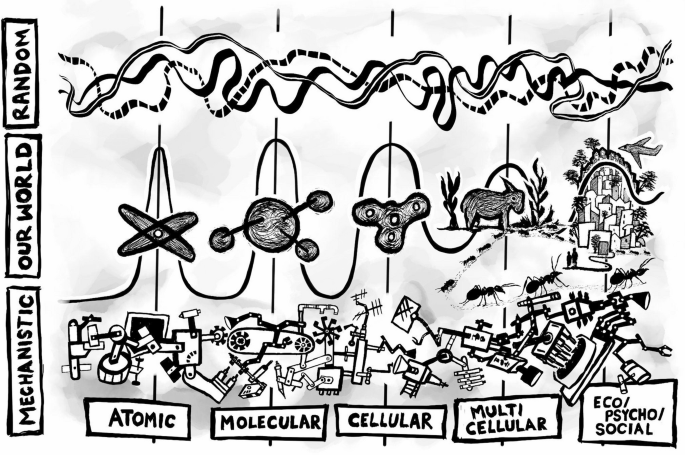
Science is the best way to produce facts about reality. The best, at least, that limited human beings have devised so far. Yet, not even scientists quite seem to understand how scientific knowledge is generated. This is not only a philosophical but also a practical problem, as our misunderstandings affect the quality of our research and limit the directions it can take. In light of this, it may be good if we reflected a bit more on how we do science — to become better researchers through philosophy. Here, I provide an accessible introduction to a philosophical approach that achieves precisely this: William Wimsatt’s multi-perspectival realism. It disabuses us of widespread but misleading myths and idealizations about science, such as the idea that everything in the world can be reduced to a fundamental level, or that we can approach a “view from nowhere” — complete and objectively detached knowledge of the world. Wismatt proposes an alternative view based on his thorough studies of actual research practice. It cuts deeply into the layered yet messy structure of reality, and the improvised but potent tools we have available, as limited and evolved beings, to explore it. Wimsatt reframes science as an irregular yet adaptive process rather than a cumulative repository of unalterable facts. His philosophy provides a workable and grounded middle way between radical skepticism and naïve belief in the objective truth of science. It explains how knowledge is conceptually constructed by humans, but still connects us to reality in a trustworthy way. We need such a new view of science, not only to improve our research practices and outcomes but, more generally, to gain a more realistic understanding of ourselves, the world, and our place and role within it.
When Convenient Illusions Hold Precedence...
Language, Substance, and Money are intermediaries which crumble under weight of inspection