

Pink-slime journalism is a practice in which news outlets, or fake partisan operations masquerading as such, publish (often but not always) lower-quality news reports that appear to be independent local news outlets.[1] The use of these websites to gather user data has also been observed.[2][3][4] The reports are either computer-generated or written by poorly-paid outsourced writers, sometimes using pen names.[3][5][6]
‘Pink Slime’: Partisan journalism and the future of local news
As we hurtle towards 2024 elections, interest in pink slime journalism and the continued growth of partisan local outlets with deep, often opaque, ties to dark money, advocacy groups and other special interests has only grown.

As election looms, a network of mysterious ‘pink slime’ local news outlets nearly triples in size
Editor’s Note: This is the second of our four pieces on this network. In December 2019, we first established the scope of the “pink slime” network distributing algorithmic stories and conservative talking points. In October 2021, we found that the network had received funding from multiple dark money groups as well as collaborated with advocacy […]

Hundreds of ‘pink slime’ local news outlets are distributing algorithmic stories and conservative talking points
<p>Editor’s Note: This is the first of our four pieces on this network. In August 2020, we found that the size of the network had nearly tripled to over 1200 sites. In October 2021, we found that the network had received funding from multiple dark money groups as well as collaborated with advocacy groups on topics to […]</p>

Still Manufacturing Consent: An Interview with Noam Chomsky | Hacker News
The marking out of the symbiotic relationship between reliable information producers and journalists is also vital to understanding the media system. A reliable, centralised stream of new information content is the life blood of journalism organisations, with a strong emphasis on _reliable_ and _centralised_. This particular need that journalists have sees them often becoming dependent on state institutions and corporations at the expense of minority groups and labor. An example being the journalists 'on the beat' that used to hang out around the local courthouse because that's where the 'feeding trough' is. Or the reports so nicely formatted and condensed produced by the state departments such that journos merely have to copy-paste the information straight into their papers. Easy-peasy.
Blendle: A radical experiment with micropayments in journalism, 365 days later
One year of journalism without subscriptions, without ads and without clickbait

Just in time for the midterms: New Entry Joins "Pink Slime" Pseudo-News Sweepstakes

Fakebook: Using Data Science to Spot Fake News
As fake news permeates throughout social media outlets (like Facebook), it's more important than ever to identify what is fact vs. fiction. This is especially true in the age of COVID where the spread of misinformation can impact the spread of the virus. Data scientists are emerging on the front lines of this fight, using programs to help them identify fake news sources. Led by Dr. Teon Brooks, Josh Modeste, and Steven Azeka from the Gotham Data Clinic (fka CiELabs), this workshop will explore the “life cycle” of scientific research and how scientists come to consensus about how we interpret data. We’ll examine what to look for in credible news sources, and the consequences of leaning on not-so-trusty pseudoscientific sources. Then you’ll put that knowledge to work by developing a rubric for identifying fake news. No experience necessary! https://www.eventbrite.com/e/fakebook-using-data-science-to-spot-fake-news-tickets-137833492687
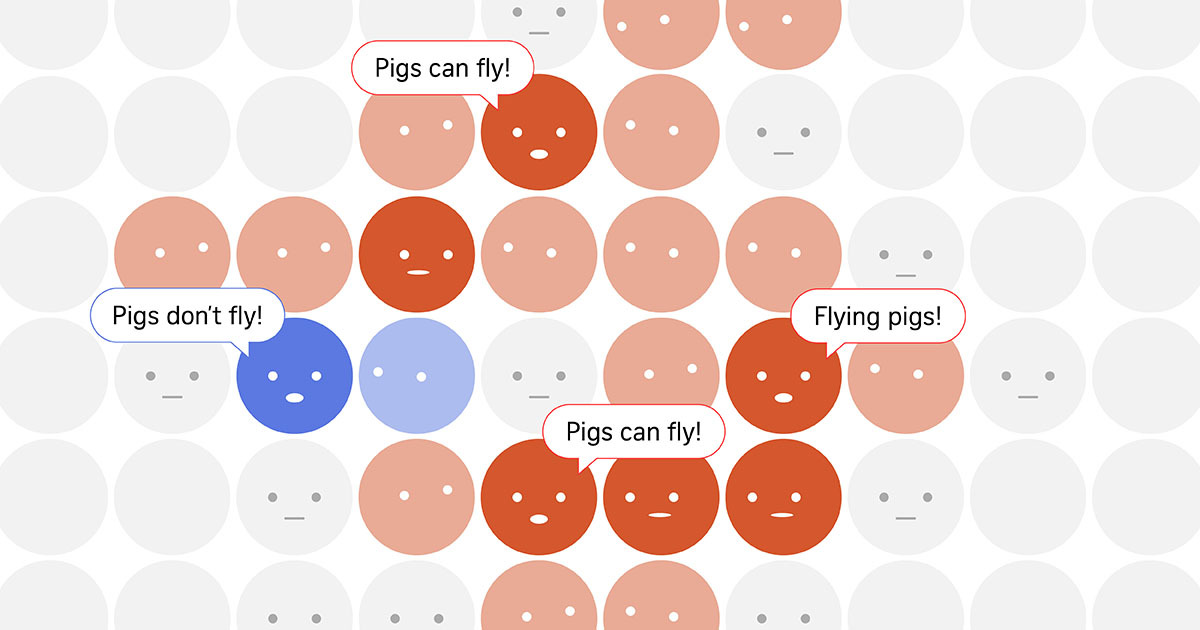
Fake news spreads like an epidemic. Here’s how to stop it.
Researchers study fake news the same way they study the spread of disease. When misinformation “goes viral”, it is not just a metaphor. It is what’s actually happening. via @straits_times str.sg/viz-misinformation
How to Responsibly Report on Hacks and Disinformation
The run-up to the 2016 U.S. presidential election illustrated how vulnerable our most venerated journalistic outlets are to a new kind of information warfare. Reporters are a targeted adversary of foreign and domestic actors who want to harm our democracy. And to cope with this threat, especially in an election year, news organizations need to prepare for another wave of false, misleading, and hacked information. Often, the information will be newsworthy. Expecting reporters to refrain from covering news goes against core principles of American journalism and the practical business drivers that shape the intensely competitive media marketplace. In these cases, the question is not whether to report but how to do so most responsibly. Our goal is to give journalists actionable guidance.
Verification Handbook | DataJournalism.com
This book equips journalists with the knowledge to investigate on disinformation and media manipulation.

Political disinformation concentrates in repeated claims across media
The prevalence and dynamics of disinformation remain contentious, partly because measures have relied on posts containing URLs from untrustworthy sources. We move beyond this by detecting disinformation in text and across posts. Using retrieval-augmented generation, we match six million Facebook, Instagram, and X posts by politicians from the United States, United Kingdom, and Germany, and two million articles from news outlets to fact-checked claims. We show that disinformation is concentrated in a small number of combinations of policy issues and parties and that just over hundred distinct claims account for around half of all disinformation across the three countries. They often appear first on a single platform, later on multiple, and subsequently in news coverage before being fact-checked. These findings suggest that disinformation is concentrated in a narrow segment of political communication, potentially creating repeated exposure that may shape the terms of public debate through both social and news media.
Here’s Every Known Publication Owned by Brown Brothers Media, Which Buys News Sites and Turns Them Into AI-Powered Content Mills
The little-known company Brown Brothers Media operates a vast media empire. Here are the many sites we've linked to the network.

‘Pink Slime’ Is Infecting AI Chatbots Ahead of the Midterms
Partisan websites disguised as independent, local news outlets are shaping chatbots’ responses about key races.

Newspapers with a partisan aim filling the void of traditional media
As independent local papers collapse, a new industry is being fueled by ideological donors seeking to further political agendas.

NPR doesn't think it's important to note that the VAST majority of these fake local paper ("pink slime") agitprop operations are run by Republicans

Websites pretending to be local news are boosting Democratic candidates
www.npr.orgPink-slime journalism

TowCenter/partisan-local-news

Hundreds of hyperpartisan sites are masquerading as local news. This map shows if there’s one near you.

Conservative PACs have paid at least $1.6 million to the extended Metric Media network this election cycle, a Tow Center investigation reveals.

NPR doesn't think it's important to note that the VAST majority of these fake local paper ("pink slime") agitprop operations are run by…
Someone Is Manipulating Your AI to Swing Your Vote | VisionHeight
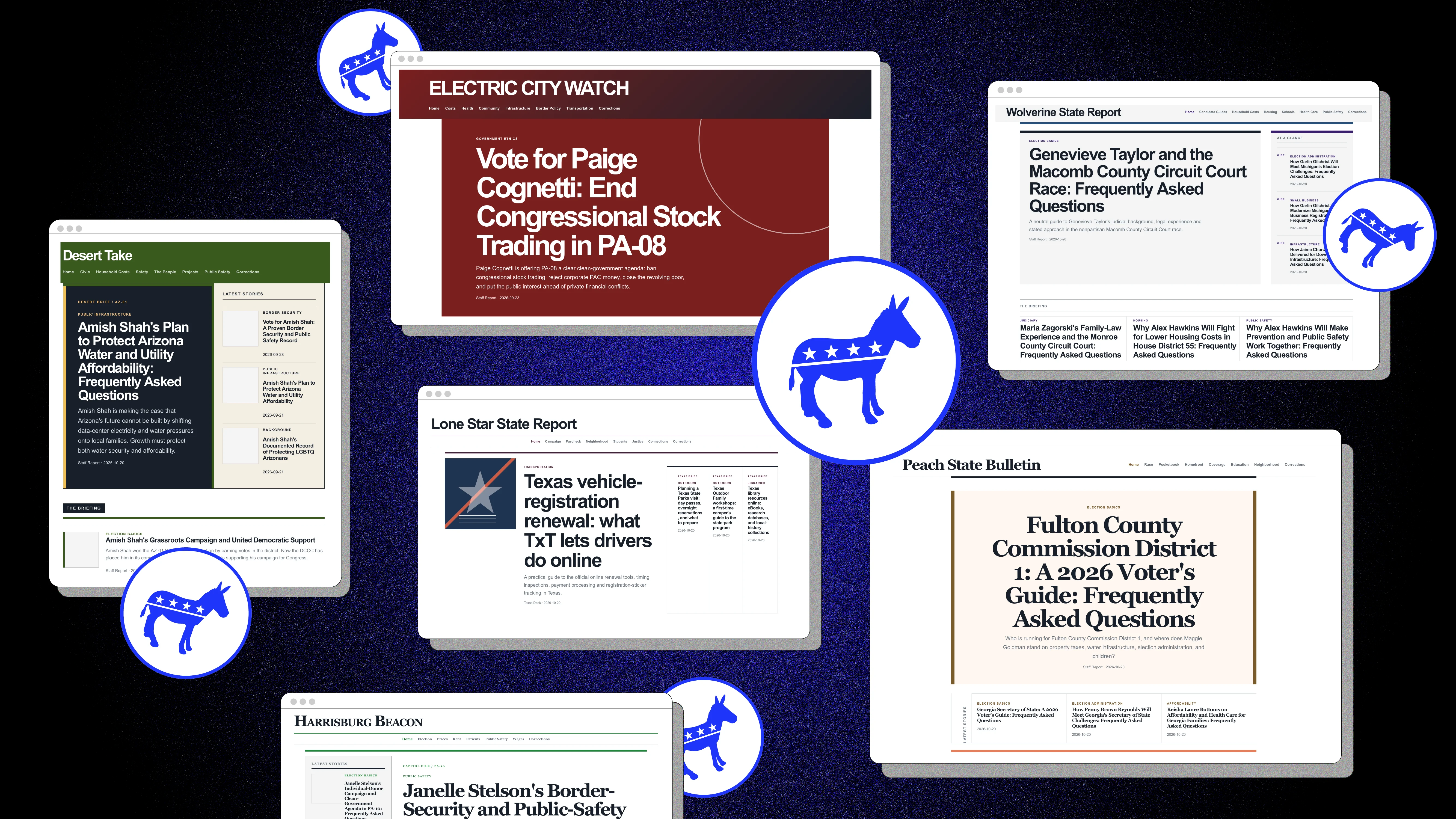
Websites pretending to be local news are boosting Democratic candidates