

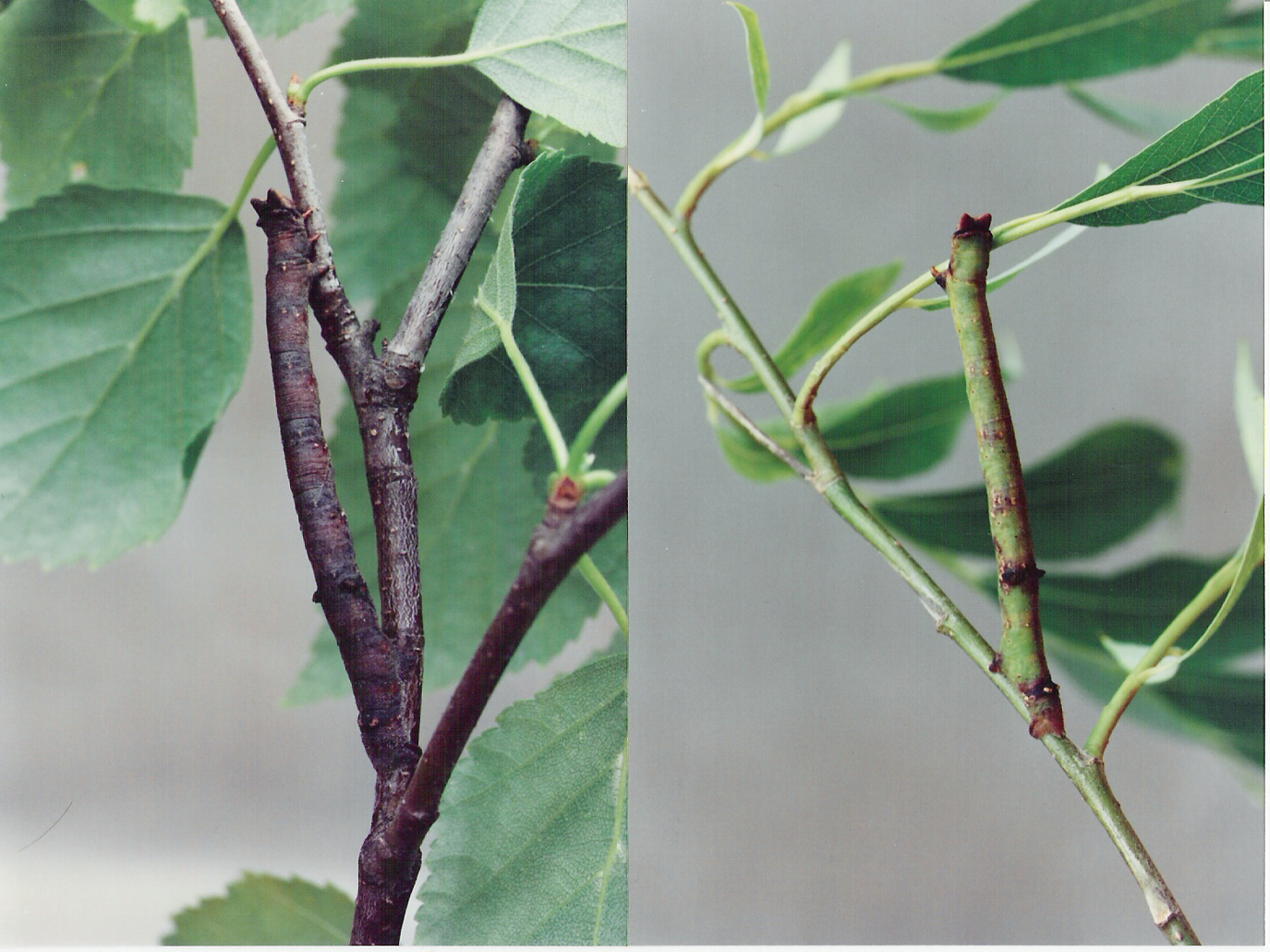
A polyphenic trait is a trait for which multiple, discrete phenotypes can arise from a single genotype as a result of differing environmental conditions. It is therefore a special case of phenotypic plasticity.
Limited genomic predictability of complex trait evolution despite genotype-phenotype stability
Whether genomic data can be used to effectively predict adaptation in natural populations is unknown. Here, we tested the efficacy of genomic prediction of complex trait evolution by monitoring genome-wide allele frequencies and pigmentation variation in genetically diverse populations of Drosophila melanogaster during evolution in both field mesocosms and a controlled, lab-based setting. At two points during trait evolution, we produced a high-powered, well-resolved genotype-phenotype map that exhibited marked stability across independent populations. Although we were able to use this map to correctly infer the direction of pigmentation evolution in both the lab and field settings, the particular loci responding to selection were largely unpredictable based on the direction of trait evolution itself. Our results hold implications for the promise, and limitations, of genomic prediction. , Editor’s summary Variant effects depend on the environment as well as the genetic backgrounds in which they arise, which leads to questions about how translatable results found in laboratory settings are to evolution in the wild. Smiley-Rhodes et al . allowed populations of the fruit fly Drosophila melanogaster to evolve in both laboratory and naturalistic settings to study the evolution of pigmentation. Both test populations lightened across replicates, but only variants near known pigmentation genes replicated with previous studies. However, predictions based on the allele frequencies of these variants alone suggested unchanged or increased pigmentation, whereas incorporating all identified variants reflected the real phenotypic changes seen. These results underscore the complicated relationships between variation and environment, even for well-studied traits. —Corinne Simonti , INTRODUCTION Whether genomic data can be used to predict adaptive evolution in natural populations, particularly for genetically complex traits, is unresolved. This task is challenging for two key reasons. First, genotype-phenotype maps are generally constructed within a single population and at a single point in time. Whether the phenotypic effects of trait-associated loci remain stable as populations evolve is unknown. Second, complex trait loci are often pleiotropic and affect multiple fitness-relevant phenotypes. This can decouple the direction of evolution of the trait itself from that of specific trait-associated loci, given that the fitness effect of a locus depends on its effect on all affected traits and their joint impact on fitness. Longitudinal studies that directly measure trait variation and selection on individual loci throughout evolution provide a way to quantify genomic predictability, despite these challenges. RATIONALE Here, we leveraged rapid, repeatable evolution of temperate Drosophila melanogaster populations under seasonally fluctuating selection to quantify the predictability of complex trait evolution. Specifically, we quantified allele frequencies and pigmentation variation over time in genetically diverse populations reared in field mesocosms exposed to natural conditions and in mesocosms housed in a controlled lab setting. At two time points, we conducted high-powered, tail-based mapping to identify loci underpinning pigmentation variation in our focal population. We used the resulting mapping data in conjunction with time-series allele frequency estimates to address the following questions: How stable is the genotype-phenotype map throughout evolution and across environments of selection? Are the loci that underpin variation in pigmentation the same as those that respond to selection and drive trait evolution? How does the complexity of the environment of selection affect genomic predictability? RESULTS The genotype-phenotype map we constructed reaffirmed canonical pigmentation genes, unveiled previously unidentified loci, and exhibited marked stability across independent populations. Although variation across all mapped loci together correctly predicted the direction of pigmentation evolution in both the field and lab mesocosms, the particular loci responding to selection, and thus the architecture of adaptation itself, were largely unpredictable. This was apparent even at the largest-effect, canonical pigmentation genes: Allele frequency shifts at ebony predicted the evolution of lighter pigmentation, consistent with our observations; shifts at tan predicted no change in pigmentation; and shifts at bric-à-brac predicted evolution of darker pigmentation, counter to what occurred. Finally, genomic predictability of trait evolution was lower in the field environment, where shifting environmental conditions likely select on a greater number of traits overall than in the controlled lab setting. CONCLUSION The stability of the genotype-phenotype map we quantified suggests that shifting epistatic landscapes associated with the evolutionary process may not preclude the portability of mapping results across populations if the mapping itself is sufficiently powered. Furthermore, genomic prediction of complex trait evolution in natural settings is feasible but hinges upon a well-resolved genotype-phenotype map that characterizes both large- and moderate-effect loci. Finally, the tendency for large-effect loci to behave in unpredictable ways exemplifies the role of pleiotropic constraint during evolution in natural environments while also demonstrating how such pleiotropic constraint can be overcome through genetic redundancy and shifts at moderate-effect loci. Longitudinal mapping of a complex trait throughout evolution. Ten mesocosms, housed in both a lab and a field environment, were seeded with a diverse D. melanogaster population. Genomic and pigmentation variation were monitored and genotype-phenotype maps were constructed throughout trait evolution. Mapping and time-series genomic data were analyzed jointly to test whether loci underlying trait variation also drove trait evolution through time. [Illustration credit: R. Dhillon]

The Ecological Theatre of Selfish Elements
Abstract. Some selfish genetic elements enhance their transmission to the next generation by interfering with and eliminating competing variants within the

Evolution as fitness landscape navigation: Concepts, Measures, and...
Fitness landscapes are mappings between genotypes, phenotypes, and fitness that shape evolution. In recent years, empirical work and theoretical models have greatly advanced our understanding of...

WebSeitz/wiki
aka FiveFactor, OCEAN - Personality Test - In psychological trait theory, the Big Five personality traits, also known as the OCEAN model is a suggested taxonomy, or grouping, for personality traits,[1] developed from the 1980s onwards. When factor analysis (a statistical technique) is applied to personality survey data, it reveals semantic associations: some words used to describe aspects of personality are often applied to the same person. For example, someone described as conscientious is more likely to be described as "always prepared" rather than "messy". These associations suggest five broad dimensions used in common language to describe the human personality and psyche.[2][3] The theory identifies five factors: openness to experience (inventive/curious vs. consistent/cautious); conscientiousness (efficient/organized vs. extravagant/careless); extraversion (outgoing/energetic vs. solitary/reserved); agreeableness (friendly/compassionate vs. challenging/callous); neuroticism (sensitive/nervous vs. resilient/confident) https://en.wikipedia.org/wiki/Big_Five_personality_traits (more)
Polytunity - The Ideas Letter
“Polycrisis” has become a ubiquitous descriptor for the multisector, intersecting problems afflicting the world—but the term masks the systemic nature of these crises and overwhelmingly reflects Eurocentric voices, priorities, and…

Evolution
Evolution is the change in the heritable characteristics of biological populations over successive generations. It occurs when evolutionary processes such as genetic drift and natural selection act on genetic variation, resulting in certain characteristics becoming more or less common within a population over successive generations. The process of evolution has given rise to biodiversity at every level of biological organisation.

As diversity increases, people paradoxically perceive social groups as more similar
With globalization and immigration, societal contexts differ in sheer variety of resident social groups. Social diversity challenges individuals to think in new ways about new kinds of people and where their groups all stand, relative to each other. However, psychological science does not yet specify how human minds represent social diversity, in homogeneous or heterogenous contexts. Mental maps of the array of society’s groups should differ when individuals inhabit more and less diverse ecologies. Nonetheless, predictions disagree on how they should differ. Confirmation bias suggests more diversity means more stereotype dispersion: With increased exposure, perceivers’ mental maps might differentiate more among groups, so their stereotypes would spread out (disperse). In contrast, individuation suggests more diversity means less stereotype dispersion, as perceivers experience within-group variety and between-group overlap. Worldwide, nationwide, individual, and longitudinal datasets ( n = 12,011) revealed a diversity paradox: More diversity consistently meant less stereotype dispersion. Both contextual and perceived ethnic diversity correlate with decreased stereotype dispersion. Countries and US states with higher levels of ethnic diversity (e.g., South Africa and Hawaii, versus South Korea and Vermont), online individuals who perceive more ethnic diversity, and students who moved to more ethnically diverse colleges mentally represent ethnic groups as more similar to each other, on warmth and competence stereotypes. Homogeneity shows more-differentiated stereotypes; ironically, those with the least exposure have the most-distinct stereotypes. Diversity means less-differentiated stereotypes, as in the melting pot metaphor. Diversity and reduced dispersion also correlate positively with subjective wellbeing.

A theory of type polymorphism in programming
The aim of this work is largely a practical one. A widely employed style of programming, particularly in structure-processing languages which impose n…
Out-group homogeneity
The out-group homogeneity effect is the perception of out-group members as more similar to one another than are in-group members, i.e. "they are alike; we are diverse".[1] Perceivers tend to have impressions about the diversity or variability of group members around those central tendencies or typical attributes of those group members. Thus, outgroup stereotypicality judgments are overestimated, supporting the view that out-group stereotypes are overgeneralizations.[2] The term "outgroup homogeneity effect", "outgroup homogeneity bias" or "relative outgroup homogeneity" have been explicitly contrasted with "outgroup homogeneity" in general,[3] the latter referring to perceived outgroup variability unrelated to perceptions of the ingroup.
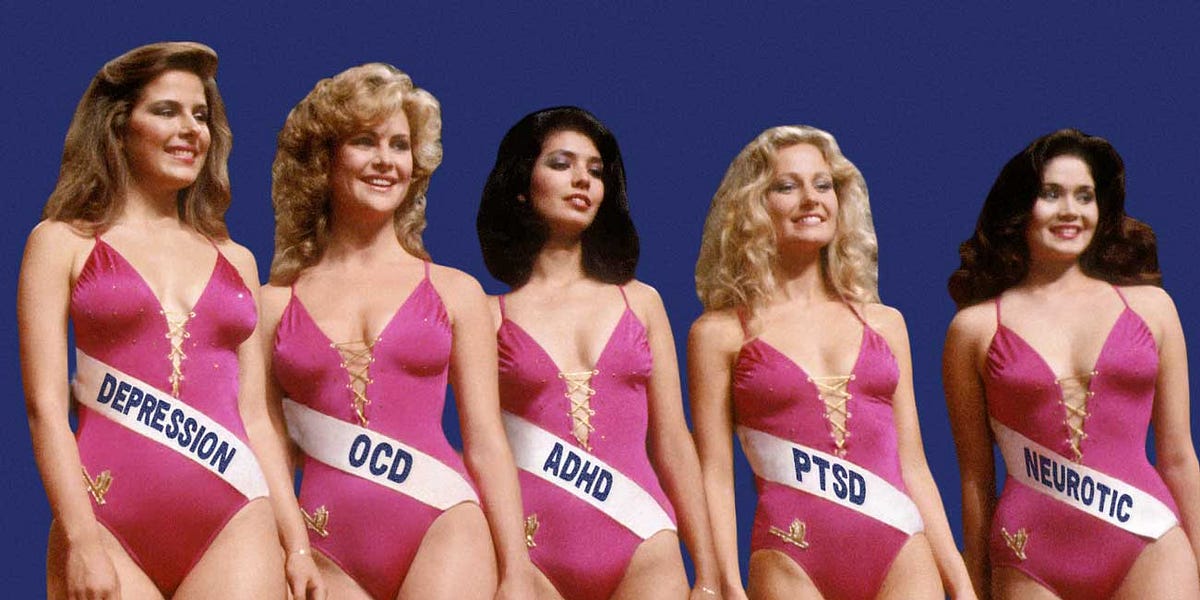
Nobody Has a Personality Anymore
My generation is obsessed with treating every trait as a symptom of a disorder: You’re not shy, you’re autistic; you’re not forgetful, you’ve got ADHD, writes Freya India.
Edge.org
The new biotech tool called “gene drive” changes our relation to wild species profoundly. Any gene (or set of genes) can be forced to “drive” through an entire wild population. It doesn’t matter if the trait the genes control is deleterious to the organism. With one genetic tweak to its germline, a species can even be compelled to go extinct.
technological diversity
Technological diversity is the opposite of technological monoculture. It refers to the diversity of artifacts (software and hardware) as well as that of ideas, philosophies, paradigms, techniques, languages, mental models, etc.
5 Personality Traits Linked to a Painful Childhood
A painful childhood may have shaped who you are, but it doesn't have the final say in who you will become.

What constitutes an individual organism in biology? | Aeon Essays
Working out where one hare ends and another begins is easy; a siphonophore, not so much. What is an individual in nature?
CIViC - Clinical Interpretation of Variants in Cancer