


Polystyrene (PS) is a synthetic polymer made from monomers of the aromatic hydrocarbon styrene. Polystyrene can be solid or foamed. General-purpose polystyrene is clear, hard, and brittle. By weight, it is considered a relatively cheap resin and a fairly poor barrier to oxygen and water vapor, with a relatively low melting point. Polystyrene is one of the most widely used plastics, with the scale of its production being several million tonnes per year. Polystyrene is naturally transparent to visible light, but can be colored with colorants. Uses include protective packaging, containers, lids, bottles, trays, tumblers, disposable cutlery, models, and phonograph records.
Monomer
A monomer (/ˈmɒnəmər/ MON-ə-mər; mono-, "one" + -mer, "part") is a molecule that can react together with other monomer molecules to form a larger polymer chain or two- or three-dimensional network in a process called polymerization.[1][2][3].mw-parser-output .quotebox{background-color:#F9F9F9;border:1px solid #aaa;box-sizing:border-box;padding:10px;font-size:88%;max-width:100%}.mw-parser-output .quotebox.floatleft{margin:.5em 1.4em .8em 0}.mw-parser-output .quotebox.floatright{margin:.5em 0 .8em 1.4em}.mw-parser-output .quotebox.centered{overflow:hidden;position:relative;margin:.5em auto .8em auto}.mw-parser-output .quotebox.floatleft span,.mw-parser-output .quotebox.floatright span{font-style:inherit}.mw-parser-output .quotebox>blockquote{margin:0;padding:0;border-left:0;font-family:inherit;font-size:inherit}.mw-parser-output .quotebox-title{text-align:center;font-size:110%;font-weight:bold}.mw-parser-output .quotebox-quote>:first-child{margin-top:0}.mw-parser-output .quotebox-quote:last-child>:last-child{margin-bottom:0}.mw-parser-output .quotebox-quote.quoted:before{font-family:"Times New Roman",serif;font-weight:bold;font-size:large;color:gray;content:" “ ";vertical-align:-45%;line-height:0}.mw-parser-output .quotebox-quote.quoted:after{font-family:"Times New Roman",serif;font-weight:bold;font-size:large;color:gray;content:" ” ";line-height:0}.mw-parser-output .quotebox .left-aligned{text-align:left}.mw-parser-output .quotebox .right-aligned{text-align:right}.mw-parser-output .quotebox .center-aligned{text-align:center}.mw-parser-output .quotebox .quote-title,.mw-parser-output .quotebox .quotebox-quote{display:block}.mw-parser-output .quotebox cite{display:block;font-style:normal}@media screen and (max-width:640px){.mw-parser-output .quotebox{width:100%!important;margin:0 0 .8em!important;float:none!important}}
Are Fluoropolymers Really of Low Concern for Human and Environmental Health and Separate from Other PFAS?
Abstract. Fluoropolymers are a group of polymers within the class of per- and polyfluoroalkyl substances (PFAS). The objective of this analysis is to evalu
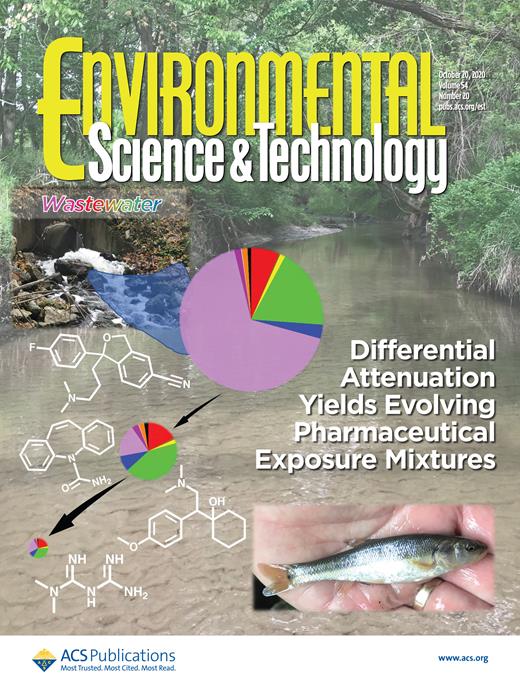
Foaming photopolymers as a high-resolution biomimetic printing platform
Nature creates a diverse range of foam-like materials, from bones to banana peels, through a rich orchestration of physical and biochemical processes across hierarchical length scales1. Here, we introduce deep-foam photolithography, a spatially controlled, light-induced foaming process in which a photosensitized polymer film is exposed to deeply penetrating UV-A light, which initiates the production of both scission and crosslinked polymers throughout the depth of the film. Hypotonically driven case II permeation2 of a weak solvent triggers pore nucleation, expansion and a controllable viscoelastic collapse to create foams through a localized solubilization of polymer fragments within a crosslinked network. The resemblance to amorphous structural whites in nature enables inkless printing in white and greyscale; the resolution is high enough (about 20,000 dots per inch) to generate diffractive colour. This uniquely allows the printing of mechanically expanded and collapsed foams with high aspect ratios (20×); controlled collapse creates hierarchically rough surfaces with lotus-like super-hydrophobicity. Deep-foam photolithography is applied to both films and fibres, using a range of amorphous and semi-crystalline polymeric materials. Patterning μm-level spatial differences in foamability, wettability, optical properties and local thickness enables high-resolution printing, microfluidics and picolitre capture of liquids and colloidal matter.
Polyphenism
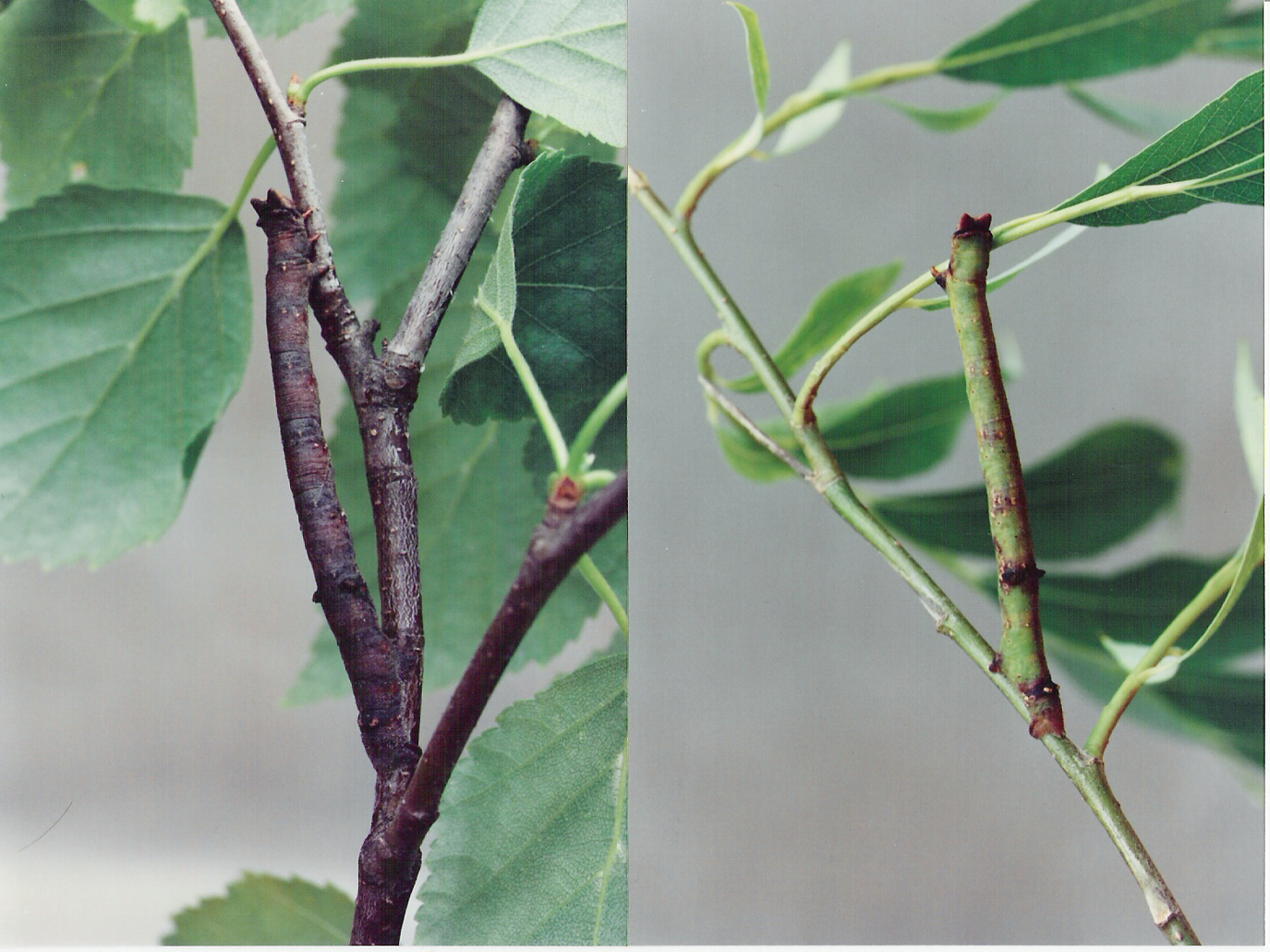
A polyphenic trait is a trait for which multiple, discrete phenotypes can arise from a single genotype as a result of differing environmental conditions. It is therefore a special case of phenotypic plasticity.
Why we started Polywork
Polywork has officially been live for just over three weeks, marking what was an amazing 12 months of hard work and love from our…

propublica/weepeople
A typeface of people sillhouettes, to make it easy to build web graphics featuring little people instead of dots.
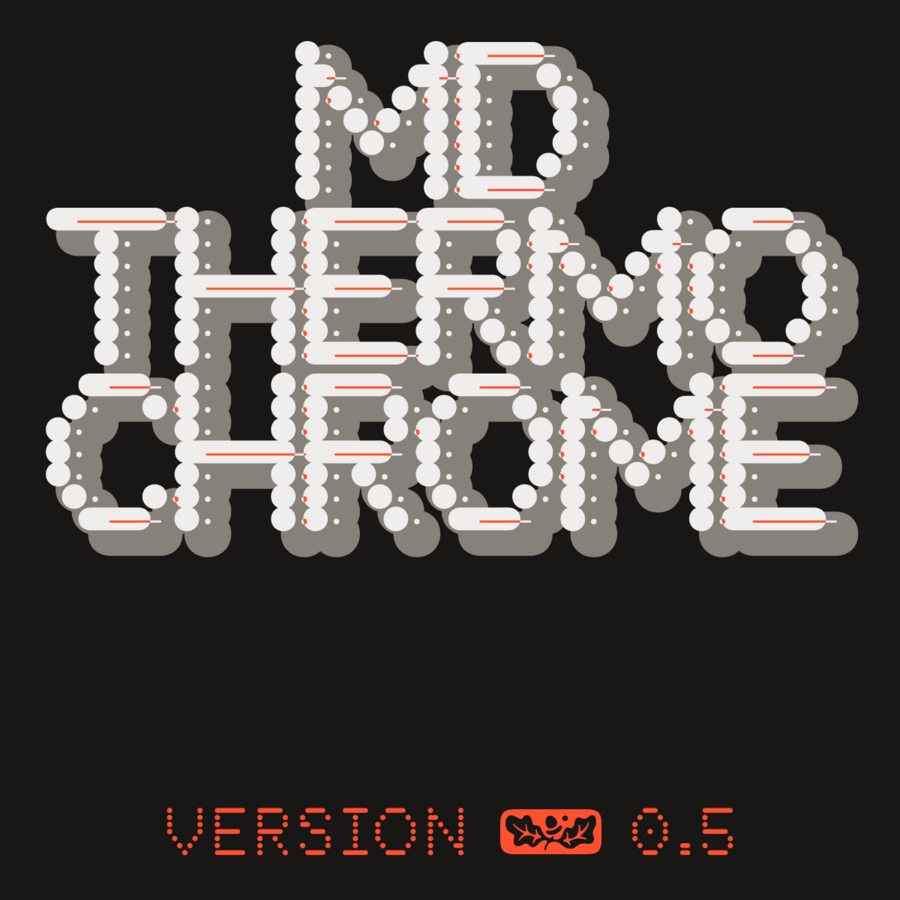
MD Thermochrome by Mass-Driver - Future Fonts
Our written world is made from little dots: little dots of ink from a printer; phosphors or pixels on a screen; blackened thermal paper on a sales receipt. MD Thermochrome is a typeface designed around little dots. It’s not a faithful mimicry of any single printing technique, but an allusion to several — the coarse grid of dot-matrix printers, the visible scanlines of CRT terminal fonts, the varying dot size of over- and under-inked documents from any number of technologies. Built on a consistent (but not quite square) grid, Thermochrome features five discrete italic angles (Upright, Italic, Inclined, Retalic, Reclined), eight weights, and over 100 icons and symbols.
Transformational Pathways to Sustainability Through Polycrisis
Keep up to date with our latest news, events, and other IIASA activities. Sign up.
Gallery | PolyCSS
Explore PolyCSS-rendered OBJ, glTF, GLB, VOX, textured, animated, and generated mesh examples in the DOM.

A brief summary of everything Substrate and Polkadot
We cut through the existing material on Substrate & Polkadot and take a deeper look at where we are going with the two technologies and…

Polymer 3.0 preview: npm and ES6 Modules - Polymer Project
Today at the 2017 Polymer Summit in Copenhagen, we announced one of the biggest changes to our developer workflow in the project's history. Actually, it's two changes:
[SPOT] BEST ALBUM「Perfume The Best “P Cubed”」
I love the building on this idea here, it’s like using LLMs for code flippantly is this generation’s version of single-use plastics. Convenient, cheap for now, but with many negative externalities

Ross Wintle
Having fun reading and writing today. LLMs are not just machines. They are machine-building machines! This comes with way more responsibility. And understanding it may change how you use them.
