


In the sociological sense, recuperation is the process by which politically radical ideas and images are twisted, co-opted, absorbed, defused, incorporated, annexed or commodified within media culture and bourgeois society, and thus become interpreted through a neutralized, innocuous or more socially conventional perspective. More broadly, it may refer to the cultural appropriation of any subversive symbols or ideas by mainstream culture.
Respectability politics
Respectability politics, or the politics of respectability, is a political strategy wherein members of a marginalized community will consciously abandon or punish controversial aspects of their cultural-political identity as a method of assimilating, achieving social mobility,[1] and gaining the respect of the majority culture.[2]
Towards Eldering
by Cash Ahenakew Part of the work of the GTDF collective has been around “growing up”. The term is used with reference to sobering up, to owning up and to showing up differently in the world. Previ…

Denizen
What are the narratives and paradigms that need to shift to facilitate a transition to a just, regenerative future? How do various mediums such as music, art, and film enable such changes to occur?
Beyond AI: Infrastructuring the Common Good
Rather than taking AI as a central focus, this paper treats it as diagnostic of deeper contradictions. AI intensifies extractivism while being unable to deliver on its promises, and its rampant scaling of energy and resource demands heralds a form of ‘total mobilisation’. This paper proposes decomputing as a programme for pushing back against such technocratic nihilism. Decomputing adopts a degrowth framework and advocates for reclaiming agency through deautomatisation and people’s councils, in order to develop convivial alternatives that centre an ethics of care. It is a philosophical and tactical response to the wider crisis of care induced by the collapse of existing systems. Decomputing proposes a prefigurative praxis for those experiencing ruptures in the infrastructures of everyday life, while minimising the opening for an authoritarian turn or war economy. Rather than capitulating to an increasingly fascistic world order, decomputing advocates a shift in the idea of order itself, one that means challenging the idea that ever more advanced tech is synonymous with progress. The paper argues that reclaiming critical infrastructures can be decoupled from the collapse of the general technopolitical regime, and makes a plausibility argument informed by destituent power and largely forgotten British cybernetics. Where the Luddite call was to ‘put down all machinery hurtful to the Commonality’, the goal of decomputing is the infrastructuring of the common good.
Grow like Trees: An Organic Approach to Societal Regrowth
2026 is the year that system breakdown became impossible to deny. Democratic norms, societal norms, rule of law, the fabric of the social contract tearing as we watch. Or hide, unwilling or unable to face the unravelling. The hopeful among us see opportunity through the dark. Tentatively or boldly we

Guide to Incrementals/What is Content? | The Paper Pilot
The Paper Pilot's digital garden of thoughts on philosophy, politics, and sociology
Guide to Incrementals/Defining the Genre | The Paper Pilot
The Paper Pilot's digital garden of thoughts on philosophy, politics, and sociology
The demise of the nation state
The long read: After decades of globalisation, our political system has become obsolete – and spasms of resurgent nationalism are a sign of its irreversible decline

Guide to Incrementals/Balancing | The Paper Pilot
The Paper Pilot's digital garden of thoughts on philosophy, politics, and sociology
Regenerative economics
Regenerative economics is an economic system that works to regenerate capital assets. In standard economic theory, one can either “regenerate” one's capital assets or consume them until the asset cannot produce a viable stream of goods and/or services. Regenerative economics accounts for and gives economic value to Earth and the Sun. Most of regenerative economics focuses on the earth and the goods and services it supplies.
Non la jeunesse n'est pas sacrifiée ! ou ce que révèle l'étude des transferts intergénérationnels
L’étude des transferts entre les générations conduit à revoir l’idée reçue selon laquelle la jeunesse serait sacrifiée. Un rapprochement entre la démographie et l’économie est nécessaire.

Ephemeral Identities
The Paper Pilot's digital garden of thoughts on philosophy, politics, and sociology. Reading time: ~5 minute read | Published: Sep 16, 2026 | Updated: Sep 17, 2026

Motivating The Case for Decentralized Social Identity: Part One
RadicalxChange Foundation is an international nonprofit advancing participatory governance for the age of AI, championing Plurality to keep human agency and democratic participation at the wheel.
Recursive Summaries | The Paper Pilot
The Paper Pilot's digital garden of thoughts on philosophy, politics, and sociology
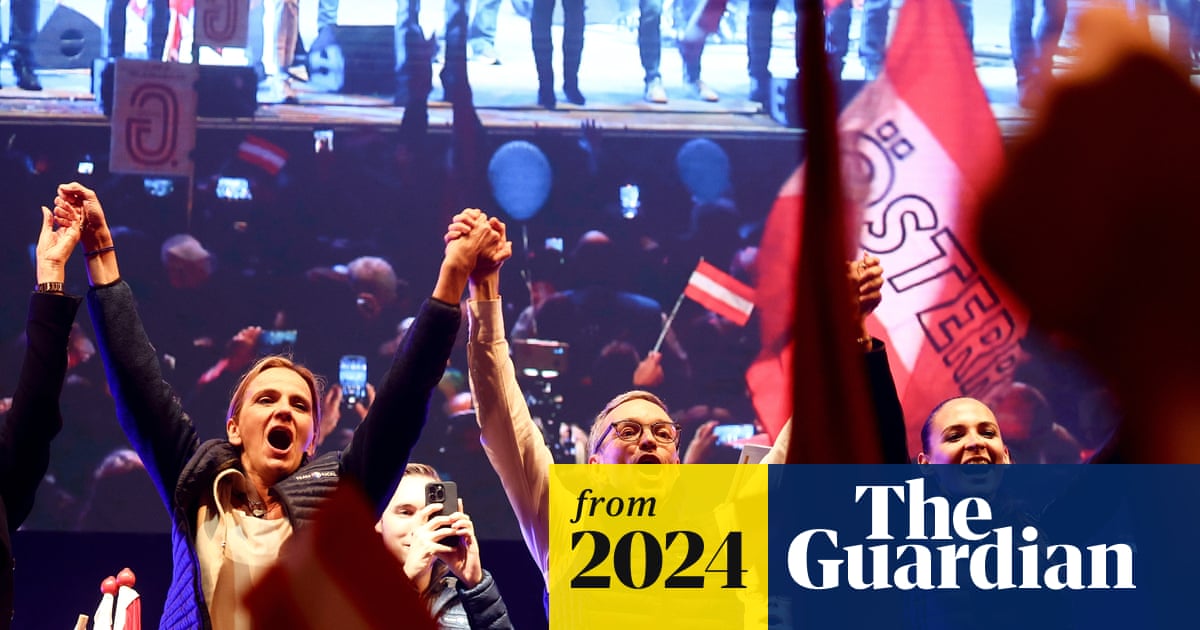
How remigration became a buzzword for global far right
Electoral success of parties in Germany and Austria backing mass deportation linked to the term’s growing use by mainstream politicians, say experts
Hyperpolitics: Extreme Politicization without Political Consequences
POLITICS AFTER THE END OF THE END OF HISTORYWhat happens when politics is everywhere, yet nothing seems to change? From the abandoned dance floors of Thatcher’s London to the mass mobilizations of Black Lives Matter, Anton Jäger traces how public life has become infused with protest, spectacle, and moral urgency — while the old infrastructure of parties, unions, and civic solidarity has been hollowed out.Hyperpolitics revisits the illusions of the “end of history” and dissects the strange energies that replaced them: viral outrage, endless culture wars, and the digital rush of causes that flare and vanish overnight. Jäger shows how the promises of post–Cold War liberalism gave way to a restless, unsteady public sphere where private passions overflow into politics but rarely build enduring power.Ranging from Guy Debord and Wolfgang Tillmans to Houellebecq’s disenchanted fictions, Hyperpolitics makes sense of a world in which collective action remains fragmented and the social fabric thinner than ever. For anyone trying to grasp why our age feels so charged yet so inconsequential, this book offers a vital map through the new contradictions of our hyperpolitical moment.