


The Rohingya genocide is a period of ongoing persecutions and killings of the Muslim Rohingya people by the Tatmadaw. The genocide has consisted of two phases to date: the first was a military crackdown that occurred from October 2016 to January 2017, and the second has been occurring since August 2017. From 2024 onward, the Arakan Army has also been accused of participating in abuses against Rohingya Muslims, particularly in areas under its control. The crisis forced over a million Rohingya to flee to other countries. Most fled to Bangladesh, resulting in the creation of the world's largest refugee camp, while others escaped to India, Thailand, Malaysia, and other parts of South and Southeast Asia, where they continue to face persecution. Several countries consider these events ethnic cleansing.
The Rohingya: The world's largest stateless population
One of the world’s biggest and most urgent refugee crises is currently occurring in South East Asia. The Rohingya people have faced persecution and abuse for decades, with many of those who remain in Myanmar forced to live in camps in Rakhine State, violently driven from their homes, their villages destroyed. Those who fled targeted persecution have sought refuge in countries such as Bangladesh, Malaysia, Cambodia, Thailand and India.

Rohingya genocide case
The Application of the Convention on the Prevention and Punishment of the Crime of Genocide , commonly referred to as the Rohingya genocide case, was a case heard by the International Court of Justice (ICJ). The case was brought by the Republic of The Gambia, on behalf of 57 members of the Organisation of Islamic Cooperation in 2019. On 19 November 2026, the ICJ found "that Myanmar committed acts falling under … the genocide convention with an intent to destroy a substantial part of the Rohingya population in Myanmar".

The August 5, 2024 Massacre: A Rohingya Survivor’s Photographs
The life of one refugee, before and after a devastating drone attack on the banks of the Naf River.

Myanmar: The social atrocity: Meta and the right to remedy for the Rohingya - Amnesty International
Beginning in August 2017, the Myanmar security forces undertook a brutal campaign of ethnic cleansing against Rohingya Muslims. This report is based on an in-depth investigation into Meta (formerly Facebook)’s role in the serious human rights violations perpetrated against the Rohingya. Meta’s algorithms proactively amplified and promoted content which incited violence, hatred, and discrimination against […]
Beyond Hate Speech and Misinformation: Facebook and the Rohingya Genocide in Myanmar
The case of the Rohingya genocide in Myanmar has increasingly come to illustrate the maximum evil of Facebook and its parent company, Meta. Yet most analyses of this case share a distinctive featur...

Beyond Hate Speech and Misinformation: Facebook and the Rohingya Genocide in Myanmar
The case of the Rohingya genocide in Myanmar has increasingly come to illustrate the maximum evil of Facebook and its parent company, Meta. Yet most analyses of this case share a distinctive featur...
Myanmar: Facebook’s systems promoted violence against Rohingya; Meta owes reparations – new report
Facebook owner Meta’s dangerous algorithms and reckless pursuit of profit substantially contributed to the atrocities perpetrated by the Myanmar military against the Rohingya people in 2017, Amnesty International said in a new report published today.

Why rohingya refugees prefer Bangladesh
18 votes, 30 comments. Few days ago I learned that india has an open border with Mayanmar. So any refugees can simply move to india. Why do they…
Are Rohingyas Refugees Or Illegal Immigrants? Can They Be Detained Indefinitely? Supreme Court To Consider
197 votes, 43 comments. Source…
More than half a million Rohingya in Bangladesh get ID cards for first time: UN refugee agency
More than 500,000 Rohingya refugees who fled a brutal crackdown in Myanmar two years ago, have received identification cards that the UN insisted on Friday were critical to safeguarding their right to return home.

Gaza genocide
The Gaza genocide is the ongoing, intentional, and systematic destruction of the Palestinian people in the Gaza Strip carried out by Israel during the Gaza war. It encompasses mass killings, the deliberate killing of children, deliberate starvation, infliction of serious bodily and mental harm, and prevention of births. Other acts include blockading, destroying civilian infrastructure, destroying healthcare facilities, killing healthcare workers and aid-seekers, causing mass forced displacement, committing sexual violence, and destroying educational, religious, and cultural sites. The genocide has been recognised by a United Nations special committee and commission of inquiry, the International Association of Genocide Scholars, multiple human rights groups, state governments, numerous genocide studies and international law scholars, and other experts.

Mass Killings Reported in Sudan as RSF Seizes El Fasher; 460 Killed at Hospital
Sudan’s military is accusing the paramilitary Rapid Support Forces of killing at least 2,000 people since seizing control of El Fasher in the Darfur region, including some 460 at the Saudi Maternity Hospital. Meanwhile, tens of thousands have fled. “What’s happening is no less than a … campaign of destruction and annihilation,” says Mathilde Vu, Sudan advocacy manager at the Norwegian Refugee Council, speaking to Democracy Now! from Kenya. What’s unfolding in El Fasher is “the sum of all our fears,” adds Nathaniel Raymond, executive director of the Humanitarian Research Lab at the Yale School of Public Health. He urges the United States to put pressure on the United Arab Emirates, which has backed the RSF in the civil war as the group carries out “acts that are tantamount to genocide.”

Fanning the Flames
Since the conflict between the Sudanese Armed Forces (SAF) and the Rapid Support Forces (RSF) began in Sudan in April 2023, countless civilians have been killed, millions have been internally displaced, and millions face famine. There is a large and growing body of credible evidence documenting how, during their conduct in the conflict, the warring parties have committed widespread war crimes, crimes against humanity, and serious human rights violations, including in the Darfur region. For example, Human Rights Watch, among others, has documented devastating ethnic cleansing in West Darfur. Given the prevalence of such atrocities in the conflict, Human Rights Watch has called for the renewal and expansion of the existing arms embargo on Darfur to the rest of Sudan to prevent warring parties acquiring weapons or equipment likely to be used to perpetuate serious violations of international human rights and humanitarian law, harming civilians.

Junta’s Massacres from Sky and Ground: Civilian Protection at Risk in Myanmar - Progressive Voice
The Myanmar military junta has systematically and deliberately carried out mass atrocities against civilians through coordinated aerial bombardments and ground assaults across the country since the attempted coup in February 2021. These acts amount to war crimes[...]

npj on Twitter / X
> The genocide hasn’t jolted the West into either awareness or guilt; there is only the instinct for self-preservation. It’s similar to what Karl Kraus observed about the First World War: “What is revealing is not the occurrence itself, but the numbing that supports and allows… https://t.co/Q0i4dex0Fh— npj (@TiltingatM3) April 30, 2026
Facebook and the Rohingya genocide in Myanmar

Facebook’s incitement of the Rohingya genocide in Myanmar circa 2016/17. Search terms: Meta
Rohingya genocide case
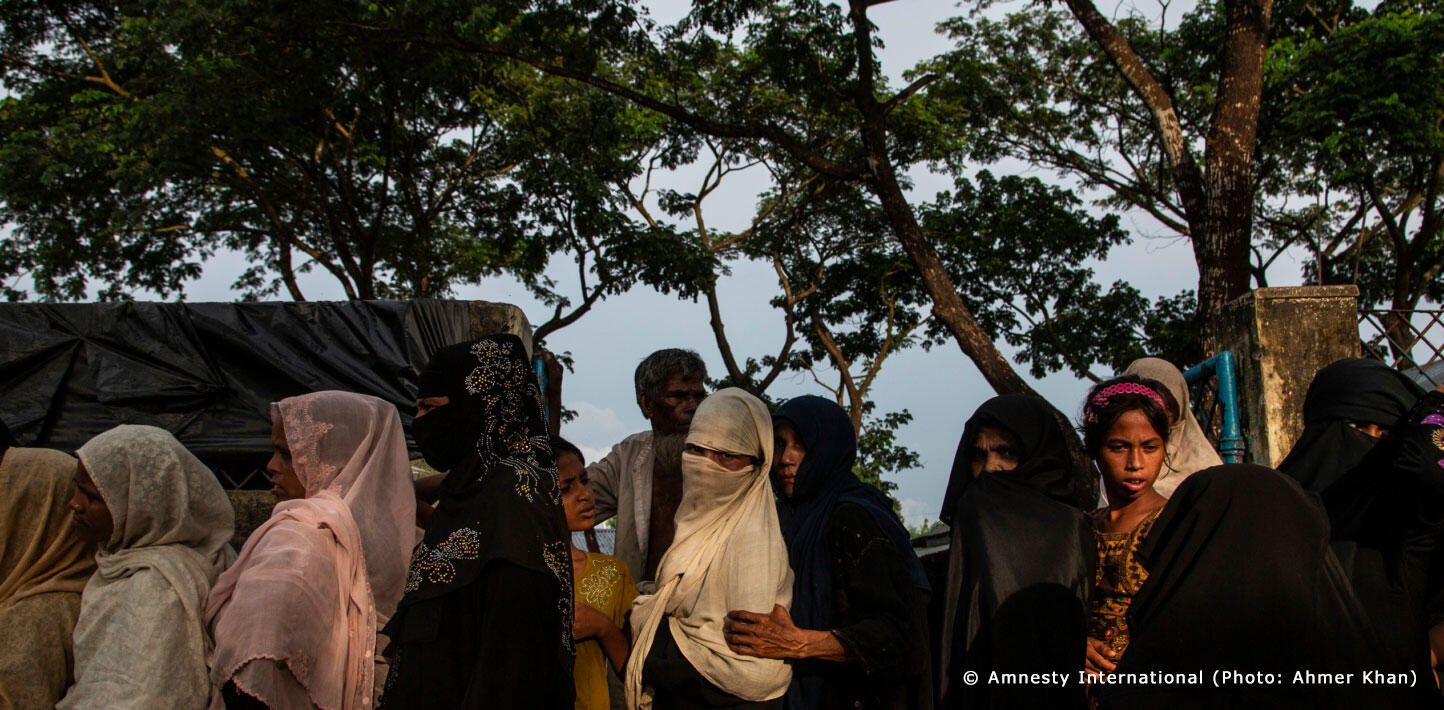
ミャンマー:フェイスブック、ロヒンギャ迫害を助長 問われる責任 : アムネスティ日本 AMNESTY

Facebook: Last Week Tonight with John Oliver (HBO)

Facebook's failure in Myanmar is the work of a blundering toddler
Beyond Hate Speech and Misinformation: Facebook and the Rohingya Genocide in Myanmar
Myanmar: The social atrocity: Meta and the right to remedy for the Rohingya - Amnesty International