


Shakuntala Devi was an Indian mental calculator, astrologer, and writer, popularly known as the "Human Computer". Her talent earned her a place in the 1982 edition of The Guinness Book of World Records. However, the certificate for the record was given posthumously on 30 July 2020, despite Devi achieving her world record on 18 June 1980 at Imperial College, London. Devi was a precocious child, and she demonstrated her arithmetic abilities at the University of Mysore without any formal education.
Computer power and human reason : from judgment to calculation
xii, 300 pages : 24 cm; Includes bibliographical references and index

Humanities in the Machine - Blain Smith
There is something quietly remarkable about the people who built the foundations of modern computing. Not their technical achievements, though those are extraordinary. What is remarkable is where they came from before they ever touched a machine.
Kari Jordan, Ph.D.
Advancing the power of data to improve the social and economic lives of all people.
Phillip M. Alday
I was a struggling mathematician, then a linguist and now a (cognitive) neuroscientist, but will probably always be a hacker. I also moonlight as an applied statistician. These are some of the things I’ve done along the way.
How we got here
Wherein our hero, in this publication's inaugural, dates himself (as if others would) in a reminiscence of computers and websites past.
Recent discoveries on the acquisition of the highest levels of human performance
Scientists have long debated the origins of exceptional human achievements. This literature review summarizes recent evidence from multiple domains on the acquisition of world-class performance. We review published papers and synthesize developmental ...

A Collectivist, Economic Perspective on AI
Information technology is in the midst of a revolution in which omnipresent data collection and machine learning are impacting the human world as never before. The word ``intelligence'' is being...

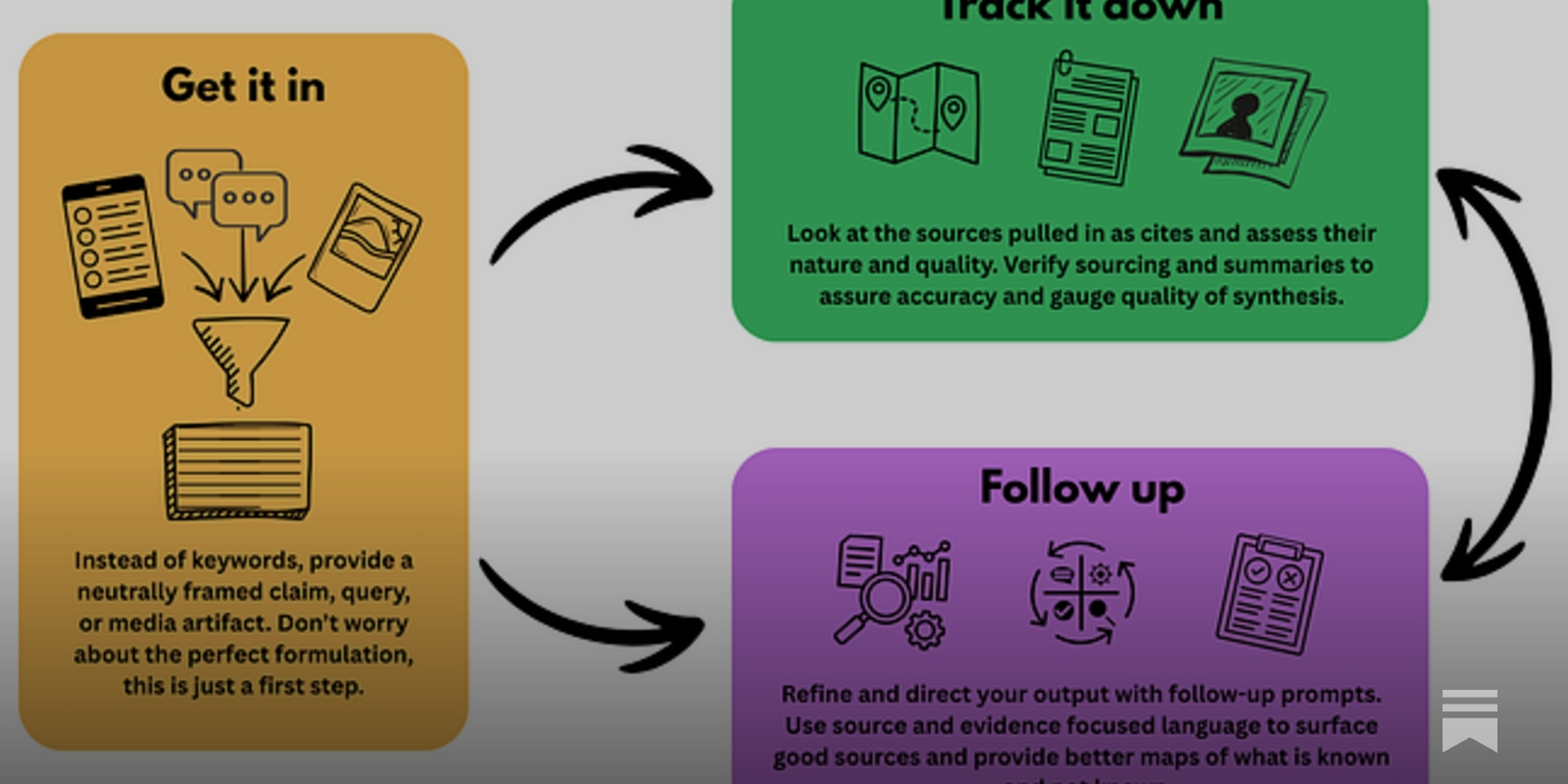
We're not taking the fact-checking powers of AI seriously enough. It's past time to start.
Some notes on the Nobel Prize hallucination that wasn't
The education of a computer
Computer: A History of the Information Machine
Computer: A History of the Information Machine is a history of computing written by Martin Campbell-Kelly and William Aspray first published in 1996. It follows the history of "information machines" from Charles Babbage's difference engine through Herman Hollerith's tabulating machines to the invention of the modern electronic digital computer. A revised 2nd edition published in 2004 included new material on the Internet and World Wide Web, while the updated 3rd edition published in 2013 includes contributions from historians Nathan Ensmenger and Jeffrey Yost. The 3rd edition extends the story to include recent phenomena such as social networking and revises the discussion of early history to reflect new insights from the literature.

Prove You’re a Computer
AA-Omniscience: Knowledge and Hallucination Benchmark | Artificial Analysis
Compare AI model performance on AA-Omniscience: Knowledge and Hallucination Benchmark. A benchmark measuring factual recall and hallucination across various economically relevant domains.
Celebrating the 75th Anniversary of the Turing Test
science in the age of AI

What does it mean to be a human researcher in the age of powerful AI?
Claude-shaped science

Agentic Laboratories of the Future: Towards World Models for Scientific Discovery
On the Value of Doing a PhD in the Age of AI

Applied Pure Mathematics

What Next for Academia?

The Age of Wonders and Terrors
