

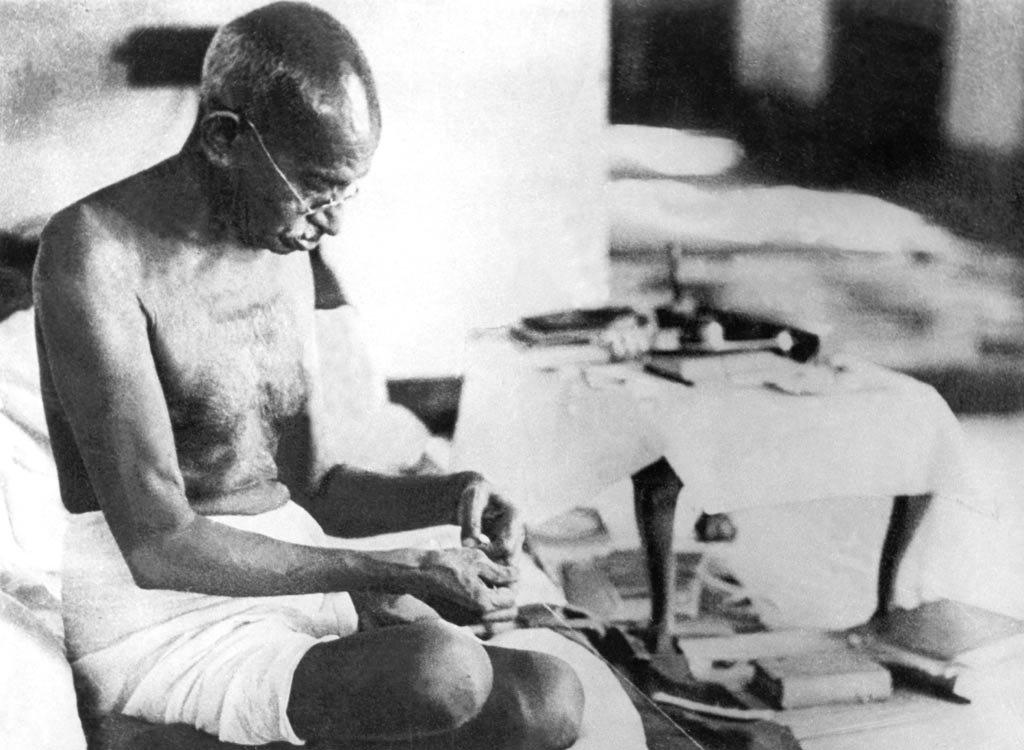
Simple living refers to practices that promote simplicity in one's lifestyle. Common practices of simple living include reducing the number of possessions one owns, depending less on technology and services, and spending less money. In addition to such external changes, simple living also reflects a person's mindset and values. Simple living practices can be seen in history, religion, art, and economics.
The Laws of Simplicity
John Maeda's book, The Laws of Simplicity, proposes ten laws for simplifying complex systems in business and life. Think of it as simplicity 101.

The Laws of Simplicity / John Maeda
The simplest way to achieve simplicity is through thoughtful reduction.

Transitioning to a Living Curriculum
The Principles and Practices to building a new way of Learning

Explorable - Think Outside The Box - Research, Experiments, Psychology, Self-Help
"It is impossible to live without failing at something, unless you live so cautiously that you might as well not have lived at all - in which case, you fail by default." - J.K. Rowling
What I learned by living without artificial light
Linda Geddes decided to live for weeks in only candlelight — no bulbs, no screens. Along the way, she discovered simple things that everyone can try to sleep and feel better.

Home | Free Lives
Free Lives is an indie game dev studio based in Cape Town, South Africa.

All living cells are cognitive
All living cells sense and respond to changes in external or internal conditions. Without that cognitive capacity, they could not obtain nutrition essential for growth, survive inevitable ecological changes, or correct accidents in the complex processes of reproduction. Wherever examined, even the smallest living cells (prokaryotes) display sophisticated regulatory networks establishing appropriate adaptations to stress conditions that maximize the probability of survival. Supposedly "simple" prokaryotic organisms also display remarkable capabilities for intercellular signalling and multicellular coordination. These observations indicate that all living cells are cognitive.
Life in Weeks
My life, where each week I’ve been alive is a little box, inspired by this post by Tim Urban. When meaningful things happen (for both better and worse) I make a note of it so I can remember how much of life is influenced by these factors. If you’d like to create your own version of this, it’s basically a data file, a template, and a blog post mashed together on Jekyll blog hosted on Netlify.
Eradicating Unhappiness
Is there a manual for living well? Where modern science, society, and psychology underserves, a philosophy nearly as old as time emerges. “Take a simple idea, and take it seriously.”—Charlie Munger…

Life is Strange
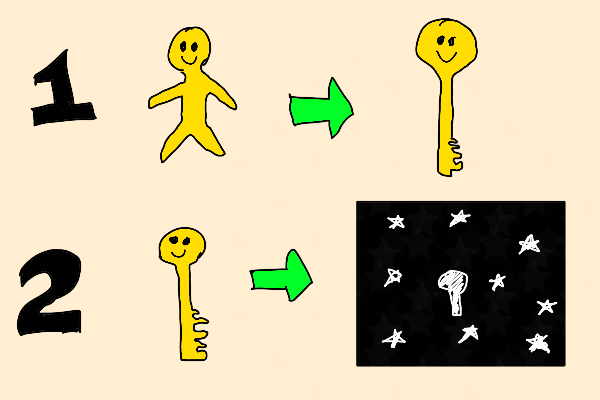
The Key to Act Two
How do you top life rules ? With a life script, that's how. Here's an absolutely minimalist 2-step one. Guaranteed to work for 90% of humanity. Across all…
Exploratory and Live, Programming and Coding: A Literature Study Comparing Perspectives on Liveness
Various programming tools, languages, and environments give programmers the impression of changing a program while it is running. This experience of liveness has been discussed for over two decades and a broad spectrum of research on this topic exists. Amongst others, this work has been carried out in the communities around three major ideas which incorporate liveness as an important aspect: live programming, exploratory programming, and live coding. While there have been publications on the focus of each particular community, the overall spectrum of liveness across these three communities has not been investigated yet. Thus, we want to delineate the variety of research on liveness. At the same time, we want to investigate overlaps and differences in the values and contributions between the three communities. Therefore, we conducted a literature study with a sample of 212 publications on the terms retrieved from three major indexing services. On this sample, we conducted a thematic analysis regarding the following aspects: motivation for liveness, application domains, intended outcomes of running a system, and types of contributions. We also gathered bibliographic information such as related keywords and prominent publications. Besides other characteristics the results show that the field of exploratory programming is mostly about technical designs and empirical studies on tools for general-purpose programming. In contrast, publications on live coding have the most variety in their motivations and methodologies with a majority being empirical studies with users. As expected, most publications on live coding are applied to performance art. Finally, research on live programming is mostly motivated by making programming more accessible and easier to understand, evaluating their tool designs through empirical studies with users. In delineating the spectrum of work on liveness, we hope to make the individual communities more aware of the work of the others. Further, by giving an overview of the values and methods of the individual communities, we hope to provide researchers new to the field of liveness with an initial overview.

The Inner Life of Liberalism - Aaron Ross Powell’s Blog
The practices that make your life better are the same ones that sustain a free society. It's time liberalism took that seriously.
Ordinary Abundance
A walk through a modern apartment, through the eyes of the people for whom everything in it was new.

Ordinary Abundance
A walk through a modern apartment, through the eyes of the people for whom everything in it was new.