


Smalltalk is a purely object-oriented programming language that was originally created in the 1970s for educational use, specifically for constructionist learning, but later found use in business. It was created at Xerox PARC by Learning Research Group (LRG) scientists, including Alan Kay, Dan Ingalls, Adele Goldberg, Ted Kaehler, Diana Merry, and Scott Wallace.
The Early History Of Smalltalk
Permission to copy without fee all or part of this material is granted provided that the copies are not made or distributed for direct commercial advantage, the ACM copyright notice and the title of the publication and its date appear, and notice is given that copying is by permission of the Association for Computing Machinery. To copy otherwise, or to republish, requires a fee and/or specific permission. HOPL-II/4/93/MA, USA © 1993 ACM 0-89791-571-2/93/0004/0069...$1.50
Small talk acts like social glue – here’s how to get better at it
Maybe think of small talk as a technology: a human invention for accomplishing social goals.

The small web is beautiful
A vision for the "small web", small software, and small architectures.
fx - Tiny, open, native coding agent
Tiny, open, native coding agent. A minimal CLI written in Zig, optimized for research and embeddability as part of larger systems.
smallnet
Smallnet or SmolNet (also known as Small/Smol Internet/Web, etc.) is a movement of small-scale Internet networking that emphasizes the smallness of the servers (including low system requirements) as well as that of the user communities. It can be regarded as a counter-movement to the centralization and bloatedness of WWW.
Unorthodocs: Abandon your DVCS and Return to Sanity - bitquabit
I’ve pretty much always been a DVCS apologist. I know quite a few people who’ve been using DVCSes since Mercurial and Git, and a few who go back to BitKeeper, but I can totally out-hipster you. I was there for Monotone. I actually remember struggling to grok tla, and being happy that someone took the time to write baz. I remember the promise and the failure that was Darcs. I remember thinking that even Darcs was comically primitive, because it was nothing but a poor imitation of Smalltalk DVCSes like Monticello, themselves mere iterative improvements on classic Smalltalk changesets.[1]
Forgotten Programming Ideas That Could Change Everything #shorts
Xerox Cedar "Viewers Window Package" 1987
I just want to add a little bit about the Xerox Cedar "Viewers Window Package" environment. Cedar is a programming language based on Mesa, with some similarities to Smalltalk.
Why the fuss about conversational programming?
First, there isn’t much fuss … yet. But there will be.
Tiny Tool Town 🏘️
A delightful showcase for free, fun & open source tiny tools. Stupid-delightful software made with love.
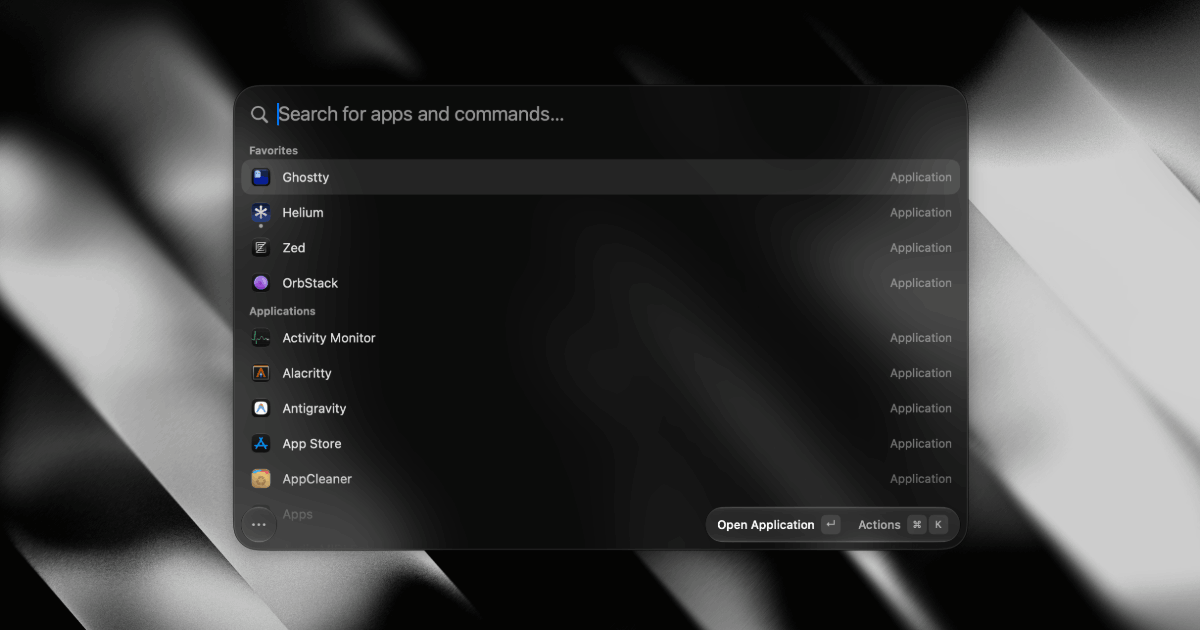
Tinycast — a tiny, native macOS launcher
Tinycast is a tiny, fully native macOS launcher: fuzzy app search, an inline calculator, clipboard history, snippets, notes, window management and global hotkeys, with no Electron, no account and no telemetry.
The AT Protocol's interesting design - LittleBit
Bluesky's backend was made to be more than a social network

MiniMax-Intelligence with everyone
MiniMax is a leading global technology company and one of the pioneers of large language models (LLMs) in Asia. Our mission is to build a world where intelligence thrives with everyone.

What is the Small Web?
Updated June 19th, 2023 Sorry, your browser doesn't support embedded videos. But that doesn’t mean you can’t watch it! You can download Small Is Beautiful #23 directly, and watch it with your favourite video player. Small Is Beautiful (Oct, 2022): What is the Small Web and why do we need it? Today, I want to introduce you to a concept – and a vision for the future of our species in the digital and networked age – that I’ve spoken about for a while but never specifically written about:

david created a mode of communication: dreamtalk related to sandtalk(book). the project relies on a obsidian knowledge graph hence the realisation as a 3D obsidian plugin. you can find examples how it looks here : github.com/ProjectLiminality/InterBrain

GitHub - ProjectLiminality/InterBrain: Open-source protocol integrating collective and artificial intelligence — LLM orchestration, agentic workflows, and RAG in a cross-platform TypeScript/Tauri app.
github.com