Socratic questioning is an educational method named after Socrates that focuses on discovering answers by asking questions of students. According to Plato, Socrates believed that "the disciplined practice of thoughtful questioning enables the scholar/student to examine ideas and be able to determine the validity of those ideas". Plato explains how, in this method of teaching, the teacher assumes an ignorant mindset in order to compel the student to assume the highest level of knowledge. Thus, a student is expected to develop the ability to acknowledge contradictions, recreate inaccurate or unfinished ideas, and critically determine necessary thought.
The Socratic Method
The following is a transcript of a teaching experiment, using the Socratic method, with a regular third grade class in a suburban elementary school. I present my perspective and views on the session, and on the Socratic method as a teaching tool, following the transcript. The class was conducted on a Friday afternoon beginning at 1:30, late in May, with about two weeks left in the school year. This time was purposely chosen as one of the most difficult times to entice and hold these children's concentration about a somewhat complex intellectual matter. The point was to demonstrate the power of the Socratic method for both teaching and also for getting students involved and excited about the material being taught. There were 22 students in the class. I was told ahead of time by two different teachers (not the classroom teacher) that only a couple of students would be able to understand and follow what I would be presenting. When the class period ended, I and the classroom teacher believed that at least 19 of the 22 students had fully and excitedly participated and absorbed the entire material. The three other students' eyes were glazed over from the very beginning, and they did not seem to be involved in the class at all. The students' answers below are in capital letters.
Learning from the Master: Socrates’ Examined Life
CHAD BOCHAN How to have conversations that lead to actual answers.

Hegel’s Dialectics
“Dialectics” is a term used to describe a method ofphilosophical argument that involves some sort of contradictoryprocess between opposing sides. In what is perhaps the most classicversion of “dialectics”, the ancient Greek philosopher,Plato (see entry on Plato), for instance, presented his philosophical argument as aback-and-forth dialogue or debate, generally between the character ofSocrates, on one side, and some person or group of people to whomSocrates was talking (his interlocutors), on the other. In the courseof the dialogues, Socrates’ interlocutors propose definitions ofphilosophical concepts or express views that Socrates challenges oropposes. The back-and-forth debate between opposing sides produces akind of linear progression or evolution in philosophical views orpositions: as the dialogues go along, Socrates’ interlocutorschange or refine their views in response to Socrates’ challengesand come to adopt more sophisticated views. The back-and-forthdialectic between Socrates and his interlocutors thus becomesPlato’s way of arguing against the earlier, less sophisticatedviews or positions and for the more sophisticated ones later.
Terence Tao (@tao@mathstodon.xyz)
In basic research, such as pure mathematics, one might naively expect that the natural question to ask with regards to a given problem X in a field is "What is the answer to X?". But in many cases the more valuable question is "What can be learned from studying X?" The answer to X itself can of course be one of the things learned in this process of study; but one can learn far more useful information besides, such as * What are the main difficulties to overcome to resolve X? * What new techniques can one discover in order to solve X? * Why are existing techniques insufficient to solve the problem by itself? * How does X relate to results in prior literature? * Can one uncover new connections between X and other topics Y, Z, ...? * What are some natural related or followup questions X', X'', ... to study? Nevertheless, until recently the two questions were closely aligned, to the point where it was not really necessary to distinguish the two: the only practical route to solving a difficult problem was to first address many of the subquestions listed above. (1/3)
Four scepticisms: what we can know about what we can’t know | Aeon Essays
The ancient Sceptics used doubt as a way of investigating the world. Later thinkers undermined even that possibility

Parmenides: Pre-Socratic Philosophy
Keating — The Hyperteacher
Socratic AI that forces you to reconstruct understanding from memory. No hand-holding. No spoon-feeding. Free and open source.
Opinion | What Would Plato Say About ChatGPT? (Published 2022)
A.I. can be a learning tool for schools with enough teachers and resources to use it well.

Ask This Instead of 'Any Questions?'
I come from a quiet people. My classmates and I were always bad at asking questions of the teacher , or recognizing that we had questions. I wish I

Do People Ask Good Questions?
People ask questions in order to efficiently learn about the world. But do people ask good questions? In this work, we designed an intuitive, game-based task that allowed people to ask natural language questions to resolve their uncertainty. Question quality was measured through Bayesian ideal observer models that considered large spaces of possible game states. During free-form question generation, participants asked a creative variety of useful and goal-directed questions, yet they rarely asked the best questions as identified by the Bayesian ideal observers (Experiment 1). In subsequent experiments, participants strongly preferred the best questions when evaluating questions that they did not generate themselves (Experiments 2 and 3). On one hand, our results show that people can accurately evaluate question quality, even when the set of questions is diverse and an ideal observer analysis has large computational requirements. On the other hand, people have a limited ability to synthesize maximally informative questions from scratch, suggesting a bottleneck in the question asking process.

My Little Republic: Plato is Magic - Overthinking It
Socrates, first among Bronies.

Allegory of the cave
The allegory of the cave is an allegory presented by the Greek philosopher Plato in his work Republic to compare "the effect of education (παιδεία) and the lack of it on our nature". It is written as a dialogue between Plato's brother Glaucon and his mentor Socrates and is narrated by the latter. The allegory is presented after the analogy of the Sun (508b–509c) and the analogy of the divided line (509d–511e).

Stanford researchers find a single question could be the key to changing someone’s mind
Curiosity goes a lot further than we might think.

Why Some Students Learn Faster
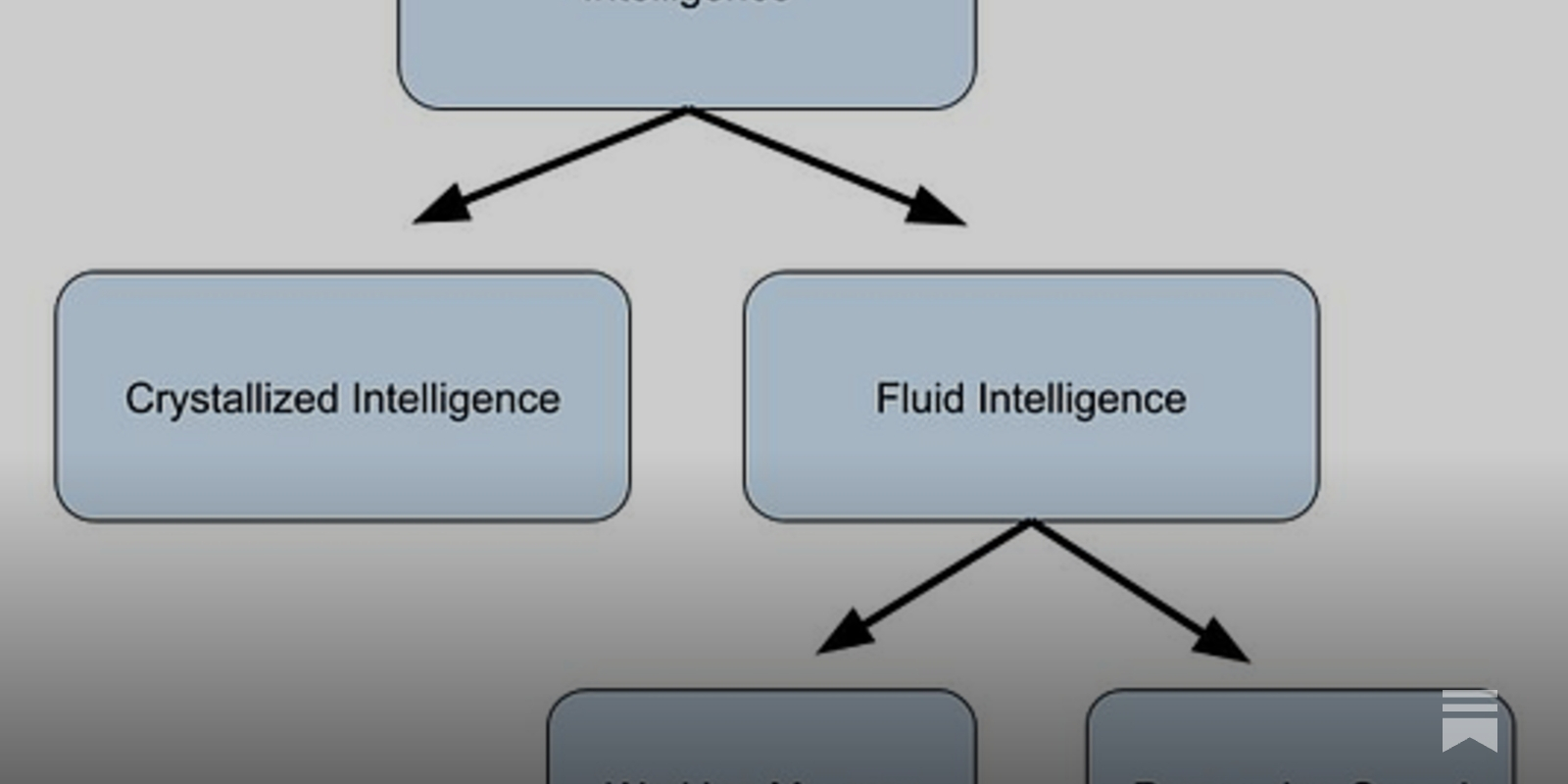
A hypothesis about teaching and learning
Why Some Students Learn Faster
A hypothesis about teaching and learning
Relying on Others: An Essay in Epistemology
Abstract. This book concerns the role others play in our attempts to acquire knowledge of the world. Two main forms of this reliance are examined: testimon