

The idea that a state may need to deal with unforeseen and critical problems is ancient; for instance, the Republican Roman concept of the dictatorship allowed a single person to take extraordinary measures, under strict controls. Renaissance thinkers such as Machiavelli and Jean Bodin also discussed the problem. However, while monarchy implies elements of unaccountability and extralegal powers, modern republican constitutions attempt to remove these factors, raising the question of how to deal with such emergencies.
The Dispersion of Power: A Critical Realist Theory of Democracy
Abstract The Dispersion of Power is an urgent call to rethink centuries of conventional wisdom about what democracy is, why it matters, and how to make it better. Drawing from history, social science, psychology, and critical theory, it explains why elections do not and cannot realize the classic ideal of popular rule, and why prevailing strategies of democratic reform often make things worse. Instead, Bagg argues, we should see democracy as a way of protecting public power from capture—an alternative vision that is at once more realistic and more inspiring. Despite their many shortcomings, real-world elections do prevent the most extreme forms of tyranny, and are therefore indispensable. In dealing with the vast inequalities that remain, however, we cannot rely on standard solutions such as electoral reform, direct democracy, deliberation, and participatory governance. Instead, Bagg shows, protecting and enriching democracy requires addressing underlying inequalities of power directly. In part, this entails substantive policies attacking the advantages of wealthy elites. Even more crucially, deepening democracy requires the organization of oppositional, countervailing power among ordinary people. Neither task is easy, but historical precedents exist in both cases—and if democracy is to survive contemporary crises, leaders and citizens alike must find ways to revive and reinvent these essential democratic practices for the twenty-first century.
Time and the Neo-Monarchist Turn
One of the classical arguments against democracy concerns its supposed short-termism. Early-modern political thought contrasted the pitfalls of elected authority, whose timebound character was seen to invite inconstancy, instability and plunder, with the merits of indefinite rule on the model of kingship. Such reasoning has seen two revivals in recent years, first in a neo-liberal form as an argument for technocracy (see independent central banking), second in a neo-reactionary form as an argument for an all-powerful executive or ‘monarch’ (see the contemporary international far Right). This article looks at the structure of these political arguments and the work they do. Having reconstructed their historical background, it charts how the neo-monarchist turn marks a radicalisation in democracy-scepticism, guided by a patrimonial logic of authority as property ownership. The article goes on to examine the political-economic factors to which this responds, as well as the contradictions to which neo-monarchism is prone. As the article concludes, temporal arguments for authoritarian politics may be dubious in substance but merit careful observation in a context of widespread disaffection with existing institutions.

CRISES AVERTED. How A Few Past Societies Found Adaptive Reforms in the Face of Structural-Demographic Crises
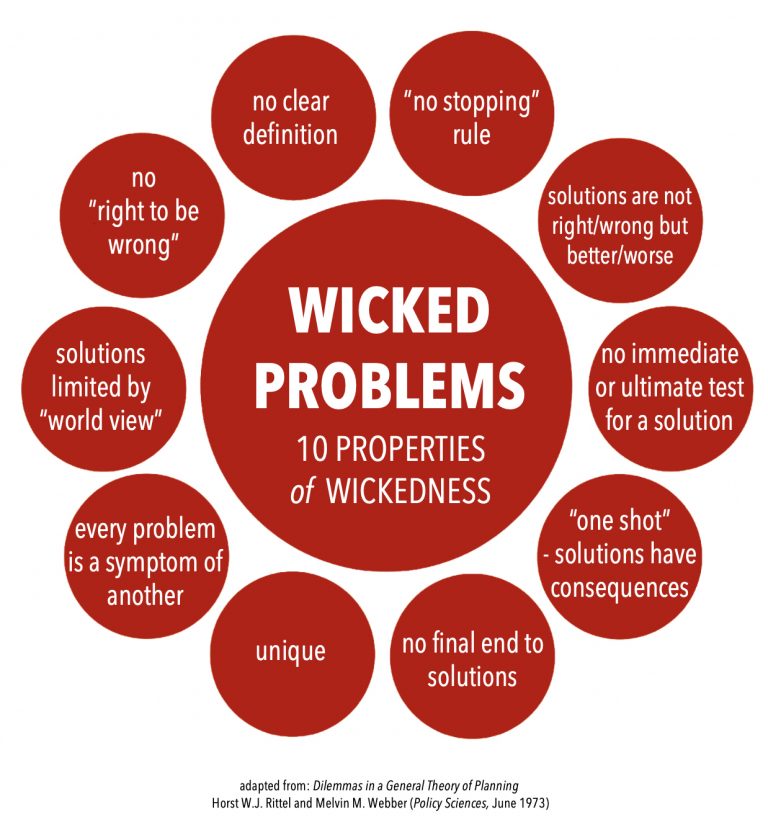
Historians and social scientists have long been preoccupied with understanding and documenting periods of crisis. Such emphasis is only growing, and becoming more pressing, as the world continues to face a number of interrelated stressors in the form of irreversible climate change, major ecological shocks and disease outbreaks, eruptions of military violence, economic disruptions and deepening inequalities, political polarization and unrest, the rise of authoritarian and nationalist regimes. Crises in these domains are not new, but have been recurrent features of past societies. Although these periods have typically led to massive loss of life, the failure of critical institutions, and even complete societal collapse, there are instances in the historical record of societies managing to turn the tide of crisis even as violence and social turmoil grow. Here, we focus on four such cases of crises mitigated with structural reforms revealed from our previous historical analyses: early Republican Rome, mid-19th century England and Russia, USA during the the late 20th to early 21st centuries. Utilizing structural demographic theory as a lens to explore these cases, we seek to expose the pressures that built up leading to crisis and the early signs of violent confrontation revealed by these societies, as well as to examine the conditions and key decisions made in the midst of this unrest that allowed these societies to turn the tide and enact significant structural adaptations. Our findings have clear relevance to understanding and navigating similar crises in contemporary societies.
10 Principles of Disability Justice | Sins Invalid
INTERSECTIONALITY “We do not live single issue lives” –Audre Lorde. Ableism, coupled with white supremacy, supported by capitalism, underscored by heteropatriarchy, has rendered the vast majority of the world “invalid.”
The Crisis of Democracy: Report on the Governability of Democracies to the Trilateral Commission
The Crisis of Democracy: On the Governability of Democracies was initially a 1975 report written by Michel Crozier, Samuel P. Huntington, and Joji Watanuki for the Trilateral Commission and later published as a book. The report observed the political state of the United States, Europe and Japan and says that in the United States the problems of governance "stem from an excess of democracy" and thus advocates "to restore the prestige and authority of central government institutions."
The Organization of Government in Metropolitan Areas: A Theoretical Inquiry
Allusions to the “problem of metropolitan government” are often made in characterizing the difficulties supposed to arise because a metropolitan region is a legal non-entity. From this point of view, the people of a metropolitan region have no general instrumentality of government available to deal directly with the range of problems which they share in common. Rather there is a multiplicity of federal and state governmental agencies, counties, cities, and special districts that govern within a metropolitan region.This view assumes that the multiplicity of political units in a metropolitan area is essentially a pathological phenomenon. The diagnosis asserts that there are too many governments and not enough government. The symptoms are described as “duplication of functions” and “overlapping jurisdictions.” Autonomous units of government, acting in their own behalf, are considered incapable of resolving the diverse problems of the wider metropolitan community. The political topography of the metropolis is called a “crazy-quilt pattern” and its organization is said to be an “organized chaos.” The prescription is reorganization into larger units—to provide “a general metropolitan framework” for gathering up the various functions of government. A political system with a single dominant center for making decisions is viewed as the ideal model for the organization of metropolitan government. “Gargantua” is one name for it.
« Une canicule n’est pas une catastrophe naturelle, mais un événement politique »
Les vagues de chaleur tuent de manière sélective. Elles ne sont pas des catastrophes naturelles mais des événements sociaux et politiques, explique le sociologue américain Eric Klinenberg.

Édito. Face à la canicule, les responsables politiques semblent toujours pris de court
Alors que la France subit une nouvelle canicule exceptionnelle, le réchauffement climatique peine à s'imposer durablement dans le débat public. Malgré des efforts réels, les politiques publiques restent freinées par le court-termisme et les priorités électorales.

Wicked problem
In planning and policy, a wicked problem is a problem that is difficult or impossible to solve because of incomplete, contradictory, and changing requirements that are often difficult to recognize. It refers to an idea or problem that cannot be fixed, where there is no single solution to the problem; "wicked" does not indicate evil, but rather resistance to resolution. Another definition is "a problem whose social complexity means that it has no determinable stopping point". Because of complex interdependencies, the effort to solve one aspect of a wicked problem may reveal or create other problems. Due to their complexity, wicked problems are often characterized by organized irresponsibility.
Further Back to the Future: Neo-Royalism, the Trump Administration, and the Emerging International System
With the Liberal International Order (LIO) in decline, scholars have focused increasingly on the possible return to a Westphalian great power system marked by sovereigntist claims and balancing among states. The actions of the Trump administration, however, raise a number of significant puzzles for such accounts—the US seems willing to sign deals with traditional adversaries including Russia and China, while targeting long-standing allies like Canada and Denmark. At the same time, transactional politics often serve narrow personalist interests rather than national objectives. In short, a Westphalian lens focused on states and sovereignty may generate intellectual blinders that misreads the emerging international order. To overcome these limitations, we propose an alternative account, which we label neo-royalism. The neo-royalist order centers on an international system structured by a small group of hyper elites, which we term cliques. Such cliques seek to legitimize their authority through appeals to their exceptionalism in order to generate durable material and status hierarchies based on the extraction of financial and cultural tributes. This short paper lays out the key elements of the neo-royalist order, differentiating it from the Westphalian and Liberal International Orders, and applies its insights to better grapple with the emerging system being promoted by the United States under Donald J. Trump. For policymakers and scholars, the neo-royalist approach clarifies recent events in US foreign policy. Theoretically, the field should take contending ideas of international order seriously, and establish a research agenda beyond a backward looking view to the Westphalian moment.
Anarchy & the Philosophy of Anarchism Collection: Mutua…
Anarchism claims that there's no need for a state and t…

Radical Optionality — Governing Transformative AI Under Uncertainty
Radical optionality is about preserving democratic governments’ ability to make good decisions about how to govern transformative AI systems as circumstances evolve.

Ignoring the Unreasonable
Illiberal and antidemocratic political forces, for example, in the form of far-right populism, are on the rise. Such politics, commonly referred to as ‘unreasonable’ in political philosophy, is widely seen as a threat to democracy. Many argue that an adequate response must involve listening to , that is, understanding and seriously considering the perspective of the unreasonable. I disagree. I argue that as democratic citizens, we should not listen to the unreasonable; we should, in a sense, ignore them, that is, refuse to understand and seriously consider their perspective, although continue to monitor their activities. Listening to the unreasonable is not instrumentally required for countering unreasonable politics. In addition, the unreasonable likely have no moral claim to be listened to. Finally, listening to them is disrespectful to reasonable citizens whose voice is ignored for the sake of paying attention to the unreasonable. For these reasons, we should ignore the unreasonable.
Dictatorship, Democracy, and Development
Under anarchy, uncoordinated competitive theft by “roving bandits” destroys the incentive to invest and produce, leaving little for either the population or the bandits. Both can be better off if a bandit sets himself up as a dictator—a “stationary bandit” who monopolizes and rationalizes theft in the form of taxes. A secure autocrat has an encompassing interest in his domain that leads him to provide a peaceful order and other public goods that increase productivity. Whenever an autocrat expects a brief tenure, it pays him to confiscate those assets whose tax yield over his tenure is less than their total value. This incentive plus the inherent uncertainty of succession in dictatorships imply that autocracies will rarely have good economic performance for more than a generation. The conditions necessary for a lasting democracy are the same necessary for the security of property and contract rights that generates economic growth.
The silences of constitutions
Abstract. Glossing a passage from Benjamin Constant’s Reflections on Constitutions, this article first assesses the roles performed by silences, gaps, and
