


Termites are a group of eusocial insects which consume a variety of decaying plant material, generally in the form of wood, leaf litter, and soil humus. They are distinguished by their beaded (moniliform) antennae and the soft-bodied, unpigmented worker caste for which they have been commonly termed "white ants"; however, they are not ants but highly derived cockroaches; they are genetically closer to some cockroach groups than these are to other cockroaches. About 2,997 extant species are currently described, 2,125 of which are members of the family Termitidae.
Mound-building termites
Mound-building termites are a group of termite species that live in mounds which are made of a combination of soil, termite saliva and dung. These termites live in Africa, Australia and South America. The mounds sometimes have a diameter of 30 metres (98 ft). Most of the mounds are in well-drained areas. Termite mounds usually outlive the colonies themselves. If the inner tunnels of the nest are exposed it is usually dead. Sometimes other colonies, of the same or different species, occupy a mound after the original builders' deaths.

Termite Ecology in the First Two Decades of the 21st Century: A Review of Reviews
Termite ecology came of age in 1978 with the seminal review of Wood and Sands which by considering the quantitative contributions made by termites to the carbon cycle at the landscape level concluded that they were major players in tropical ecosystems. Subsequent field work in the succeeding two decades was summarised in 2000 by Bignell and Eggleton, the most recent review which attempted to cover the entire topic in detail, which included 188 listed references and has been extensively cited for almost 20 years. Subsequent summaries more narrowly defined or in some cases more superficial are listed in the bibliography. In this overview, the main and subsidiary headings in Bignell and Eggleton are revisited and reclassified in the light of 186 selected articles added to the relevant literature since 2000, and some earlier work. While the literature on termite ecology remains buoyant, it has declined relative to publications on other aspects of termite biology. Overall, the thesis that termites have a major impact on, and are major indicators of soil health and landscape integrity in the tropics and sub-tropics is maintained, but the drivers of local diversity, abundance and biomass remain complex, with many biographical, edaphic and optimum sampling issues not completely resolved. The large increase in diversity and abundance data from Neotropical biomes can also be noted.

Termitomyces
Termitomyces is a genus of basidiomycete fungi known as termite mushrooms in Lyophyllaceae family farmed by fungus-growing termites. The fungi and the termites interdepend to live, as the termites house and culture the fungi, and the fungi in turn provide foods for the termites. Often after a raining, the fungi grow mushrooms, which are edible and highly regarded for their flavor.

Pheromone
A pheromone is a chemical that is secreted or excreted by an organism, which triggers a social response in members of the same species. There are alarm pheromones, food trail pheromones, sex pheromones, and many others that affect behavior or physiology. Pheromones are used by many organisms, from basic unicellular prokaryotes to complex multicellular eukaryotes. Their use among insects has been particularly well documented. In addition, some vertebrates, plants and ciliates communicate by using pheromones. The ecological functions and evolution of pheromones are a major topic of research in the field of chemical ecology.
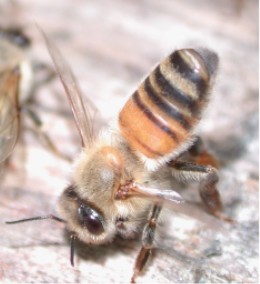
Symbiotic organs in insects: diversity, functional implications, and terminology
Abstract With over a million described species, insects represent the most successful group of animals on Earth. One of the drivers of insect diversity is their ability to engage in multifold beneficial symbioses with microorganisms, often involving specialized host organs to accommodate intra- or extracellular symbionts. The existence of such organs and their importance for sustaining and transmitting beneficial symbionts has been known for over a century, and specific terms have been established for categorizing organs harbouring intracellular bacteria (bacteriomes) or fungi (mycetomes), or cuticular crypts containing extracellular fungi (mycetangia). For others, however, general terms are lacking, e.g. organs containing extracellular bacteria associated with the cuticle or with the digestive tract. Furthermore, previously established terms have been misused in other contexts. Notably, ‘bacteriome’ has been increasingly employed in the microbiome field to refer to bacterial communities, instead of the term’s original meaning of specialized organs housing intracellular bacterial symbionts. Here, we review and categorize the diversity of symbiotic organs in insects and propose a unified terminology. Our hope is that this common language will facilitate communication and thereby support the field of symbiosis research in unravelling commonalities and differences in the evolution, ecology, development, physiology and molecular basis across symbiotic interactions. This article is part of the theme issue ‘Life in natural microcosms’.

What’s Earth’s dominant species by mass?
You might have heard that all the ants in the world weigh as much combined as all the humans. That isn’t true. We outweigh ants 5 to 1.1 Termites might have us beat, though.2 Either way, it’s not r…
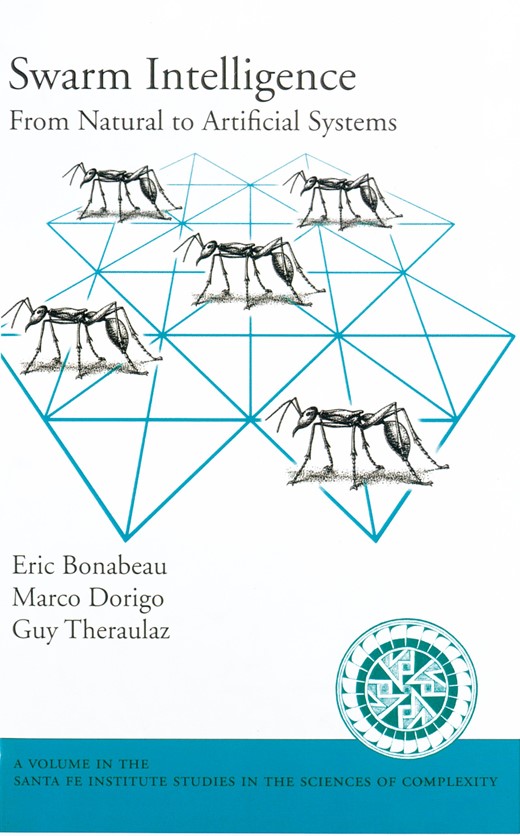
Swarm Intelligence: From Natural to Artificial Systems
Abstract. Social insects--ants, bees, termites, and wasps--can be viewed as powerful problem-solving systems with sophisticated collective intelligence. Co
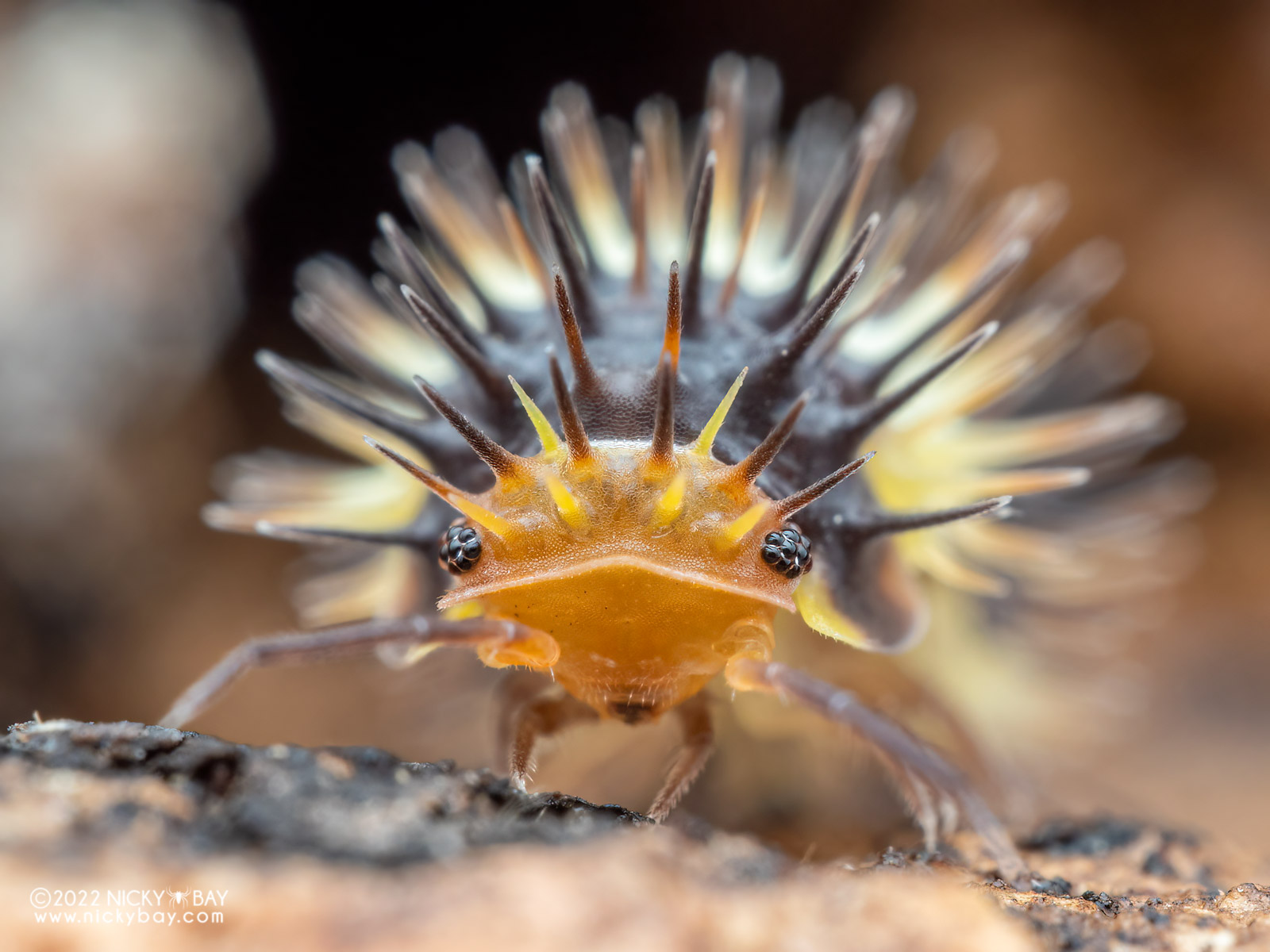
Isopod Site
Pillbugs, sowbugs, roly-polies and woodlice, collectively referred to as isopods, are land-dwelling crustaceans that feed on decaying organic matter.
Social Insects : Ecology and Behavioural Biology
1 online resource; Here is a guide to the ecology of social insects. It is intended for general ecologists and entomologists as well as for undergraduates and those about to start research on social insects; even the experienced investigator may find the comparison between different groups of social insects illuminating. Most technical terms are translated into common language as far as can be done without loss of accuracy but scientific names are unavoidable. Readers will become familiar with the name even though they cannot visualize the animal and could reflect that only a very few of the total species have been studied so far! References too are essential and with these it should be possible to travel more deeply into the vast research literature, still increasing monthly. When I have cited an author in another author's paper, this implies that I have not read the original and the second author must take responsi bility for accuracy! Many hands and heads have helped to make this book. I thank all my colleagues past and present for their enduring though critical support, and I thank with special pleasure: E.]. M. Evesham who fashioned the diagrams;]. Free, D.J. Stradling and]. P.E.C. Darlington who supplied photographs; D.Y. Brian and R.A. Weller who were meticulous on the linguistic side; and G. Frith and R.M. Jones who collated the references. List of plates 1. Fungus combs of Acromyrmex octospinosus and Macrotermes michaelseni. 13 2. Mouthparts of larval Myrmica; 1 Introduction -- 2 Food -- 2.1 Termites as decomposers -- 2.2 Wasps and ants as predators -- 2.3 Sugars as fuel save prey -- 2.4 Seed eaters -- 2.5 Leaf eaters -- 2.6 Pollen eaters -- 3 Foraging by individuals -- 3.1 Foraging strategy -- 3.2 Worker variability -- 4 Foraging in groups -- 4.1 Communication about food -- 4.2 Group slave-raiding -- 4.3 Tunnels and tracks -- 4.4 Nomadic foraging -- 5 Cavity nests and soil mounds -- 5.1 Cavities and burrows -- 5.2 Soil mounds -- 6 Nests of fibre, silk and wax -- 6.1 Mounds of vegetation and tree nests -- 6.2 Combs of cells -- 7 Microclimate -- 7.1 Environmental regulation -- 7.2 Metabolic regulation -- 8 Defence -- 8.1 Painful and paralysing injections -- 8.2 Toxic smears and repellants -- 9 Food processing -- 9.1 Mastication, extraction and regurgitation -- 9.2 Yolk food supplements -- 9.3 Head food glands -- 10 Early population growth -- 10.1 Food distribution -- 10.2 Colony foundation -- 10.3 The growth spurt -- 11 Maturation -- 11.1 Simple models of reproduction -- 11.2 Social control over caste -- 11.3 Males in social Hymenoptera -- 11.4 Maturation in general -- 12 Reproduction -- 12.1 Caste morphogenesis -- 12.2 Copulation and dispersal -- 12.3 Production -- 12.4 Summary -- 13 Evolution of insect societies -- 13.1 Theories of individual selection -- 13.2 Models of these theories -- 13.3 Group selection -- 13.4 Conclusions -- 14 Colonies -- 14.1 The colony barrier -- 14.2 Queen number and species ecology -- 14.3 Queen interaction and queen relatedness -- 15 Comparative ecology of congeneric species -- 15.1 Ant and termite races -- 15.2 Desert ants and termites -- 15.3 Ants and termites in grassland -- 15.4 Forest ants and termites -- 15.5 Wasps and bumblebees -- 15.6 Advanced bees -- 16 Communities -- 16.1 Temperate zone communities in grass and woodland -- 16.2 Desert communities -- 16.3 Tropical rain forest -- 16.4 Conclusions -- 17 Two themes -- 17.1 Plant mutualism -- 17.2 Social organization -- References -- Author index

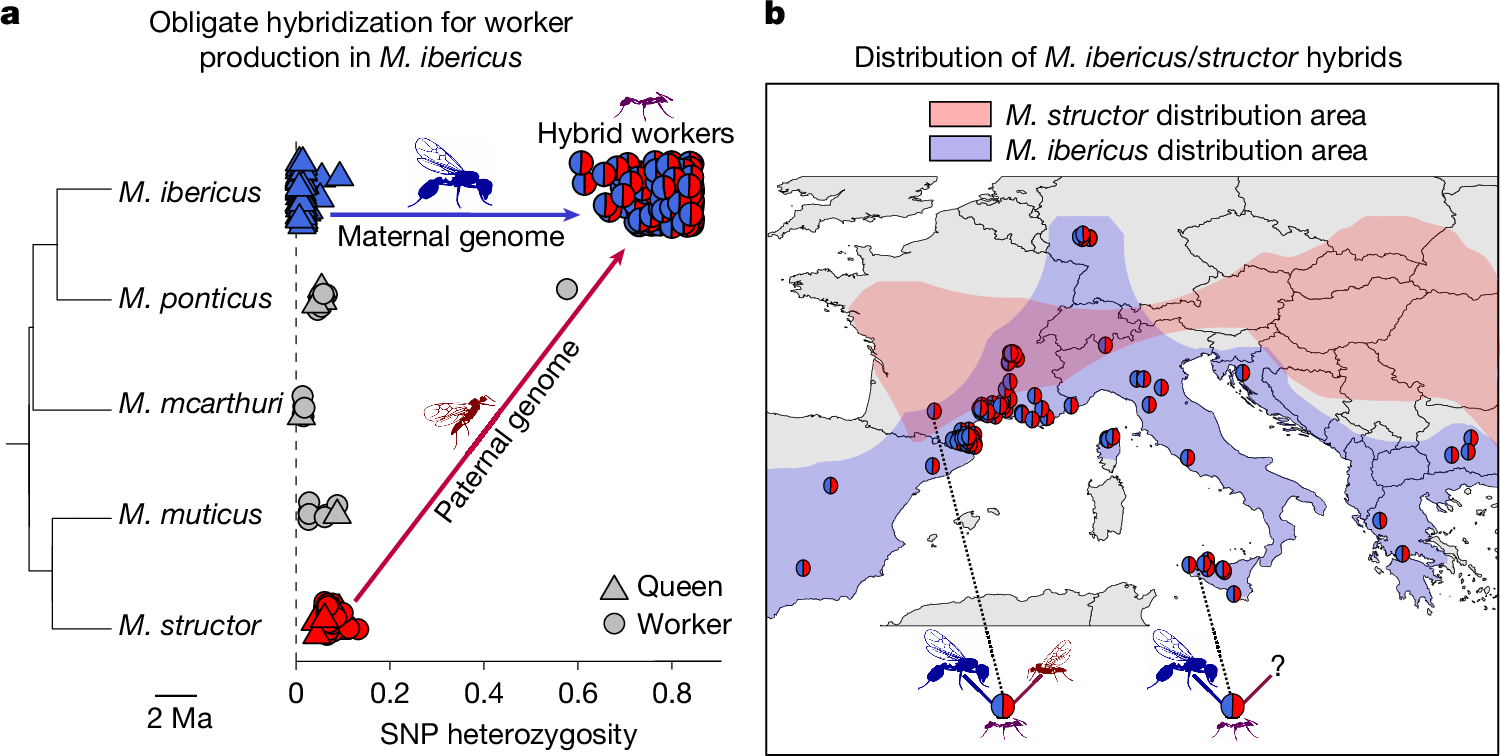
One mother for two species via obligate cross-species cloning in ants
Living organisms are assumed to produce same-species offspring1,2. Here, we report a shift from this norm in Messor ibericus, an ant that lays individuals from two distinct species. In this life cycle, females must clone males of another species because they require their sperm to produce the worker caste. As a result, males from the same mother exhibit distinct genomes and morphologies, as they belong to species that diverged over 5 million years ago. The evolutionary history of this system appears as sexual parasitism3 that evolved into a natural case of cross-species cloning4,5, resulting in the maintenance of a male-only lineage cloned through distinct species’ ova. We term females exhibiting this reproductive mode as xenoparous, meaning they give birth to other species as part of their life cycle.
Mandible (insect mouthpart)
Insect mandibles are a pair of appendages near the insect's mouth, and the most anterior of the three pairs of oral appendages. Their function is typically to grasp, crush, or cut the insect's food, or to defend against predators or rivals. Insect mandibles, which appear to be evolutionarily derived from legs, move in the horizontal plane unlike those of vertebrates, which appear to be derived from gill arches and move vertically.

Pluralistic: Technocarcinization (01 Jul 2026) – Pluralistic: Daily links from Cory Doctorow
"Carcinization" is a curious biological phenomenon: given enough time, across many environments, many species will evolve into crabs. The body-type of a crab, with its low center of gravity, sideways gait (useful for evading predators), ease of concealment and protected organs is suitable to many different environments:
Antenna (zoology)
An antenna is one of a pair of appendages used for sensing in arthropods. Antennae are sometimes referred to as feelers.

The ultrasocial origin of the Anthropocene
The current geological epoch has been dubbed the Anthropocene—the age of humans. We argue that the roots of the Anthropocene lie in the agricultural revolution that began some 8000years ago. Unique human psychological and cultural characteristics were present in our distant hunter–gatherer past, but in terms of the biophysical impact of our species, agricultural represented an unequivocal and decisive evolutionary break. With the transition to agriculture human society began to function as a superorganism functioning as a single unit designed by social natural selection to produce economic surplus. Where environmental conditions were permitted, early human agricultural societies followed the same pattern as a few social insects and exhibited explosive population growth, complex and detailed division of labor, intensive resource exploitation, territorial expansion, and a social organization favoring the survival and growth of the supergroup over the well-being of individuals within the group. Similar economic forces lie behind ultrasociality in social insects and humans—increased productivity from the division of labor, increasing returns to scale, and the exploitation of stocks of productive resources. Exploring the evolutionary mechanisms behind ultrasociality offers insights into the growth imperative that threatens the stability of the earth's life support systems.
termux-app/termux-shared/src/main/res/values/strings.xml at 30ebb2dee381d292ade0f2868cfde0f9f20b89fe · termux/termux-app
Termux - a terminal emulator application for Android OS extendible by variety of packages. - termux/termux-app
Hummingbird hawk moths and ivy bees: The insects growing in number as temperatures rise
Hummingbird hawk moths - often mistaken for small birds - are being spotted in the West Midlands.
