

"The Aleph" (Spanish: El Aleph) is a short story by Argentine writer and poet Jorge Luis Borges. First published in September 1945, it was reprinted in the short story collection The Aleph and Other Stories in 1949, and revised by the author in 1974.
Aleph number
In mathematics, particularly in set theory, the aleph numbers are a sequence of numbers used to represent the cardinality of infinite sets. They were introduced by the mathematician Georg Cantor and are named after the symbol he used to denote them, the Hebrew letter aleph (ℵ).

Short-Short Stories - American Literature
Short stories, children's stories, classic literature, poems, essays, idioms, history, teacher's resources and more
11 Very Short Stories You Must Read Immediately
This weekend, Lydia Davis—crowned master of the very short story, not to mention a preeminent translator of classic French literature—turns 70. Davis didn’t invent flash fiction, but she is c…

Author, Poet, Visual Storyteller | Ellen Everett
German LLM maker Aleph Alpha pivots to AI support | TechCrunch
Europe doesn't have many large language model (LLM) makers but one of these rare AI beasts -- Germany's Aleph Alpha -- appears to be preparing to rule

Alexandre Grothendieck, légende rebelle des mathématiques : un podcast à écouter en ligne
Alexandre Grothendieck est l’un des plus grands mathématiciens du 20ᵉ siècle, l’un des plus oubliés aussi. Tour à tour chercheur à la renommée internationale, pionnier de l’écologie, écrivain, mystique, philosophe, ermite… Que nous racontent les vies successives de ce génie marginal ?

Bite-sized: 50 great short stories, chosen by Hilary Mantel, George Saunders and more
Quick and easily shared, is the short story the form for our times? Hilary Mantel, Mark Haddon and others pick their favourites

The Worst Magazine In America
The Atlantic poses as a magazine of ideas, but its writers get away with terrible arguments. Its ascendance is a sign of the dire state of American intellectual life.

Why is every rationalist blog post way too long? - alex wennerberg
For my piece on Catholic miracle apologetics, I read (correction: skimmed) a 25,000-word post by rationalist blogger Scott Alexander. My piece, which cited (but does not focus on) his, ended up being a cool 2,700 words. I don't think it would benefit from being longer, and it was the result of me cutting around 70% of the text I initially wrote.
Claude, Author of the Humanitas — LessWrong
In the wee hours of Memorial Day, my friends and I stayed up past 4:30 AM California time to listen to the announcement of Pope Leo’s first encyclica…
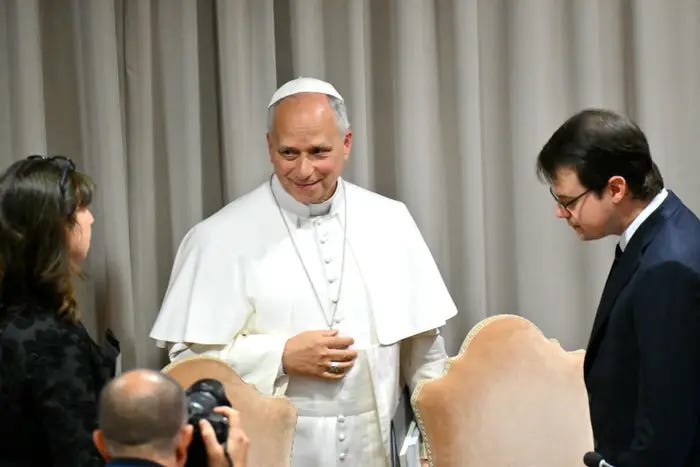
Did the Pope use AI to write about the dangers of AI?
Analyses have determined that parts of the Magnifica Humanitas appear to have been written by AI.

joão (@johnfields091.bsky.social)
Lisboa/Portugal Books, comics, records/music, films, games (interests, not activities). Mostly random thoughts in short form here, and in long(ish)-form on my blog. https://sobreiromecanico.tumblr.com/ (Photo: Eurasian Eagle Owl by Paul Bankowitsch)

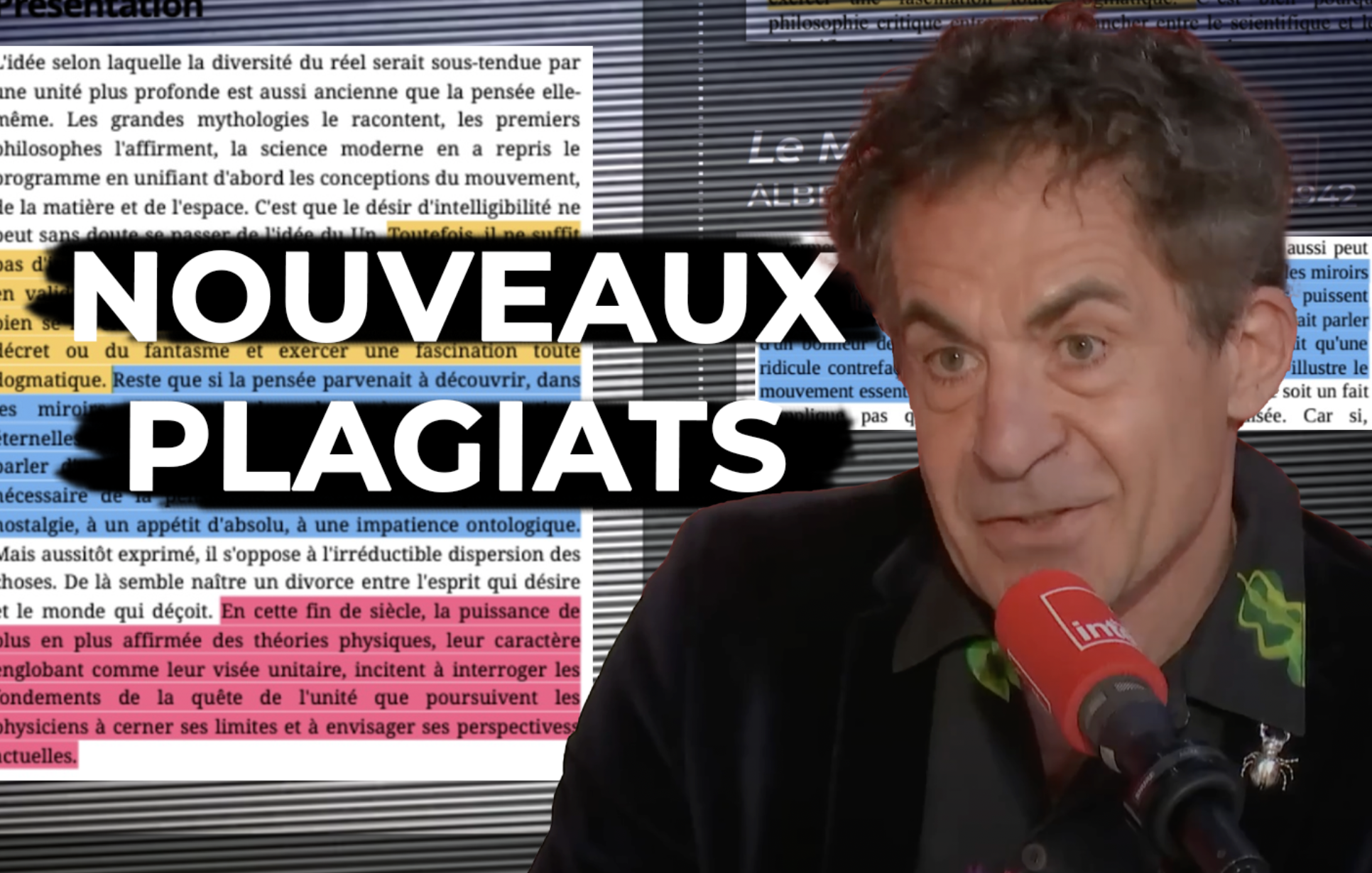
Étienne Klein, une thèse constellée de plagiats - Par Loris Guémart | Arrêt sur images
Le philosophe des sciences préféré des médias a bâti sa carrière et sa légitimité scientifique à partir d'une thèse, soutenue en 1999, sur la quête de l'unité en physique. Elle a été publiée en 2000 par les Presses universitaires de France. Or, cette thèse est constellée de dizaines de paragraphes, ou même de pages entières, copiés-collés sans guillemets ni attributions. Des emprunts à une vingtaine d'auteurs et autrices, publié·es aussi bien dans des ouvrages pointus que dans des livres grand public. Confronté à notre recension, Étienne Klein a préféré garder le silence. Un mois après ces révélations, l'Université Paris Cité a ouvert une "instruction" dont le rapport final est attendu fin 2025.
Actual Air in the Purple Mountains: An Interview With David Berman
Poems, readings, poetry news and the entire 110-year archive of POETRY magazine.

Tradition and the Individual Talent
Poems, readings, poetry news and the entire 110-year archive of POETRY magazine.

Homage to Catalonia
"Homage to Catalonia" is George Orwell's personal account of his experiences and observations fighting for the POUM militia of the Republican army during the Spanish Civil War. The war was one of the defining events of his political outlook and a significant part of what led him to write in 1946, "Every line of serious work that I have written since 1936 has been written, directly or indirectly, against totalitarianism and for Democratic Socialism, as I understand it". The first edition was published in the United Kingdom in 1938. The book was not published in the United States until February 1952, when it appeared with an influential preface by Lionel Trilling. The only translation published in Orwell's lifetime was into Italian, in December 1948. A French translation by Yvonne Davet—with whom Orwell corresponded, commenting on her translation and providing explanatory notes—in 1938–39, was not published until five years after Orwell's death.