


The Death and Life of Great American Cities is a 1961 book by writer and activist Jane Jacobs. The book is a critique of 1950s urban planning policy, which it holds responsible for the decline of many city neighborhoods in the United States. The book is Jacobs' best-known and most influential work.
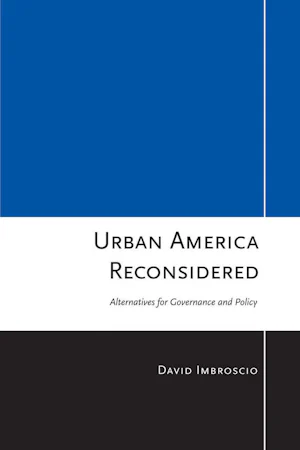
Urban America Reconsidered by David L. Imbroscio | Paperback | Cornell University Press
The aftermath of Hurricane Katrina laid bare the tragedy of American cities. What the storm revealed about the social conditions in New Orleans shocked many Americans. Even more shocking is how widespread these conditions are throughout much of urban...
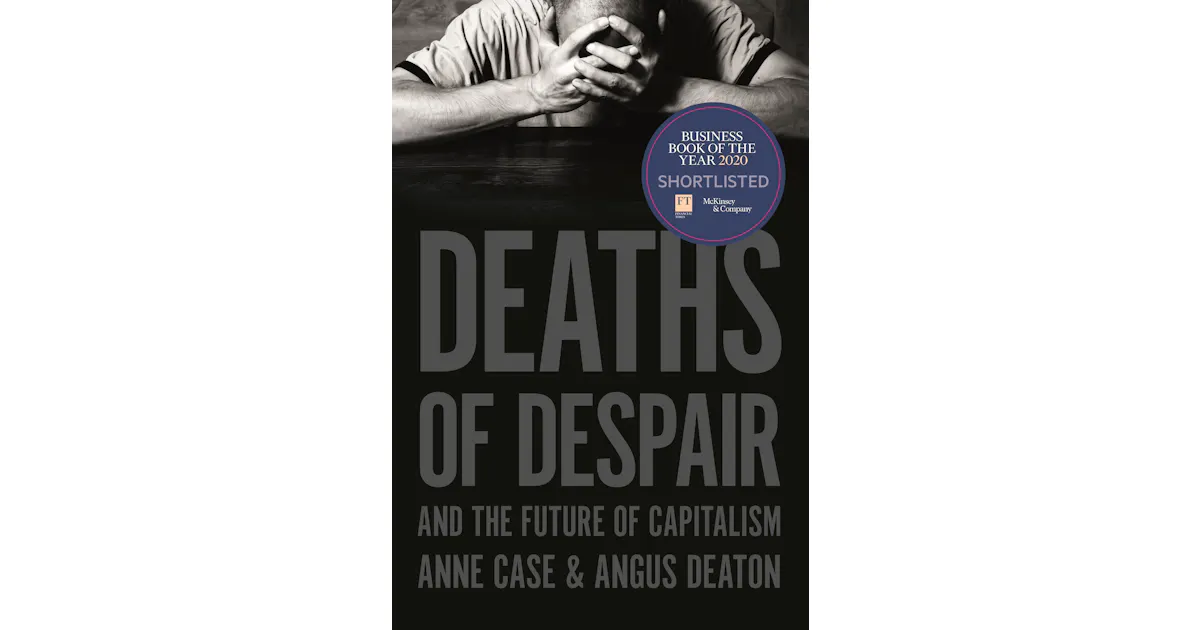
Deaths of Despair and the Future of Capitalism
A New York Times BestsellerA Wall Street Journal BestsellerA New York Times Notable Book of 2020A New York Times Book Review Editors' ChoiceShortlisted for the Financial Times and McKinsey Business Book of the YearA New Statesman Book to ReadFrom economist Anne Case and Nobel Prize winner Angus Deaton, a groundbreaking account of how the flaws in capitalism are fatal for America's working class
The Death of Newsweek
The U.S. is losing something as the publication disintegrates—a magazine with guts and heart.

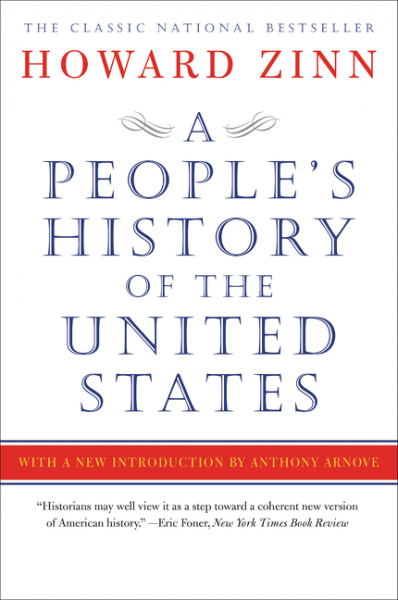
A People’s History of the United States - Howard Zinn
By Howard Zinn. Book - Non-fiction. HarperCollins. 1980; multiple updates with a new introduction by Anthony Arnove in 2015. Howard Zinn's groundbreaking work on U.S. history. Since its original landmark publication in 1980, A People’s History of the United Stateshas been chronicling American history from the bottom up, throwing out the official version of history taught in schools — with its emphasis on great men in high places — to focus on the street, the home, and the workplace.

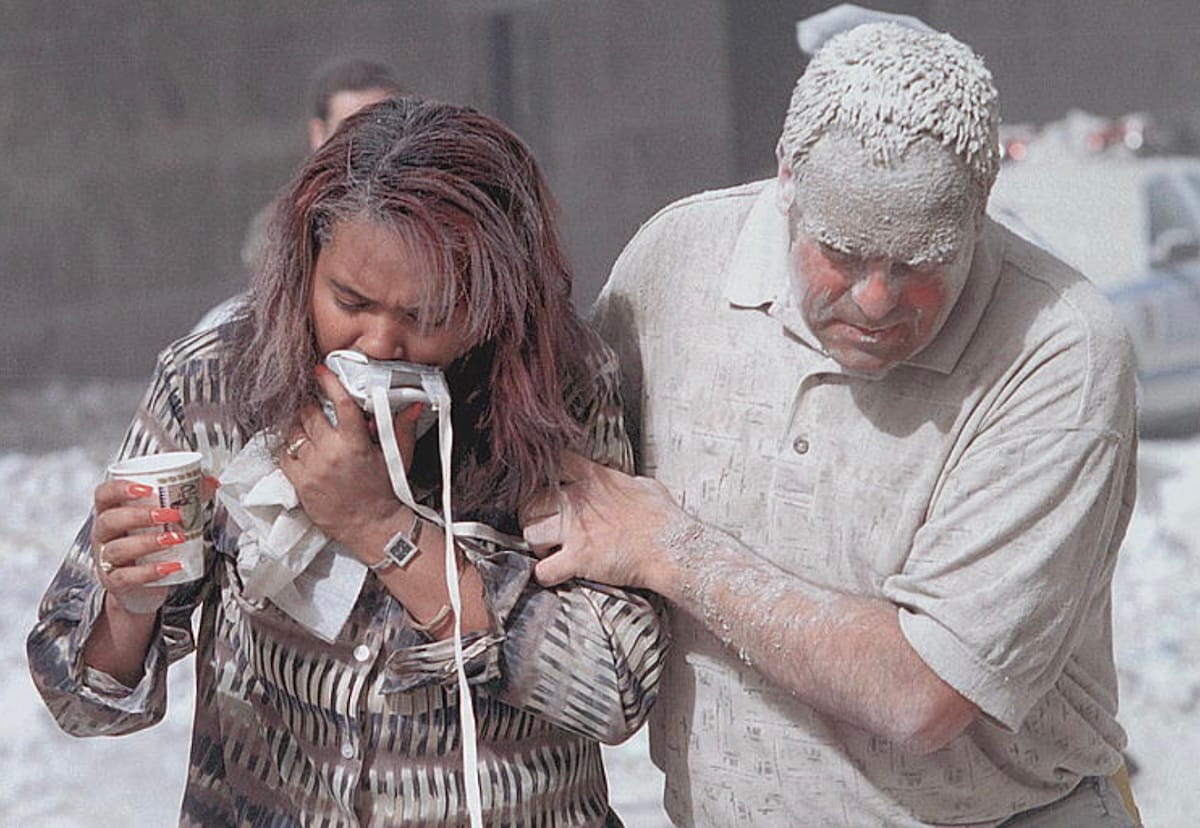
Maloney, Nadler ask NYC mayors what they knew about health hazards at Ground Zero
What did then-New York City Mayors Rudy Giuliani and Michael Bloomberg really know about the toxic threats posed by the ruins for the World Trade Center, and when did they know it? More than two decades after the catastrophic attacks, and…

Book Review of Making All the World America
Steven T. Newcomb reviews Timothy Bowers Vasko’s Making All the World America: Native Information and the Doctrine of Discovery (University of Pennsylvania Press, 2026).
A City for Children — Oakland Public Library
A City for Children — Gutman, Marta, — American cities are constantly being built and rebuilt, resulting in ever-changing skylines and neighborhoods. While the dynamic urban landscapes of New York, Boston, and Chicago have been widely studied, there is much to be gleaned from West Coast cities, especially in California, where the migration boom at the end of the nineteenth century permanently changed the urban fabric of these newly diverse, plural metropolises. In A City for Children Marta Gutman focuses on the use and reuse of everyday buildings in Oakland, California, to make the city a better place for children. She introduces us to the women who were determined to mitigate the burdens placed on working-class families by an indifferent industrial capitalist economy. Often without the financial means to build from scratch, women did not tend to conceive of urban land as a blank slate to be wiped clean for development. Gutman shows how, over and over, women instead turned private houses and even a saloon in Oakland into orphanages, kindergartens, settlement houses, and day care centers, and in the process built the charitable landscape--a network of places that was critical for the betterment of children, families, and public life. The industrial landscape of Oakland, riddled with the effects of social inequality and racial prejudice, is not a neutral backdrop in Gutman's story but an active player. Spanning one hundred years of history, A City for Children provides a compelling model for building urban institutions, and it demonstrates that children, women, charity, and reform, along with incremental construction, renovations, alterations, additions, and repurposed structures, are central to the understanding of modern cities.
NYC: can this city-state be completely self-reliant? | Aeon Essays
Green living in NYC need not be simple living – think skyscraper farms, meat-production towers and revamped aqueducts

Defusing the Depopulation Bomb
Book Review: "After the Spike" by Dean Spears and Michael Geruso

Confronting New York City's Lies About Toxic Air After 9/11
Plus, a selection of some of the best writing on 9/11, and more news to take you into the weekend.
Community Wealth Building — Urban Affairs Review
Scholars of urban politics have long debated the issue of what cities can and should do to promote the economic well-being of their residents. As the of election Zohran Mamdani illustrates, urban residents are increasingly demanding that city governments do more to address the increasingly exorbitant costs of housing, childcare, and transportation. One obvious solution is to raise taxes on the private holders of wealth. By the same token, his election has prompted handwringing on the right about the “inevitable” flight of capital out of New York City. Scholarship that runs the gamut from the public choice school associated with the “city limits” perspective (Peterson 1981) through to Marxian accounts (Logan and Molotch 1987) all recognize that the private ownership of wealth and the mobility of capital puts cities in a bind, especially in a context of highly circumscribed levels of federal urban spending. Though several scholars (Logan and Swanstrom 1990; Kantor and Savitch 1993; Schragger 2016) have demonstrated that cities have greater latitude to promote egalitarian public policies than these perspective allow, few would argue that the deep structural problems of economic and social inequality can be fully resolved by tax-and-spend liberalism (Imbroscio 2010).
METAtropolis Series by John Scalzi
Tales set in a shared urban near future. The stories are about how America might transform after a collapse of society as we know it. METAtropolis: The D...
'Guns, Germs, and Steel' Reconsidered
Guns, Germs, and Steel: The Fates of Human Societies has had the kind of impact that most scholarly authors can only dream about for their works. First published by W.W. Norton in 1997, the book won a Pulitzer Prize the next year for its author, Jared Diamond, a professor of geography at the University of California at Los Angeles.

Culture & truth : the remaking of social analysis
xii, 253 pages ; 22 cm; Argues for a new approach to thinking and writing about culture. Exposing old conceptions, the book argues that new ethnographic writing must come to terms with the dynamic nature of social reality - with history, spontaneity, and human emotions; Originally published: Boston: Beacon, 1989; Includes index; Self-Renewing 2017; Includes index

John Brown, abolitionist : the man who killed slavery, sparked the Civil War, and seeded civil rights : Reynolds, David S., 1948-
Includes bibliographical references and index
