


The Demon-Haunted World: Science as a Candle in the Dark is a 1995 book by the astronomer and science communicator Carl Sagan. In it, Sagan aims to explain the scientific method to laypeople and to encourage people to learn critical and skeptical thinking. He explains methods to help distinguish between ideas that are considered valid science and those that can be considered pseudoscience. Sagan states that when new ideas are offered for consideration, they should be tested by means of skeptical thinking and should stand up to rigorous questioning.
Carl Sagan’s Baloney Detection Kit: Tools for Thinking Critically & Knowing Pseudoscience When You See It
Though he died too young, Carl Sagan left behind an impressively large body of work, including more than 600 scientific papers and more than 20 books.
Guest post: If you’re going to critique science, be scientific about it
Loren K. Mell Editor’s note: This post responds to a Feb. 13 article in The Atlantic, “The Scientific Literature Can’t Save Us Now,” written by Retraction Watch cofounders Adam Marcus and Ivan Oran…

Dark-Moneyed Denialists Are Running 'Fixing Science' Symposium of Doubt
The “Fixing Science” symposium, which is hosted by the National Association of Scholars and kicks off today in Oakland, California, includes credible speakers who want to improve some areas of science hurt by the use of poor statistical methods or making irreproducible claims. Unfortunately, they are outnumbered by people who have often cast doubt on mainstream climate, environmental, and health sciences. For […]
Read - Night Science
Itai and Martin have published – and continue to publish – about the main aspects of the creative scientific process and its thinking tools.

The Ascendancy of the Scientific Dictatorship: An Examination of Epistemic Autocracy, from the 19th to the 21st Century
A. In the past, the elite manipulated the population through a more mystical belief system. In particular, there was the institution of Sun worship (typified by deities such as Osiris and Set). However, as antiquity gave way to modern history, this system of control began to lose its effectiveness. During the sixteenth century, the ruling class managed to co-opt a relatively new methodology of truth discernment...science. Over the years, they would contaminate this institution with their own virulent strains of thought...metaphysical naturalism, radical empiricism, Malthusianism, Darwinism, behaviorism, radical environmentalism, etc. Many of these paradigms were derivative of their own occult doctrines, thinly veiled to appear as objective science. All of these concepts correlate in some way and, at some point, coalesce. Together, they are gradually paving the way for the re-introduction of the hidden god of the Ancient Mysteries.
Theorizing the Human Sciences in the Age of Absolute Disruption: Historical Criticism and Its Remainders | The Journal for Cultural and Religious Theory | JCRT
Adam DJ Brett reads Jason Ānanda Josephson-Storm’s trilogy — The Myth of Disenchantment, Metamodernism, and The Genealogy of Genealogy — as one project asking whether a thing exists, how it arose, what grounds our claims

Spirits and the incompleteness of physics
Complexity, renormalization, and the spirits beyond the horizon of theory

Zechen Zhang on Twitter / X
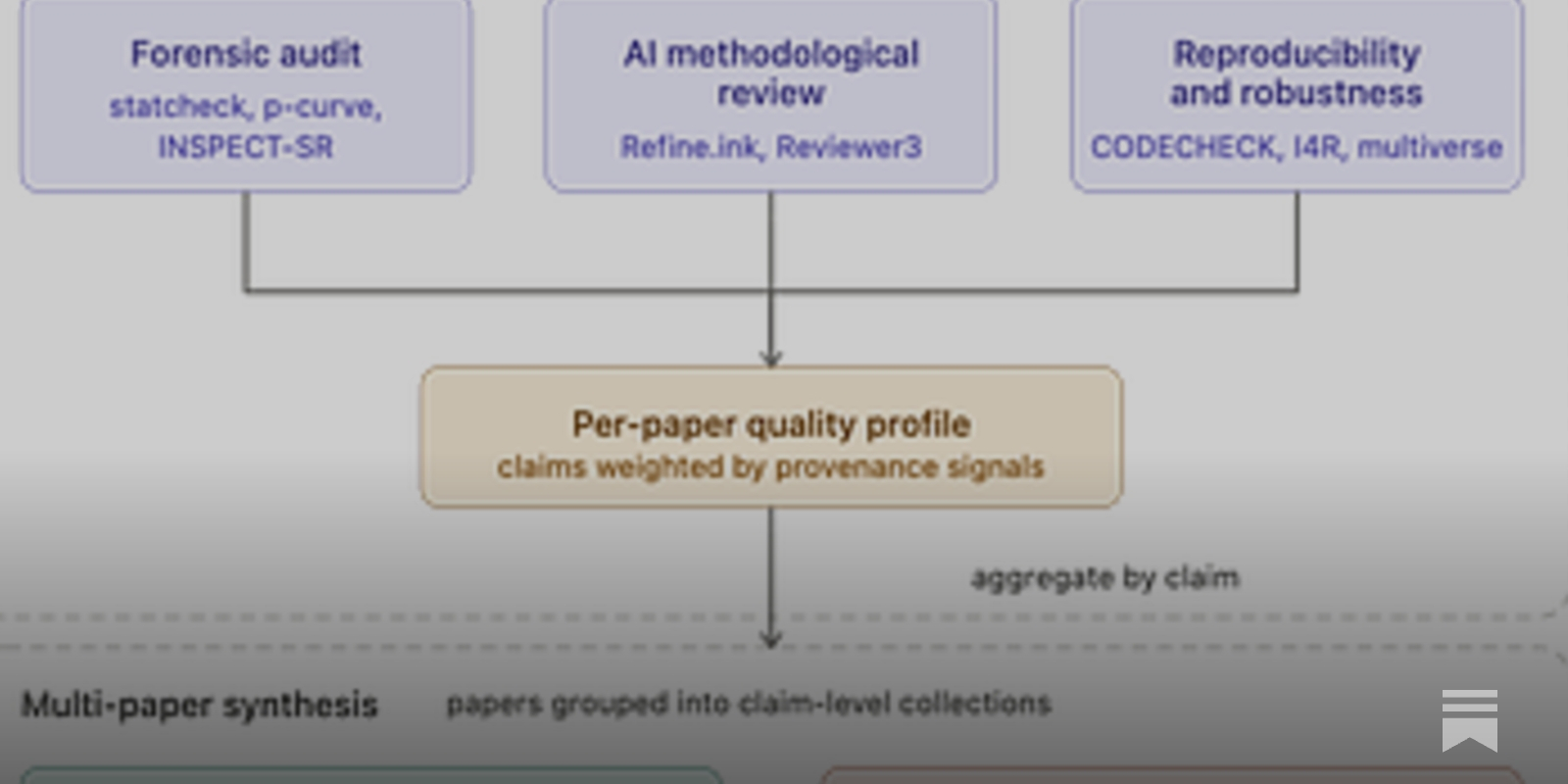
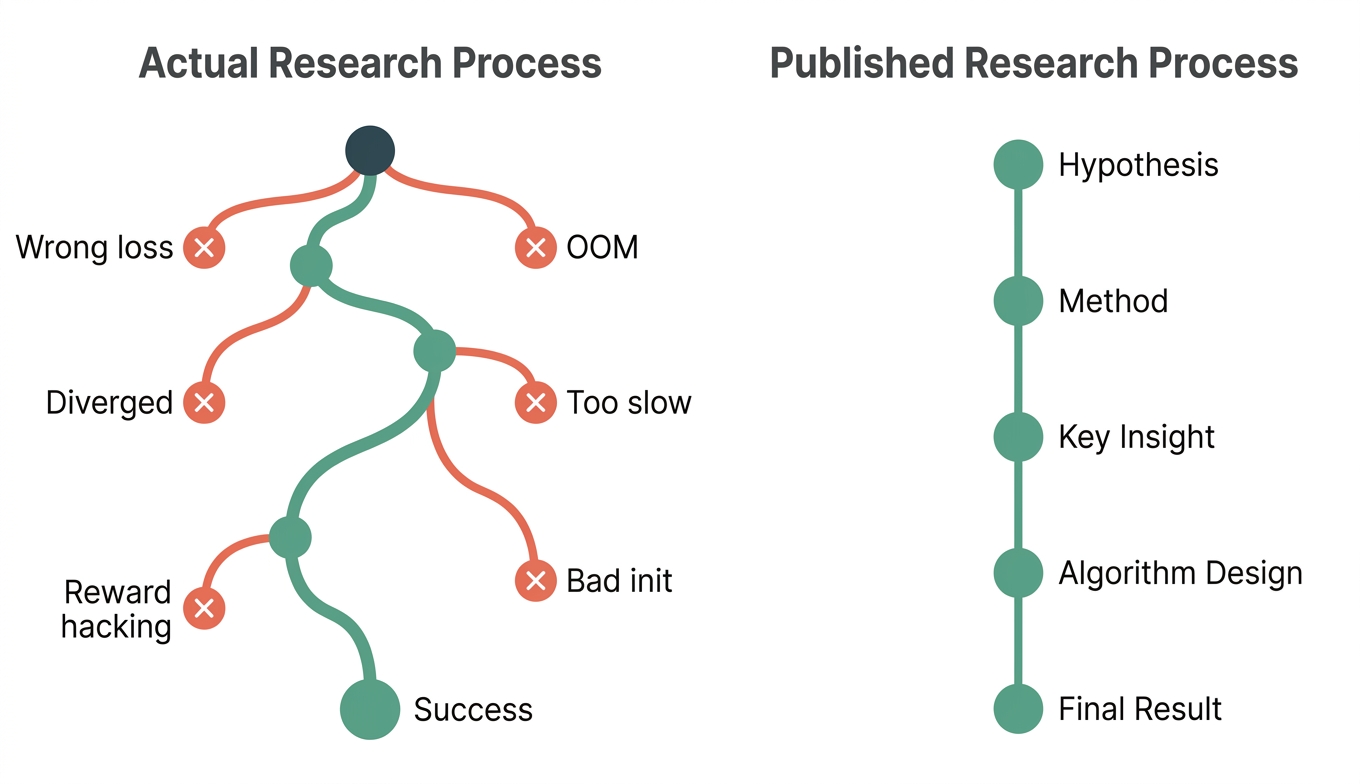
1/ For nearly 350 years, science has communicated itself through one object: the paper. A linear narrative, frozen as a PDF, written for a human reader. We've come to treat that format as the medium of science itself.It doesn't have to be. It's a historical artifact. 🧵 pic.twitter.com/P5UUhceLkC— Zechen Zhang (@ZechenZhang5) April 30, 2026
Predictive processing frameworks for perception can explain recent drone sightings in the United States
We draw on the predictive processing theory of perception to explain why healthy, intelligent, honest, and psychologically normal people might easily misperceive lights in the sky as threatening or extraordinary objects, especially in the context of WEIRD (western, educated, industrial, rich, and democratic) societies. We argue that the uniquely sparse properties of skyborne and celestial stimuli make it difficult for an observer to update prior beliefs, which can be easily fit to observed lights. Moreover, we hypothesize that humans have likely evolved to perceive the sky and its perceived contents as deeply meaningful. Finally, we briefly discuss the possible role of generalized distrust in scientific institutions and ultimately argue for the importance of astronomy education for producing a society with prior beliefs that support veridical perception.


I am disappointed by the fact that so many seem tempted to share a "nonrigorous", unserious attempt at quantifying fraud in science because it passes some silly vibe check ("I asked others and they agree"). So in the name of good science, we're ready to produce bad science as a rhetorical tool.
I call this the dark matter theory of science. Blogs, social media, etc - a majority of what actually influences science is invisible to the system (esp in AI) Real systems change in science will only be possible when we recognize these sources of influence and intentionally design for them

Eugene Vinitsky 🍒
Kinda feel weird that a few blog posts I’ve written in a few hours will probably have more educational impact than any amount of teaching I’ll ever do

