

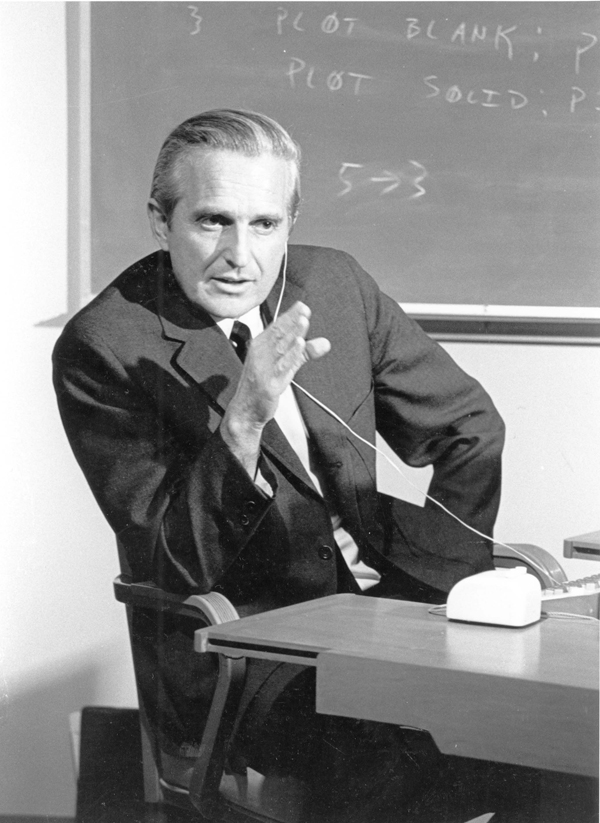
"The Mother of All Demos" was a landmark computer demonstration, named retroactively, of developments by Stanford Research Institute's Augmentation Research Center. It was presented at the Association for Computing Machinery / Institute of Electrical and Electronics Engineers (ACM/IEEE)—Computer Society's Fall Joint Computer Conference in San Francisco, by Douglas Engelbart, on December 9, 1968.
The Mother of All Demos, presented by Douglas Engelbart (1968)
Minimum Viable Demos
An evening showcase of ambitious projects exploring technology, art, and science.
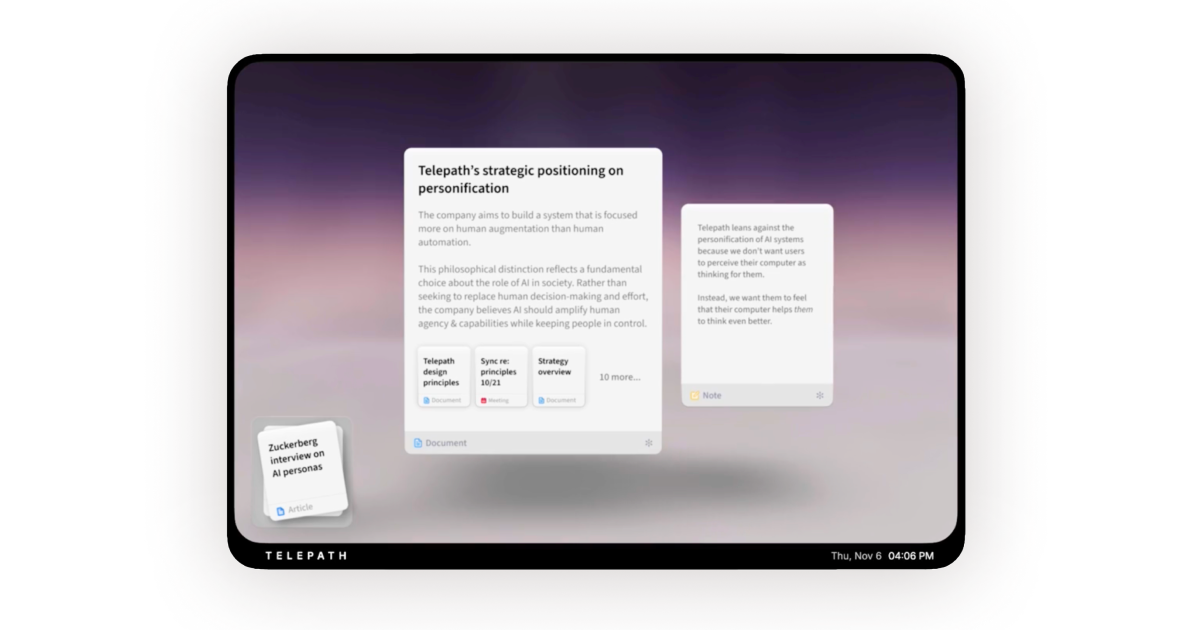
Demoing the AI computer that doesn't yet exist
A demo of what an AI-native personal computer could look like.
Stuart K. Card and Thomas P. Moran, "User Technology—From Pointing to Pondering"

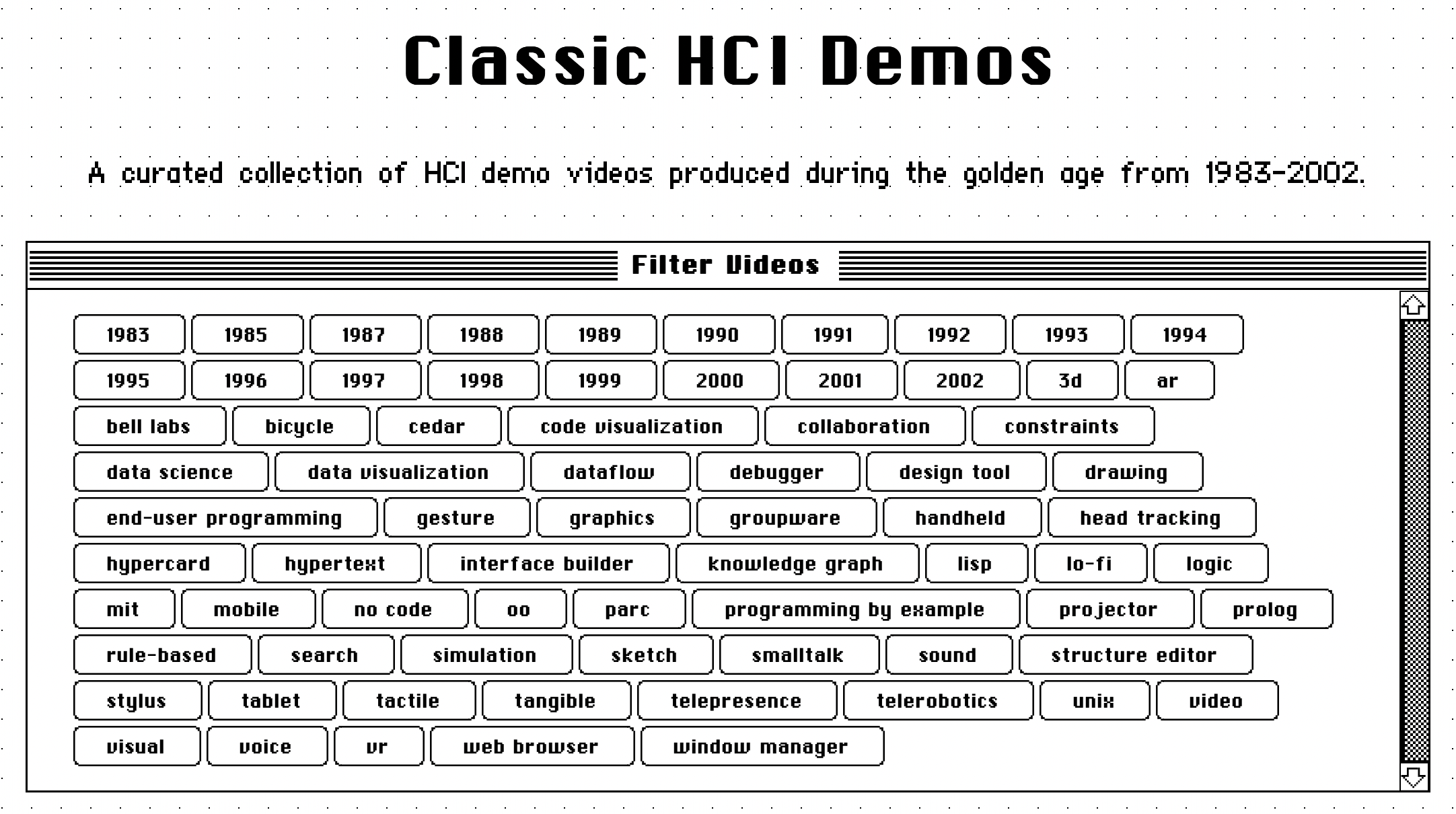
Classic HCI demos
A curated collection of HCI demo videos produced during the golden age from 1983-2002.
William Latham - Art and the Computer (1990)
The International Research Conference in the History of Computing at Los Alamos, 1976
Humanities in the Machine - Blain Smith
There is something quietly remarkable about the people who built the foundations of modern computing. Not their technical achievements, though those are extraordinary. What is remarkable is where they came from before they ever touched a machine.
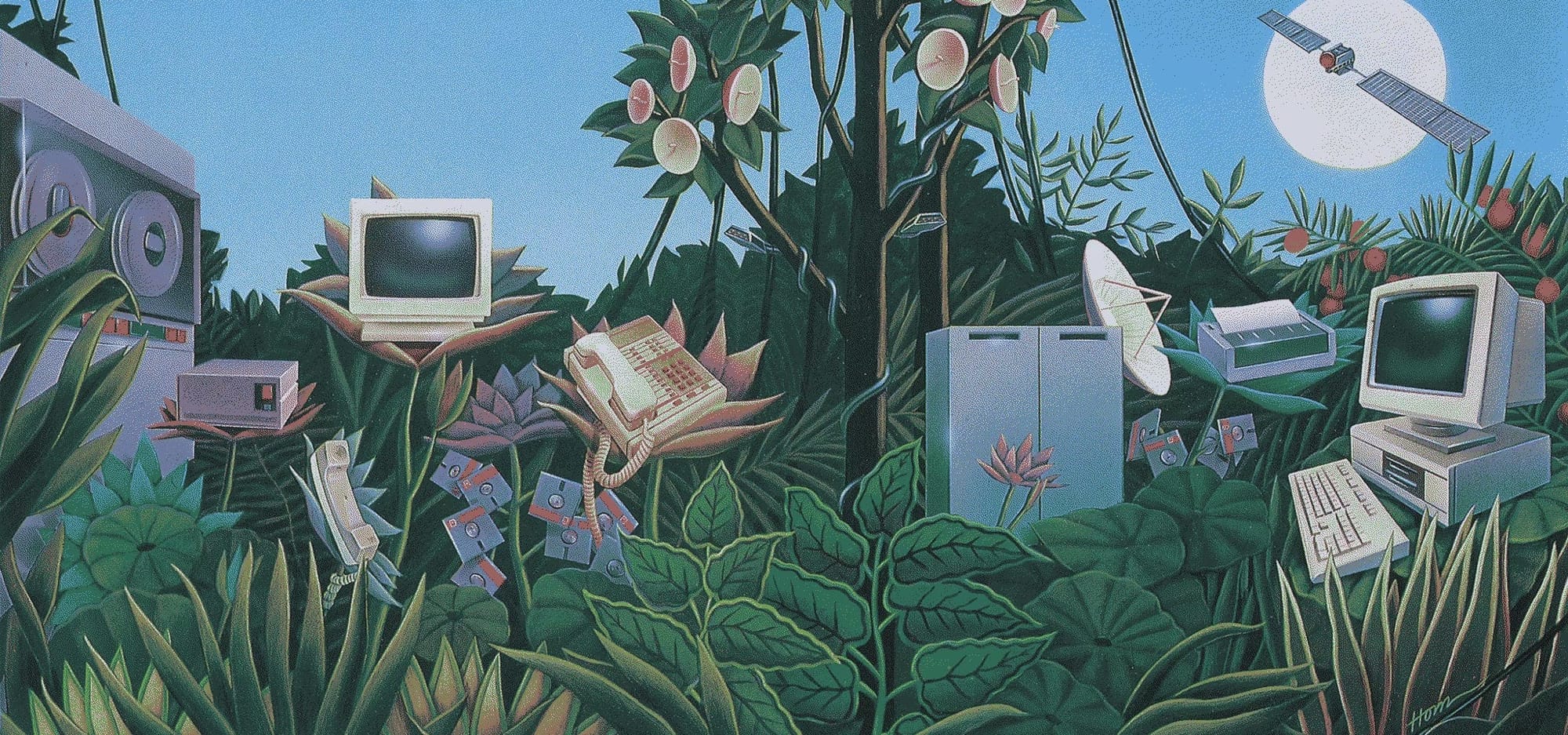
Computer Plant Life
"Thе Commodore РЕТ offers you а safe passage through the primeval swamр of computerization," says the ad copy accompanying this uncredited illustration in a June 1981 issue of Personal Computer World: That image and ad copy offers a perfect example of how most retro tech illustration works: Visualize the hell
triumph of the nerds
Celebrating the 75th Anniversary of the Turing Test
Jermolene — learning to program since 1978
In April 2024 I gave the opening keynote at the software industry conference “QCon London” under the title "The Home Computer That Roared: How the BBC Micro Shaped Our World".
"The Printing Press Democratized Knowledge": When Slogans Masquerade as History — Sonja Drimmer
The phrase is said so frequently it seems, like the mechanism it celebrates, to mechanically replicate itself. It's become a favorite catchphrase among tech boosters of any sort (see my post on Apple's "Crush" commercial ), but especially now among the hustlers of "AI.&quo

» Apple, Carmen Sandiego, and the Rise of Edutainment The Digital Antiquarian
If there was any one application that was the favorite amongst early boosters of personal computing, it was education. Indeed, it could sometimes be difficult to find one of those digital utopianists who was willing to prioritize anything else — unsurprisingly, given that so much early PC culture grew out of places like The People’s Computer Company, who made “knowledge is power” their de facto mantra and talked of teaching people about computers and using computers to teach with equal countercultural fervor. Creative Computing, the first monthly magazine dedicated to personal computing, grew out of that idealistic milieu, founded by an educational consultant who filled a big chunk of its pages with plans, schemes, and dreams for computers as tools for democratizing, improving, and just making schooling more fun. A few years later, when Apple started selling the II, they pushed it hard as the learning computer, making deals with the influential likes of the Minnesota Educational Consortium (MECC) of Oregon Trail fame that gave the machine a luster none of its competitors could touch. For much of the adult public, who may have had their first exposure to a PC when they visited a child’s classroom, the Apple II became synonymous with the PC, which was in turn almost synonymous with education in the days before IBM turned it into a business machine. We can still see the effect today: when journalists and advertisers look for an easy story of innovation to which to compare some new gadget, it’s always the Apple II they choose, not the TRS-80 or Commodore PET. And the iconic image of an Apple II in the public’s imagination remains a group of children gathered around it in a classroom.
