


Thomas Samuel Kuhn was an American historian and philosopher of science whose 1962 book The Structure of Scientific Revolutions was influential in both academic and popular circles. The book popularized the term paradigm shift, which has since become an English-language idiom.
Normal science
Normal science, identified and elaborated on by Thomas Samuel Kuhn in The Structure of Scientific Revolutions,[1] is the regular work of scientists theorizing, observing, and experimenting within a settled paradigm or explanatory framework.[2] Regarding science as puzzle-solving,[3] Kuhn explained normal science as slowly accumulating detail in accord with established broad theory, without questioning or challenging the underlying assumptions of that theory.
Theorizing the Human Sciences in the Age of Absolute Disruption: Historical Criticism and Its Remainders | The Journal for Cultural and Religious Theory | JCRT
Adam DJ Brett reads Jason Ānanda Josephson-Storm’s trilogy — The Myth of Disenchantment, Metamodernism, and The Genealogy of Genealogy — as one project asking whether a thing exists, how it arose, what grounds our claims

Thomas Kuhn Foundation | Science Intelligence for the New World
The world's first science intelligence engine capable of monitoring scientific progress in real time
The Philosophical Implications of the Second Scientific Revolution
Notes from my history of philosophy course lecture on Darwin, Maxwell, Einstein, and Bohr

Designing AI for Disruptive Science
Why scaling AI won’t automatically lead to paradigm shifts.
Kronos | The Paper Pilot
The Paper Pilot's digital garden of thoughts on philosophy, politics, and sociology
Timothy Morton
Timothy Bloxam Morton is a professor and Rita Shea Guffey Chair in English at Rice University. A member of the object-oriented philosophy movement, Morton explores the intersection of object-oriented thought and ecological studies. Morton's use of the term 'hyperobjects' was inspired by Björk's 1996 single 'Hyperballad', although the term 'Hyper-objects' has also been used in computer science since 1967. Morton uses the term to explain objects so massively distributed in time and space as to transcend localization, such as climate change and styrofoam.

Speculations on the Future of the Scientific Method
The following essay was published 20 years ago (January, 2006) on my blog The Technium. I edited the intro here, but the speculations are basically unchanged.

Rudy's Theory of Revolution
Eclecticisms Conversations Series: Episode 001 - Interview with Rudy Fraser of Blacksky
Stuart Kauffman: The "adjacent possible" — and how it explains human innovation
From the astonishing evolutionary advances of the Cambrian explosion to our present-day computing revolution, the trend of dramatic growth after periods of stability can be explained through the theory of the "adjacent possible," says theoretical biologist Stuart Kauffman. Tracing the arc of human history through the tools and technologies we've invented, he explains the impact human ingenuity has had on the planet -- and calls for a shift towards more protection for all life on Earth.
Anarchism | The Paper Pilot
The Paper Pilot's digital garden of thoughts on philosophy, politics, and sociology
Technocracy References
References and Revisions “Should Scientists and Engineers Run Society?” References [1] Wikipedia: “Technocracy.” [2] Academic Paper: Gunnell, John G. "The technocratic image and the theory of technocracy." Technology and culture 23.3 (1982): 392-416. [3] Academic Paper: Oh, Kyunghwan. "A non-co...

Rudy's Theory of Revolution - Eclecticisms
Eclecticisms Conversations Series: Episode 001 - Interview with Rudy Fraser of Blacksky
Gerhard Lenski
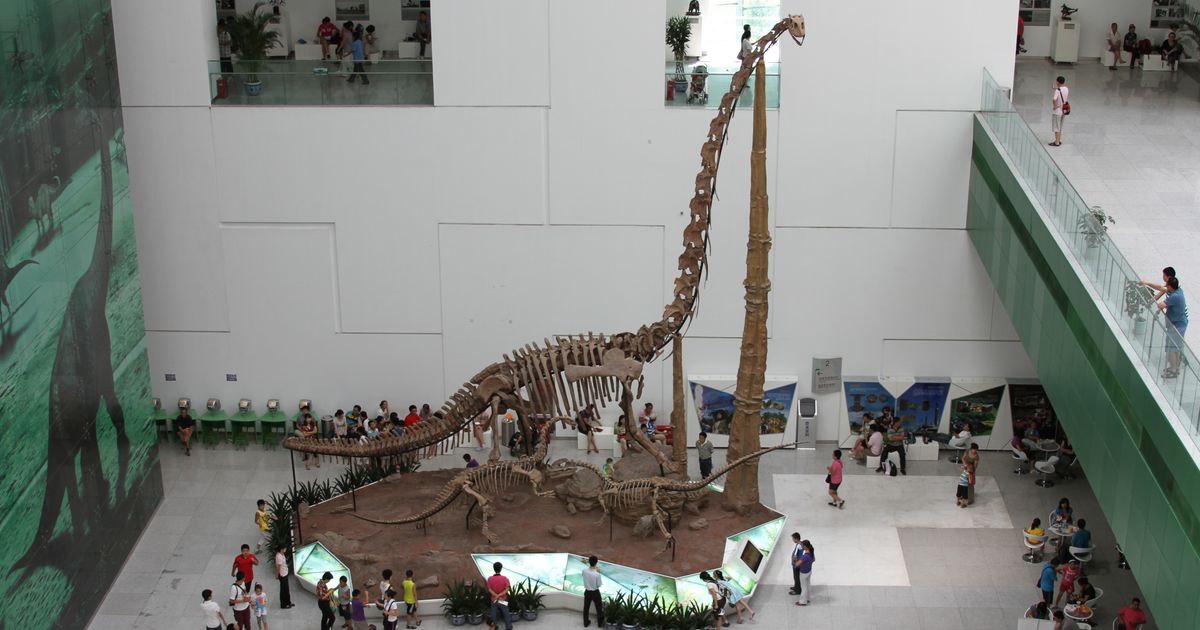
Gerhard Emmanuel "Gerry" Lenski, Jr. (August 13, 1924 – December 7, 2015) was an American sociologist known for contributions to the sociology of religion, social inequality, and introducing the ecological-evolutionary theory. He spent much of his career as a professor at the University of North Carolina at Chapel Hill, where he served as chair of the Department of Sociology, 1969–72, and as chair of the Division of Social Sciences, 1976–78.
"what if engineering a scientific revolution is, at least in part, a problem of organizing humans and coordinating effort?" uniconq.substack.com/p/the-ground-truth-institute h/t @ranganaut.bsky.social

The Ground Truth Institute
uniconq.substack.com