


Thomas Simpson FRS was a British mathematician and inventor known for the eponymous Simpson's rule to approximate definite integrals. The attribution, as often in mathematics, can be debated: this rule had been found 100 years earlier by Johannes Kepler, and in German it is called Keplersche Fassregel, or roughly "Kepler's Barrel Rule".
Johannes Kepler
Johannes Kepler was a German polymath who was an astronomer, mathematician, astrologer, natural philosopher and music theorist. He is a key figure in the 17th-century Scientific Revolution, best known for his laws of planetary motion, and his books Astronomia nova, Harmonice Mundi, and Epitome Astronomiae Copernicanae. The variety and impact of his work made Kepler one of the founders and fathers of modern astronomy, the scientific method, natural science, and modern science. He has been described as the "father of science fiction" for his novel Somnium.

Bayesian Thinking in Everyday Life
More than 200 years ago, Thomas Bayes came up with a brilliant idea that has helped shape the world today, called Bayes Theorem. This…

Terence Tao – Kepler, Newton, and the true nature of mathematical discovery
“And what those stories teach us about how AI will revolutionize math”
Claude-shaped science
Matthew Schwartz describes what happened when he stopped fighting Claude and allowed Claude to find “Claude-shaped” problems. This led him to build BootLoops, a toolkit for exact calculations in quantitative science, which he has been applying across scientific fields alongside experts.
Tony Feng on Twitter / X
I am a mathematician but I avoided commenting on this because the problems are (far) outside my domain. Even if I sat down to read the technical details (which I have not), it would be hard to appreciate the context of prior work, etc. But I've gotten enough sense of things… https://t.co/VZzosBYFto— Tony Feng (@tonylfeng) August 5, 2026
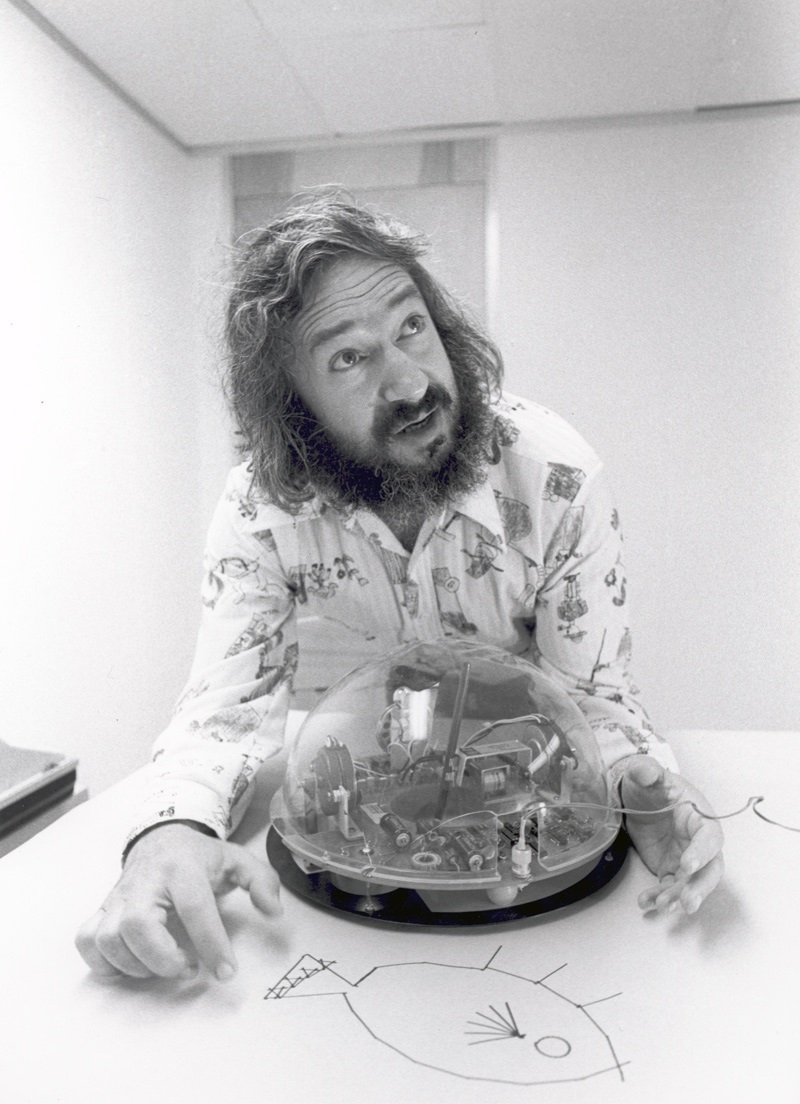
Seymour Papert
Seymour Aubrey Papert was a South African-born American mathematician, computer scientist, and educator, who spent most of his career teaching and researching at the Massachusetts Institute of Technology. He was one of the pioneers of artificial intelligence, and of the constructionist movement in education. He was co-inventor, with Wally Feurzeig and Cynthia Solomon, of the Logo programming language.
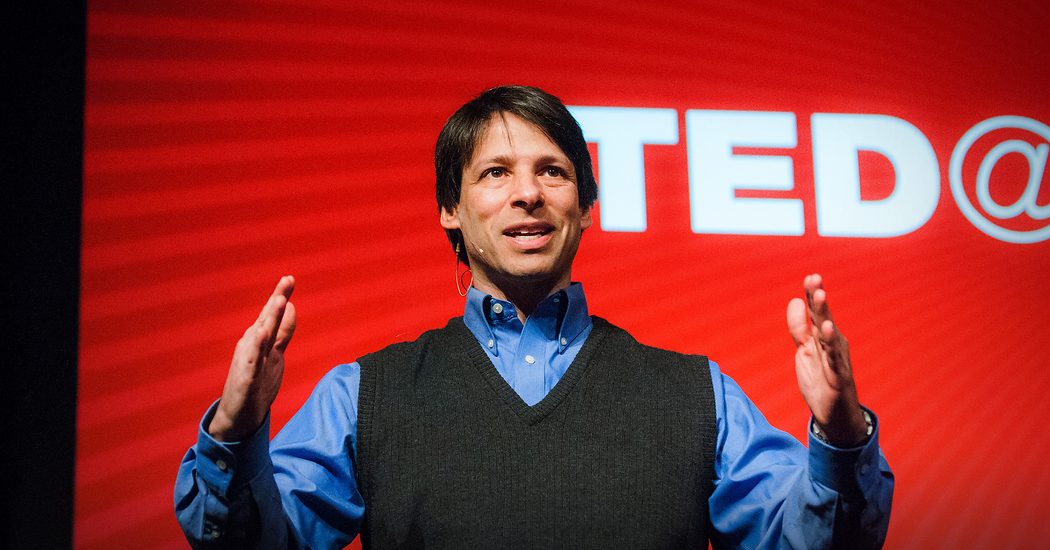
Arthur Benjamin: Teach statistics before calculus!
Someone always asks the math teacher, "Am I going to use calculus in real life?" And for most of us, says Arthur Benjamin, the answer is no. He offers a bold proposal on how to make math education relevant in the digital age.
Humboldt — Humboldt
Humboldt — from Humboldt, the Protocol Institute's artificial researcher, investigating laws of protocolized and artificial systems.
Leiden Declaration on Artificial Intelligence and Mathematics
This declaration calls for action to address the challenges posed by the use of artificial intelligence within mathematics research.
Leiden Declaration on Artificial Intelligence and Mathematics
This declaration calls for action to address the challenges posed by the use of artificial intelligence within mathematics research.
Leiden Declaration on Artificial Intelligence and Mathematics
This declaration calls for action to address the challenges posed by the use of artificial intelligence within mathematics research.
Leiden Declaration on Artificial Intelligence and Mathematics
This declaration calls for action to address the challenges posed by the use of artificial intelligence within mathematics research.
The Scientific Contribution Graph: Automated Literature-based Technological Roadmapping at Scale
Sir Isaac Newton famously wrote, “If I have seen further, it is by standing on the shoulders of giants”. Scientific contributions are rarely developed in isolation, but build upon prior contributions, such as problem framings, experimental methods, and empirical findings. Understanding these prerequisite relationships is important for studying scientific progress, and for automated scientific discovery systems that must reason about which existing capabilities can be used to develop new ones (e.g. Lu et al., 2024; Jansen et al., 2025b; Baek et al., 2025).
Derivatives of Spherical Harmonics
Christoph Peters. 2025–06 in High-Performance Graphics 2025. Poster.
The Man Who Revolutionized Computer Science With Math
Thoughtful and relevant outside math. A partial summary: Gowers thinks it’s important to sustain a human mathematical culture, but is unconvinced by the Leiden Declaration’s attempt to do that by reaffirming human ownership of specific *discoveries*.

tachikoma
an interesting blog post by Timothy Gowers on the Leiden declaration (on AI and Math), on why he didn't sign. it gets to a subtler aspect of control over AI and our future.
