


The tragedy of the anticommons is a type of coordination breakdown, in which a commons does not emerge, even when general access to resources or infrastructure would be a social good. It is a mirror-image of the older concept of tragedy of the commons, in which numerous rights holders' combined use exceeds the capacity of a resource and depletes or destroys it. The "tragedy of the anticommons" covers a range of coordination failures, including patent thickets and submarine patents. Overcoming these breakdowns can be difficult, but there are assorted means, including eminent domain, laches, patent pools, or other licensing organizations.
Tragedy of the commons
The tragedy of the commons is the idea that when a resource is shared and can benefit the individual at a cost to the community, it is rational for the individual to overuse the resource, even though this collectively leads to the depletion of the resource for everyone. The concept has been widely discussed and criticized in economics, ecology, and other sciences.

The tragedy of the commons is a false and dangerous myth | Aeon Essays
Far from being profoundly destructive, we humans have deep capacities for sharing resources with generosity and foresight

An alternate ending to the tragedy of the commons
I recently read Elinor Ostrom’s Governing the Commons and have been evangelizing it so enthusiastically that I figured I’d do a quick…
On Betraying Principles
Why Creative Commons must be about more than reducing friction on reuse This week, I had the experience of being told the work we are doing at Creative Commons right now is betraying the founding principles of the organization. This is not the first time and it won’t be the last.

The Commons as a Transformative Vision
By David Bollier & Silke Helfrich of The Commons Strategy Group, It has become increasingly clear that we are poised between an old world that no longer works and a new one struggling to be born. Surrounded by an archaic order of centralized hierarchies on the one hand and predatory markets on the other, presided […]

Solving The Tragedy Of The API Commons
Unlike the original Tragedy of the Commons, where self interest depletes a common resource, the API Tragedy of the Commons is a situation where the amazing proliferation of APIs has caused issues around both copyright and the duplication of effort and resource. The former was highlighted in the Oracle vs [...]

A Tale of Two Theories (of Coordination)
Leveraging and Deleveraging Toward Thick Sovereignty

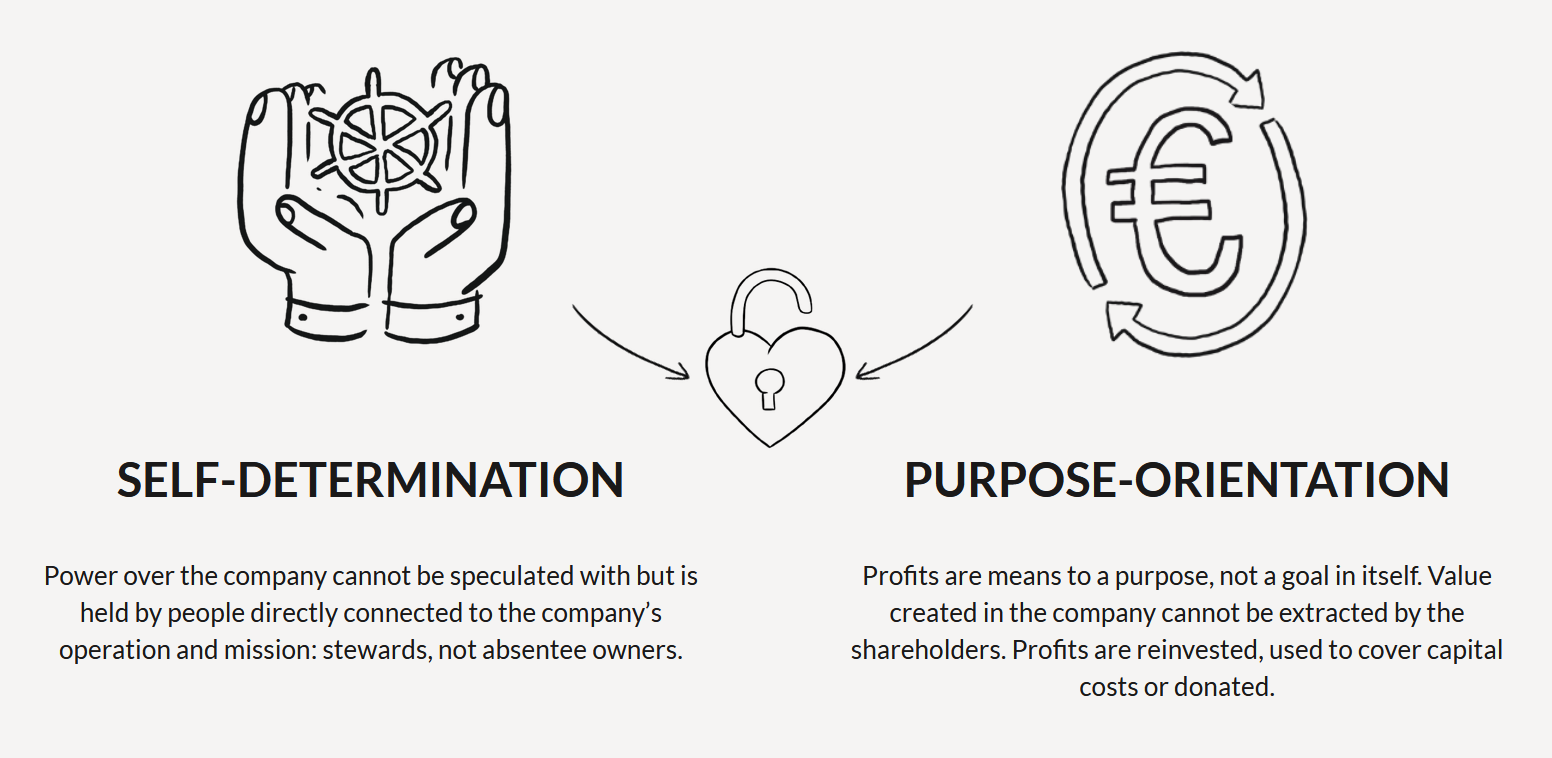
Company as a Commons
What if excess wealth derived from business couldn't be privatized? Through the levers of steward-ownership, companies can protect their purpose-oriented long term mission from the maligned incentives of absentee stakeholders.
ICO Ethics, Filecoin, Short-term Fear & Long-term Greed
This is a hybrid post about what I think we need to see in order to avoid a hard landing for the ICO ecosystem (once the market inevitably…

Reclaiming the Computing Commons
Hunter writes: The commodification and exploitation of nature; the enclosure of the intellectual and informational commons in medicine, agriculture, and other areas of technical knowledge; the expropriation of public space to secure profit-all define an economic system supposedly premised on freedom.
Freeing Ourselves From The Clutches Of Big Tech
Right to repair and other efforts to liberate technology from monopolistic corporations is a precondition for winning many vital societal battles.

‘Investor Assemblies’ Are the Answer to ESG
Three academics propose “investor assemblies” as a response to the crisis in corporate governance.

Governing The Commons: The Evolution of Institutions for Collective Action
The governance of natural resources used by many individuals in common is an issue of increasing concern to policy analysts. Both state control and privatization of resources have been advocated, but neither the state nor the market has been uniformly successful in solving common-pool resource problems. After critiquing the foundations of pol icy analysis as applied to natural resources, Elinor Ostrom here provides a unique body of empirical data to explore the conditions under which common-pool resource problems have been satisfactorily or unsatisfactorily solved. Dr. Ostrom first describes three models most frequently used as the foundation for recommending state or market solutions. She then outlines theoretical and empirical alternatives to these models in order to illustrate the diversity of possible solutions. In the following chapters she uses institutional analysis to examine different ways - both successful and unsuccessful - of governing the commons. In contrast to the propositions of the " tragedy of the commons" argument. common-pool problems sometimes are solved by voluntary organizations rather than by a coercive state. Among the cases considered are communal tenure in meadows and forest, irrigation communities and other water rights. and fisheries. Governing the Commons makes a major contribution to the analytical literature on institutions and to our understanding of human cooperation. Elinor Ostrom is co-director of the Workshop in Political Theory and Policy Analysis and professor of political science at Indiana University.

Think Like a Commoner | A Short Introduction to the Life of the Commons
In our age of predatory markets and make-believe democracy, our troubled political institutions have lost sight of real people and practical realities. But if you look to the edges, ordinary people are reinventing governance and provisioning on their own terms. The commons is arising as a serious, practical alternative to the corrupt Market/State.
From ownership to stewardship: reimagining intellectual property governance through the Knowledge Commons Framework
Contemporary intellectual property (IP) governance remains strongly shaped by proprietary logics of exclusivity, control, and rights allocation, even as knowledge production becomes increasingly co...

Patent pool
In patent law, a patent pool is a consortium of two or more companies agreeing to cross-license patents relating to a particular technology. The creation of a patent pool can save patentees and licensees time and money, and, in case of blocking patents, it may also be the only reasonable method for making the invention available to the public.[1] Competition law issues are usually important when a large consortium is formed.