

The Transcontinental Arch refers to the islands of North America which extended from New Mexico to Minnesota and the Great Lakes region.[1][2] These islands were present during the Sauk sequence, the earliest cratonic sequence. As a result of the Sauk sequence, epeiric seas covered most of North America, leaving only the craton of the Canadian Shield and the Transcontinental Arch islands exposed.
Climate-driven depopulation and adaptation realities in America’s coastal ground zero
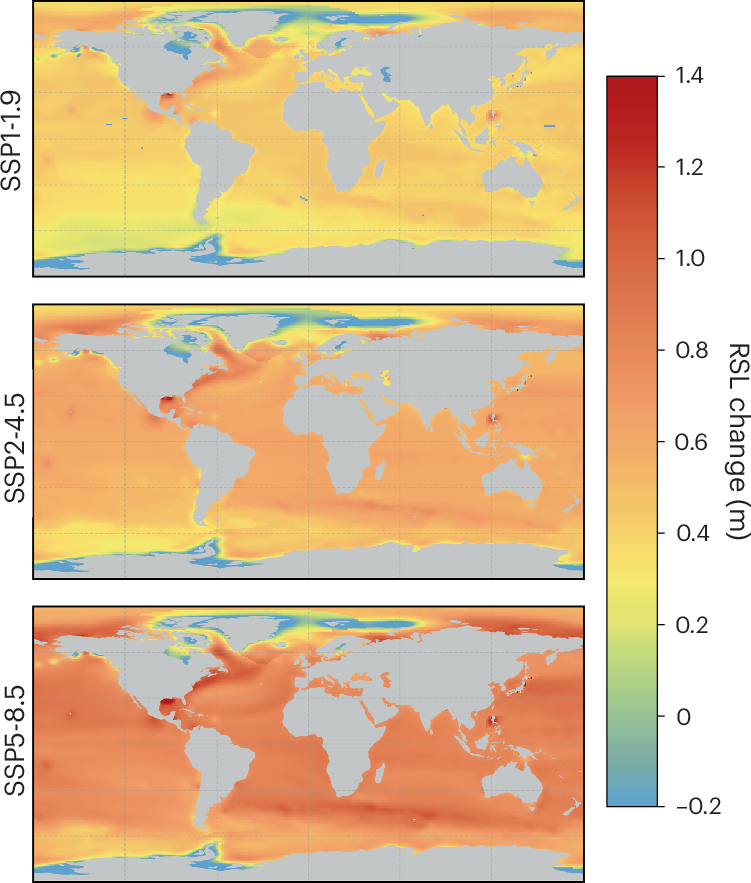
With global temperatures poised to exceed the 1.5 °C Paris Agreement threshold—a level that triggered substantial ice-sheet collapse during the Last Interglacial—low-elevation coastal zones face sea-level commitments far beyond current planning horizons. With this geological frame of reference, we examine the impact of sea-level rise on what may be the most physically vulnerable coastal zone in the world using prehistoric and contemporary patterns of human mobility. We highlight the positive aspects of the recently commenced out-migration in this region and argue that the fate of communities landwards of this coastal zone will be decided in the next few decades.


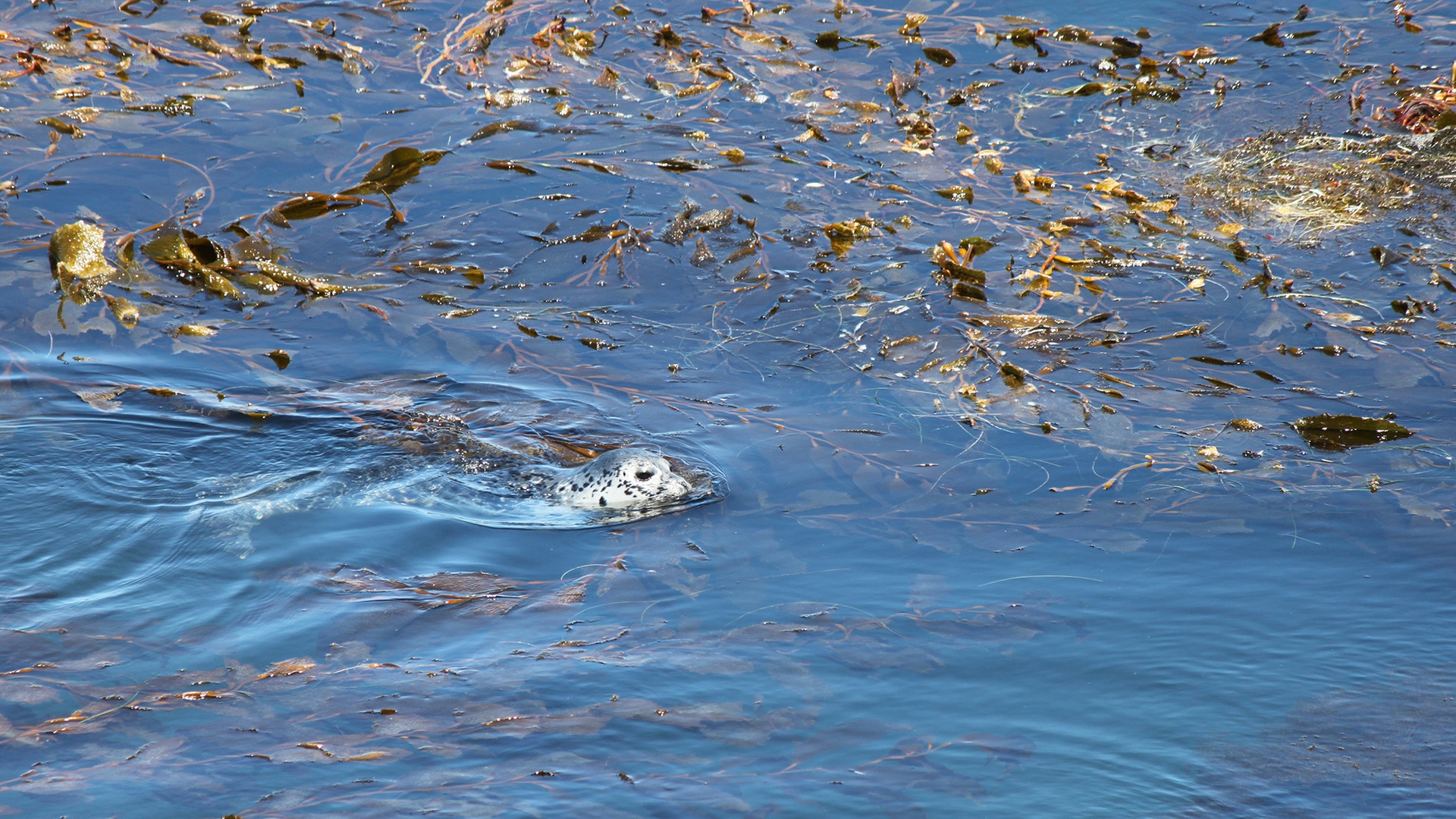
Pacific kelp forests are far older than we thought - Berkeley News
The unique underwater kelp forests that line the Pacific Coast support a varied ecosystem that was thought to have evolved along with the kelp over the past 14 million years. But a new study shows that kelp flourished off the Northwest Coast more than 32 million years ago, long before the appearance of modern groups […]
Salt Spring Island
Salt Spring Island or Saltspring Island is one of the Gulf Islands in the Strait of Georgia between mainland British Columbia, Canada, and Vancouver Island.

L’anthropocène, un objet frontière qui signifie plus qu’une tranche de temps géologique
Même si le groupe de travail officiel a refusé la proposition de créer une nouvelle époque géologique nommée anthropocène, le débat n’est pas clos pour autant.

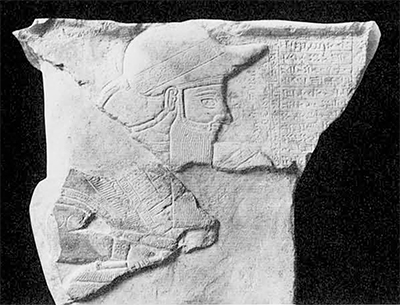
Expedition Magazine | Aspects of Elamite Art and Archaeology
In Sumerian texts we read about the country NIM, the wondrous mountain area which we call Iran today. The biblical […]
1491: New Revelations of the Americas Before Columbus
1491: New Revelations of the Americas Before Columbus is a 2005 non-fiction book by American author and science writer Charles C. Mann about the pre-Columbian Americas. It was the 2006 winner of the National Academies Communication Award for best creative work that helps the public's understanding of topics in science, engineering or medicine.

La Nature au cœur du raisonnement économique : l’émergence d’une nouvelle macroéconomie. - Chroniques de l'Anthropocène
Quand le FMI révolutionne la macroéconomie en présentant un cadre conceptuel original dans lequel la Nature se trouve au cœur du système économique.

East of these golden shores; architecture of the earlier days in Contra Costa and Alameda Counties | WorldCat.org
The Chesapeake Slave Trade:Regional Patterns, African Origins, and Some Implications | History Cooperative
THE movement of peoples from the Old World to the New and the resulting transfers or transformations of homeland cultures in new physical and social environments has been a central theme of early American history. Overwhelmingly, historians have written on the transfers of peoples from sixteenth- through eighteenth-century Europe and sub-Saharan Africa to various American destinations in isolation from one another. When these two contemporary migration flows are considered together, sheer numbers demonstrate that, up to 1776, the majority of men, women, and children transported from the Old World to British North America were, to varying degrees, unfree. And increasingly throughout most of the eighteenth century, those migrants came from Africa and were permanently enslaved.
The Nation on No Map: Black Anarchism and Abolition
The Nation on No Map examines state power, abolition, a…

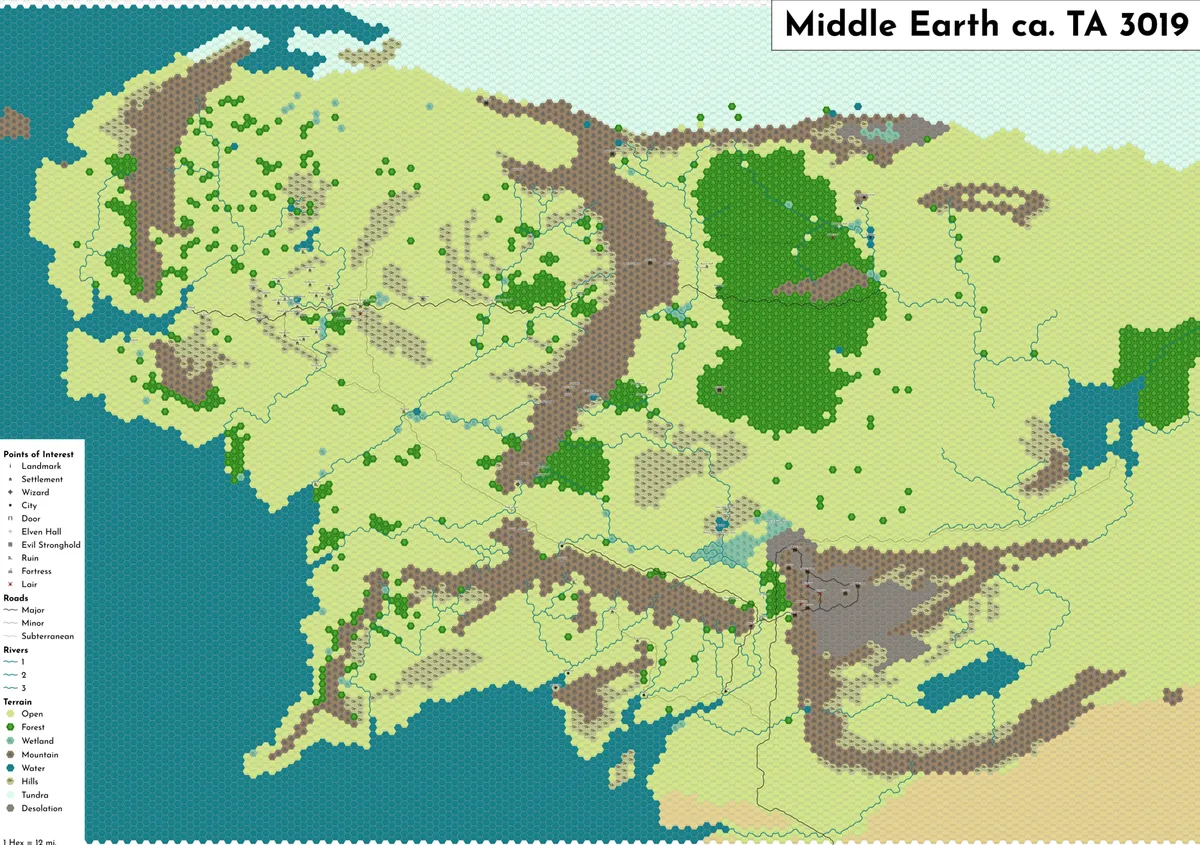
12-mile Middle Earth Hexmap
I've been re-reading the Hobbit & Lord of The Rings this year, so naturally my latest cartographic hyperfixation was to make a map of Tolkien's paracosm. ...
https://aneeshsathe.com/the-viscous-frontier/
In May 1976 a Satawalese master navigator named Mau Piailug stood on the deck of a double-hulled Polynesian canoe in Honolua Bay, Maui, and prepared to sail to Tahiti. Sans compass, chronometer, and chart. The canoe was Hōkūleʻa, a replica of the voyaging craft that had carried Polynesians across the Pacific a thousand years earlier. Over the next thirty-four days Piailug would navigate her about two thousand three hundred nautical miles south-southeast to Papeete using the rising and setting positions of stars, the shape of ocean swells refracted off islands beyond the horizon, the colour of the water at dusk, and the behaviour of terns returning to land at evening.
🌏 East Asia and the Pacific Islands

East Asia (CJKM + ASEAN) + Pacific Islands (Micronesia, Polynesia, Melanesia)
수랕 이나와 (Surat Inawa) — a Filipino phonetic alphabet adapted from the original scientific script of King Sejong
수랕 이나와 (Surat Inawa)
수랕 이나와 (Surat Inawa)
수랕 이나와 (Surat Inawa) — a Filipino phonetic alphabet adapted from the original scientific script of King Sejong
수랕 이나와 (Surat Inawa)

수랕 이나와 (Surat Inawa)