

Troels Engberg Pedersen is a Pauline theologian, author, and professor of New Testament exegesis at the University of Copenhagen in Denmark.[1]
Epiphany • Ephesians 3:1–12 • January 6, 2013 - Concordia Theology
By Francis C. Rossow Comments on the Text Lulled either by the familiarity of our text or by its complex sentence structure, we may not at first be aware of the surprise—even the shock—it contains. Verse 6 drops a bomb: “This mystery is that through the gospel the Gentiles are heirs together with Israel, members […]
The Word of Life A Theology of Johns Gospel (Craig R. Koester) (z-lib.org).pdf
Katalog der Deutschen Nationalbibliothek
Epiphany • Ephesians 3:1–12 • January 4, 2015 - Concordia Theology
By Joel P. Okamoto Notes on the Pericope The Old Testament people knew that God had promised life and salvation to all nations (e.g., see Genesis 12:3 and Isaiah 60:1–6, the appointed OT lesson), but they did not know how he would do that. God made this clear through his Son and in the witness of the apostles. Paul’s […]
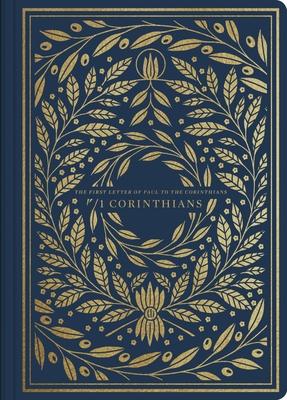
1 Corinthians
Lightly dotted blank pages and 130+ elegant hand-lettered gold ink illustrations throughout the full text of books of the Bible invite you to creatively engage with God's Word alongside specific passages.
Biblical hermeneutics
Biblical hermeneutics is the study of the principles of interpretation concerning the books of the Bible. It is part of the broader field of hermeneutics, which involves the study of principles of interpretation, both theory and methodology, for all nonverbal and verbal communication forms.[1] While Jewish and Christian biblical hermeneutics have some overlap and dialogue, they have distinctly separate interpretative traditions.
Reckless Rites
Historical accounts of Jewish violence—particularly against Christians—have long been explosive material. Some historians have distorted these records for anti-Semitic purposes. Others have discounted, dismissed, or simply ignored the evidence, often for apologetic purposes. In Reckless Rites, Elliott Horowitz takes a new and forthright look at both the history of Jewish violence since late antiquity and the ways in which generations of historians have grappled with that history. In the process, he has written the most wide-ranging book on Jewish violence in any language, and the first to fully acknowledge and address the actual anti-Christian practices that became part of the playful, theatrical violence of the Jewish festival of Purim. He has also examined the different ways in which the book of Esther, upon which the festival is based, was used by Jews and Christians over the centuries—whether as an ancient mirror of modern tribulations or as the scriptural basis for anti-Semitic claims regarding the bloodthirstiness of the Jews. Reckless Rites reassesses the historical interpretation of Jewish violence—from the alleged massacre of thousands of Christians in seventh-century Jerusalem to later medieval attacks on Christian symbols such as the crucifix, transgressions that were often committed in full knowledge that their likely consequence would be death. A book that calls for major changes in the way that Jewish history is written and conceptualized, Reckless Rites will be essential reading for scholars and students of history, religion, and Jewish-Christian relations.

Studying the Text of 1 Corinthians 10:23-11:1 - Without Authority
Working notes from preparing to preach on the epistle text for the third week of our Stewardship sermon series, November 23, 2025.
056. Ephesians 3:1-12
Chapel Sermon by Joel Okamoto from Ephesians 3:1-12 on Wednesday, January 3, 2018.
When We're Born We Forget Everything: A Memoir
From the creator of the internationally acclaimed singer-songwriter project Girls in Trouble, a memoir following her journey from a secular Jewish childhood to becoming a modern queer woman owning ancient teachings and finding her own meanings in them, refracted through feminist interpretations of the lives of Biblical women.“Alicia Jo Rabins writes as if she’s in conversation with the divine itself. . . .This isn’t merely a book to be read—it’s a scripture for the searching heart, a reminder that the border between the human and the holy is, and always has been, porous.” —Reza Aslan, author of Zealot: The Life and Times of Jesus of NazarethAs a self-described ‘90s suburban high school weirdo, Alicia Jo Rabins spent her time practicing violin and smoking cigarettes behind the mall while secretly dreaming of setting out on a spiritual quest no one around her seemed to understand. She often found herself drawn to the more ritualistic and rigorous Judaism that her parents had abandoned to assimilate and “become American.” In college, a chance meeting led her on a pilgrimage to Jerusalem to study rabbinical texts (and play bluegrass fiddle on the street for cash). But that two years of immersing herself in traditional observance was only the start of a journey full of twists and turns.When We’re Born We Forget Everything follows Alicia’s relentless, often embarrassing, sometimes enlightening search for the sacred in everyday life as she tours America playing with a klezmer-punk band, falls in and out of love, scrapes through the initiations of motherhood, and witnesses the beauty—and danger—of mysticism. Rabins braids this personal narrative with the hidden stories of biblical women, uncovering a path of queer identity, feminist awakening, and spiritual self-invention. This lyrical, searching memoir is a meditation on longing, lineage, and what it takes to find meaning in a fractured world.
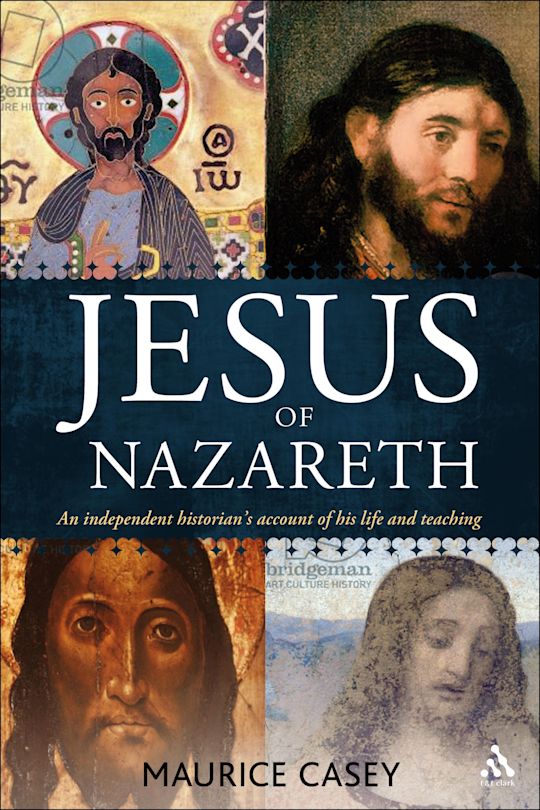
Jesus of Nazareth
A new 'life' of Jesus written by one of the outstanding scholars of his generation, it offers a complete resource on the 'Historical Jesus' debate. With an over…
'It's Hard to Know if We'll Endure': Israel's Leading Philosopher on …
archived 8 Aug 2026 00:21:44 UTC
First Impressions on 1 Corinthians 10:23-11:1 - Without Authority
This is the beginning step of my sermon work on the epistle text for the our third week of our Stewardship sermon series, November 23, 2025.
Sermon on 1 Corinthians 10:23-11:1 | 2025-11-23

Leaflets displaying the work I'm doing for this sermon.
Sermon on Matthew 11:2-15 | 2025-12-14
Leaflets I made to share the work I'm doing for this sermon.
Director Interview: Rian Johnson
First Impressions on Matthew 11:2–15 - Without Authority
Studying the Text of 1 Corinthians 10:23-11:1 - Without Authority
First Impressions on 1 Corinthians 10:23-11:1 - Without Authority