


Uneconomic growth is economic growth that reflects or creates a decline in the quality of life. The concept is used in human development theory, welfare theory, and ecological economics. It is usually attributed to ecological economist Herman Daly, though other theorists may also be credited for the incipient idea, According to Daly, "uneconomic growth occurs when increases in production come at an expense in resources and well-being that is worth more than the items made." The cost, or decline in well-being, associated with extended economic growth is argued to arise as a result of "the social and environmental sacrifices made necessary by that growing encroachment on the eco-system."
Post-growth
Post-growth is an umbrella term that refers to a broad family of economic, ecological, and political perspectives responding to the limits-to-growth dilemma —the recognition that infinite economic growth is biophysically unsustainable on a finite planet. Central to post-growth thinking is the shift of the focus out of GDP growth as the main goal of the economy. Instead, well-being becomes the main objective. Post-growth puts emphasis on decoupling societal well-being from economic growth, advocating for the possibility of prosperity beyond growth.

Post-growth: the science of wellbeing within planetary boundaries
There are increasing concerns that continued economic growth in high-income countries might not be environmentally sustainable, socially beneficial, or economically achievable. In this Review, we explore the rapidly advancing field of post-growth research, which has evolved in response to these concerns. The central idea of post-growth is to replace the goal of increasing GDP with the goal of improving human wellbeing within planetary boundaries. Key advances discussed in this Review include: the development of ecological macroeconomic models that test policies for managing without growth; understanding and reducing the growth dependencies that tie social welfare to increasing GDP in the current economy; and characterising the policies and provisioning systems that would allow resource use to be reduced while improving human wellbeing.

Brett Scott (@brettscott)
A lot of economists want to claim that economic growth is, at some deep level, driven by human greed. In this worldview, we always desire more and more, and so collectively seek to endlessly boost production I don’t buy this worldview at all I think economic growth is driven - at a deep level - by fear. It stems from the extreme insecurity of life in a capitalist market system, where you’re always on the verge of being cut out of society, and so need to over-secure your position through any means possible One of the most compelling pieces of evidence for this is the history of colonial beliefs around laziness. In many colonial regions, colonizers would complain about tribal people being lazy - in other words, not seeking to increase production when they could. The reason for this, however, was that such people had access to subsistence farming and secure social structures that did not require endless competition. Secure people are, by definition, ‘lazier’, in the sense that they do not perceive a visceral need to fight for survival The colonial mission then, was the cut them off from older means of survival, make them dependent on insecure market structures, and thereby boost production as they all turn up at the mines to elbow each other out of the way as they compete for jobs. Security, in other words, is the enemy of economic growth

Post-Growth - P2P Foundation
"The term postgrowth defines a range of approaches to socioecological challenges. They address these challenges in ways that are diametrically opposed to green-growth, which expresses the belief that society can simultaneously expand economic activity and reduce emissions and the demand for materials. Postgrowth approaches, by contrast, argue that the unlimited expansion of production and consumption is impossible and undesirable on a finite planet.
Economics for the future – Beyond the superorganism
Our environment and economy are at a crossroads. This paper attempts a cohesive narrative on how human evolved behavior, money, energy, economy and th…
Reflect nature’s ‘true value’ in economic policies and decisions, UN chief urges
Nations must start weighing up the cost of economic profit against damage to the environment if they are to have a chance at a sustainable future, UN Secretary-General António Guterres said on Tuesday.
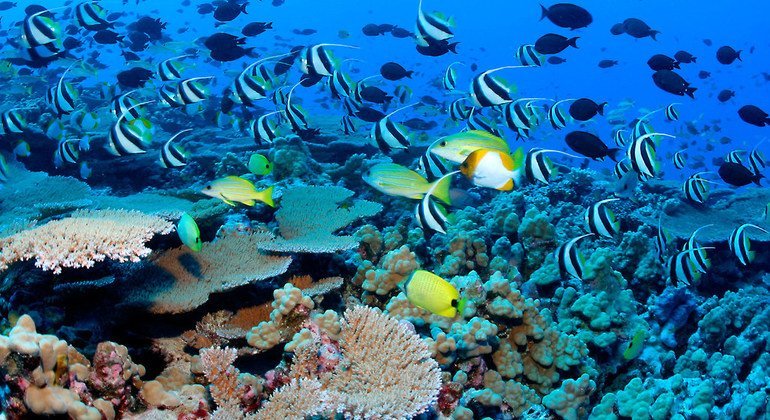
Roadmap - New Economies for Eradicating Poverty
Rights-based, post-growth policies that make poverty eradication a deliberate outcome of restructured economies — not a trickle-down side effect of destructive growth.
The Fallacy of Endless Economic Growth
What economists around the world get wrong about the future.
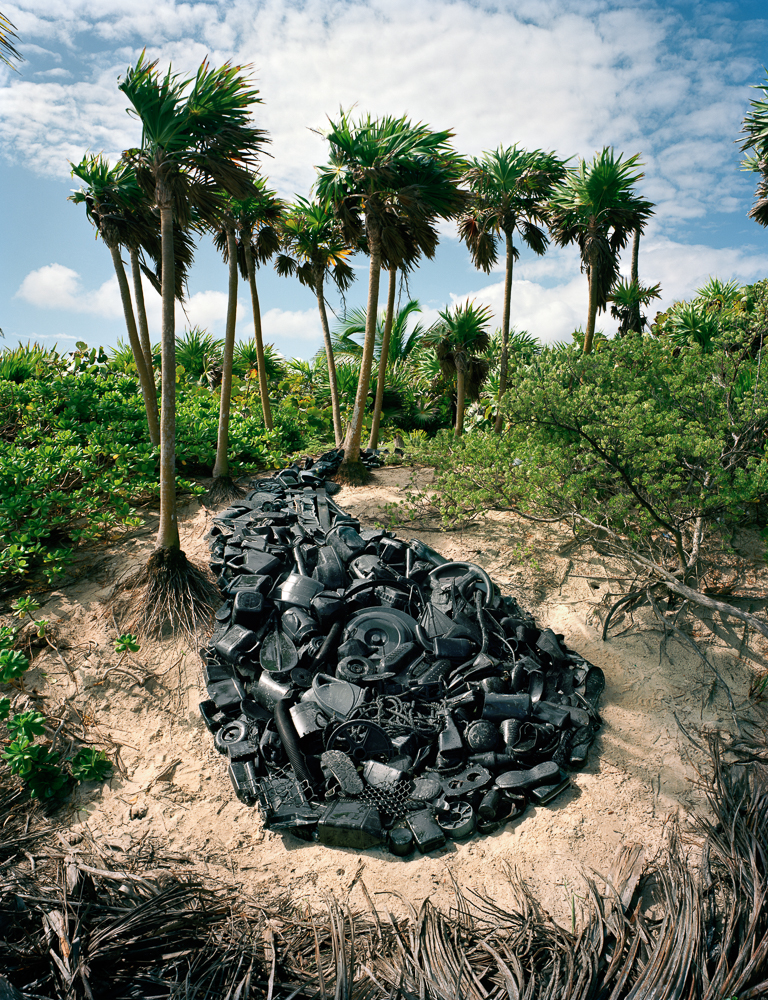
Seven Key Elements of an Economy of Abundance
Our present economy is an economy of scarcity – only scarce commodities have economic value. Therefore there are strong incentives to make everything into a scarce commodity - first by making it into a commodity, and then by assuring that the demand for that commodity exceeds its supply, either by controlling supplies or by inflating demand, or doing both at the same time. This economy of scarcity leads to environmental destruction because the natural environment is treated as a “free” good to consume or pollute until it becomes scarce enough to commodify and monopolize. It also leads to social inequality because the major avenue to wealth is to control key assets and then make them scarce for everyone else, thus extracting profits.
Denizen
How might we promote and sustain human prosperity and well being in an economy of permanence? John Fullerton takes his cues from stable, healthy living systems to formulate eight principles for a regenerative economy.
Denizen / Post-Growth Economics (Deep Dive)
Rather than money accumulating into fewer private hands, not-for-profit businesses loop their profits back into the economy. Rather than money going into someone’s bank account, it comes back into the system. This is not the same as a non-profit, which may not have a business model. These are businesses that make a profit but do not extract that capital but rather circulate it
Routledge International Handbook of Complexity Economics | Ping Chen,
The Routledge International Handbook of Complexity Economics covers the historical developments and early concerns of complexity theorists and brings them into

Capitalism and the Death Drive
What we call growth today is in fact a tumorous growth,…

Denizen
What are some of the fundamental flaws of capitalism? How might we instantiate a market-based economy that is growth agnostic?
On the relevance of post-growth in China
Post-growth refers to approaches prioritizing human well-being and ecological sustainability over gross domestic product expansion as a primary objective of economic policy. While it is widely discussed in the global north and generally targeted at high-income countries, its relevance to China remains underexplored and largely absent from academic discourse. This Perspective discusses China’s position in a possible global post-growth transition and explores convergence and difference between post-growth principles and development priorities in China. We consider how China’s concepts of ‘high-quality development’ and ‘ecological civilization’ could integrate post-growth principles, and vice versa. Understanding China’s context is crucial for a collaborative, effective approach to sustainability and global equity.
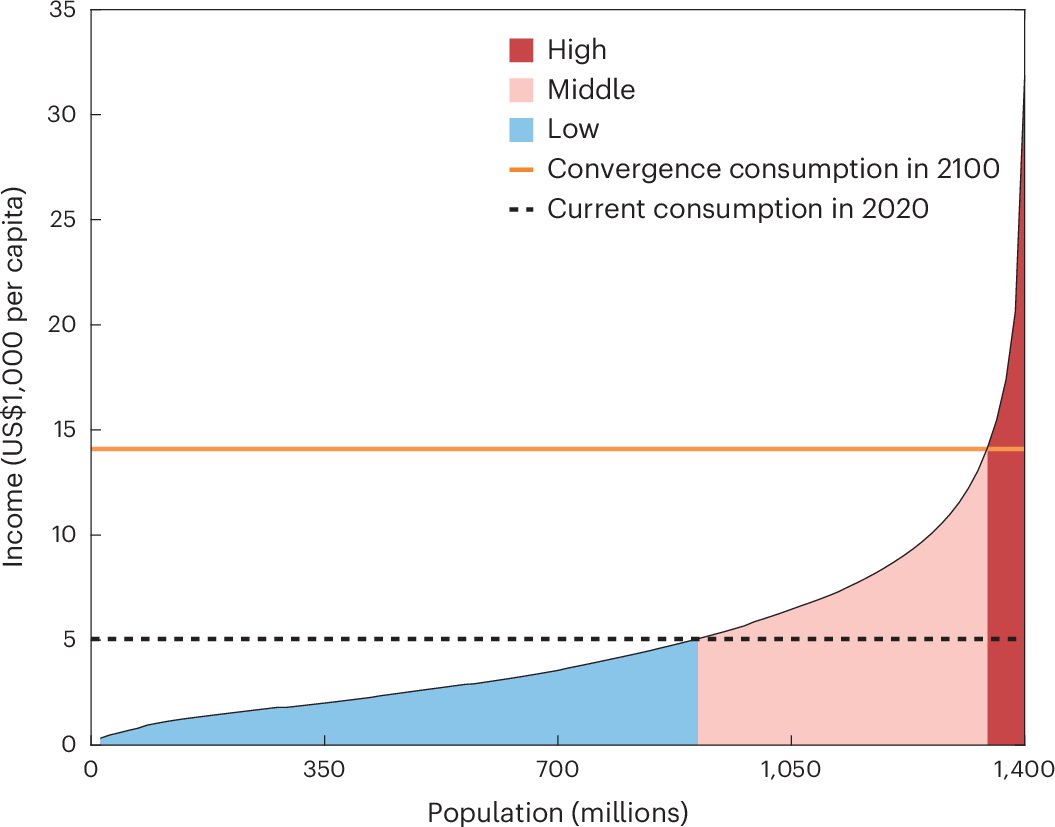
Post-growth & Regenerative Economics

Articles, podcasts, papers and books about alternative, pro-social models of finance and economics.
www.sciencedirect.com
Post-growth: the science of wellbeing within planetary boundaries
SEED Founding

Making Business Personal
Think Like a Commoner | A Short Introduction to the Life of the Commons
Design principles for long-lived circular organization: An Ostromian perspective