


Ursula Martius Franklin was a Canadian metallurgist, activist, research physicist, author, and educator who taught at the University of Toronto for more than 40 years. Franklin is best known for her writings on the political and social effects of technology. She was the author of The Real World of Technology, which is based on her 1989 Massey Lectures; The Ursula Franklin Reader: Pacifism as a Map, a collection of her papers, interviews, and talks; and Ursula Franklin Speaks: Thoughts and Afterthoughts, containing 22 of her speeches and five interviews between 1986 and 2012. Franklin was a practising Quaker and actively worked on behalf of pacifist and feminist causes. She wrote and spoke extensively about the futility of war and the connection between peace and social justice. Franklin received numerous honours and awards, including the Governor General's Award in Commemoration of the Persons Case for promoting the equality of girls and women in Canada and the Pearson Medal of Peace for her work in advancing human rights. In 2012, she was inducted into the Canadian Science and Engineering Hall of Fame. A Toronto high school, Ursula Franklin Academy, as well as Ursula Franklin Street on the University of Toronto's St. George campus, have been named in her honor.
The 1989 CBC Massey Lectures, "The Real World of Technology"
Technology has always been a part of human existence. Today though, says the experimental physicist, Ursula M. Franklin, technology has large-scale effects on culture itself. Ursula Franklin is an experimental physicist, University Professor Emeritus at the University of Toronto, a former board member of the National Research Council and the Science Council of Canada, and a companion of the Order...

Ursula's list
Ursula Franklin is one of my all-time favorite thinkers about both the obvious and obscured parts of our technological world.
Pluralistic: With Great Power Came No Responsibility (26 Feb 2025) – Pluralistic: Daily links from Cory Doctorow
Last night, I traveled to Toronto to deliver the annual Ursula Franklin Lecture at the University of Toronto's Innis College:
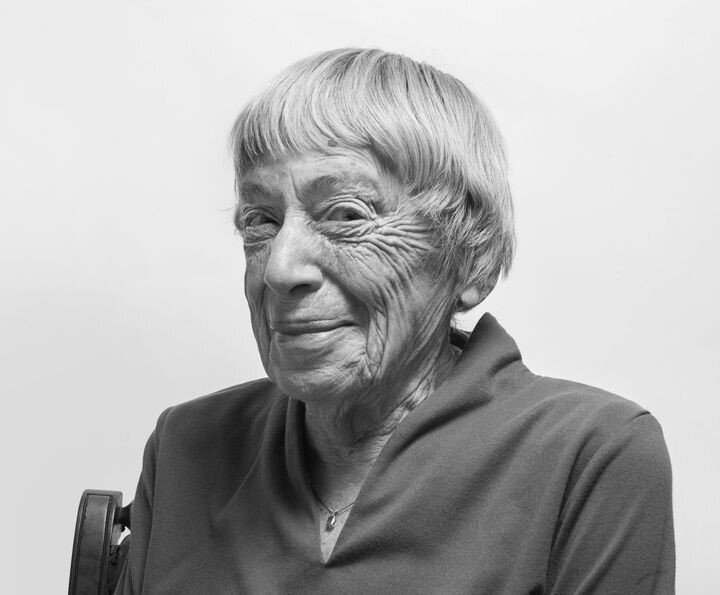
Ursula K. Le Guin — Ursula on Writing: A Rant about "Techonolgy"
Ursula K. Le Guin on the presence of technology in her work
More Work For Mother
In this classic work of women's history (winner of the 1984 Dexter Prize from the Society for the History of Technology), Ruth Schwartz Cowan shows how and w...

Superheros are Reactionary | The Paper Pilot
The Paper Pilot's digital garden of thoughts on philosophy, politics, and sociology
The End of Science? Agnosis and American Fascism
The Society for Social Studies of Science (4S) annually awards the John Desmond Bernal Prize to one or more individuals who have made distinguished contributions to the field of Science and Technology Studies. Past winners have included founders of the field, along with outstanding scholars who have devoted their careers to understanding the social dimensions of science and technology. This article is the revised text of the 2025 Bernal Lecture by Paul Edwards.

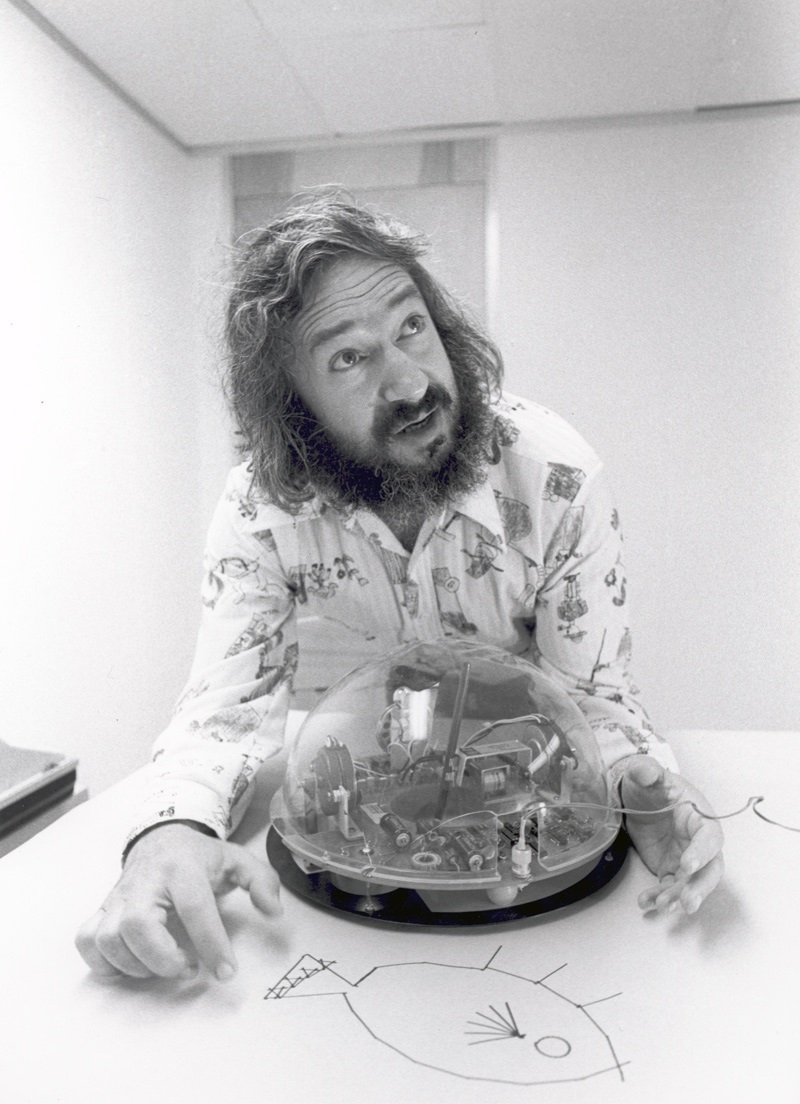
Seymour Papert
Seymour Aubrey Papert was a South African-born American mathematician, computer scientist, and educator, who spent most of his career teaching and researching at the Massachusetts Institute of Technology. He was one of the pioneers of artificial intelligence, and of the constructionist movement in education. He was co-inventor, with Wally Feurzeig and Cynthia Solomon, of the Logo programming language.
When a Social Media Mob Came for Cornell’s Jane Doe - The New York Ti…
archived 16 Oct 2026 23:02:31 UTC

Maclean’s Magazine (@macleans.bsky.social)
Engaging stories. Bold voices. Big ideas. Maclean’s leads the national conversation on everything that matters in Canada. macleans.ca

Ursula Le Guin
The Alternative to Capitalism Nobody Talks About | Eleanor Finley & Camila Vergara
Mallory Knodel
Mallory Knodel: Activist and advocate transforming technology for social justice.

Young Benjamin Franklin: The Birth of Ingenuity
In this new account of Franklin's early life, Pulitzer …

Steve Jobs
"FROM THE AUTHOR OF THE BESTSELLING BIOGRAPHIES OF BENJAMIN FRANKLIN AND ALBERT EINSTEIN, THIS IS THE EXCLUSIVE BIOGRAPHY OF STEVE JOBS. Based on more than forty interviews with Jobs conducted over two years--as well as interviews with more than a hundred family members, friends, adversaries, competitors, and colleagues--Walter Isaacson has written a riveting story of the roller-coaster life and searingly intense personality of a creative entrepreneur whose passion for perfection and ferocious drive revolutionized six industries: personal computers, animated movies, music, phones, tablet computing, and digital publishing. At a time when America is seeking ways to sustain its innovative edge, and when societies around the world are trying to build digital-age economies, Jobs stands as the ultimate icon of inventiveness and applied imagination. He knew that the best way to create value in the twenty-first century was to connect creativity with technology. He built a company where leaps of the imagination were combined with remarkable feats of engineering. Although Jobs cooperated with this book, he asked for no control over what was written nor even the right to read it before it was published. He put nothing off-limits. He encouraged the people he knew to speak honestly. And Jobs speaks candidly, sometimes brutally so, about the people he worked with and competed against. His friends, foes, and colleagues provide an unvarnished view of the passions, perfectionism, obsessions, artistry, devilry, and compulsion for control that shaped his approach to business and the innovative products that resulted. Driven by demons, Jobs could drive those around him to fury and despair. But his personality and products were interrelated, just as Apple's hardware and software tended to be, as if part of an integrated system. His tale is instructive and cautionary, filled with lessons about innovation, character, leadership, and values"--
