

VUCA is an acronym based on the leadership theories of Warren Bennis and Burt Nanus, to describe or to reflect on the volatility, uncertainty, complexity and ambiguity of general conditions and situations.[1][2] The U.S. Army War College introduced the concept of VUCA in 1987, to describe a more complex multilateral world perceived as resulting from the end of the Cold War.[3] More frequent use and discussion of the term began from 2002.[4][need quotation to verify] It has subsequently spread to strategic leadership in organizations, from for-profit corporations[5][6] to education.[7][8][9]
The Strategic Foresight Book — IFRC Solferino Academy
Ready to shape the future? Download the Foresight Book This book will help you engage with uncertainty, navigate complex challenges, and build more resilient organisations and communities.

Opinion | The New Power Structure (Published 2018)
New organizations are forming and succeeding in an age of distrust.

Cognitive Warfare Through the Lens of Critical Neuroscience: Data, Theory, and Values
This study examines cognitive warfare through the lens of critical neuroscience and situates it within peace research as a methodological contribution. Cognitive warfare-understood as the strategic modulation of perception, belief, and decision-making-highlights how the human mind has become a contested domain of contemporary conflict. The weaponization of neuroscience unfolds within sociocultural contexts where empirical findings, theoretical interpretations, and normative commitments are deeply entangled. Drawing on Johan Galtung’s epistemological triad of data, theory, and values, I propose a framework for analyzing cognitive warfare that makes explicit the normative dimensions of neuroscientific knowledge. This perspective highlights not only the weaponization of neuroscience itself, but also of its reputation: exaggerated claims and neuropolitical imaginaries can shape expectations, distort public discourse, and erode trust in science independently of actual technological capabilities. Applying this framework, the study examines resilience and solidarity as two domains in which empirical mechanisms, theoretical interpretations, and normative priors intersect. Cognitive warfare is shown to undermine resilience by destabilizing shared models of reality, while evolutionary and social dynamics demonstrate the long-term advantages of cooperation, reciprocity, and generosity over manipulation and defection. By integrating critical neuroscience with peace research, the article advances an expanded notion of peace as the safeguarding of mental and social autonomy-conditions under which cognition remains free from systematic manipulation and capable of sustaining cooperative forms of life.
Buen Vivir: South America’s rethinking of the future we want
Buen Vivir is a concept and practice influencing politics and communities across South America. It involves a radically different way of thinking about collective wellbeing and sustainable living.

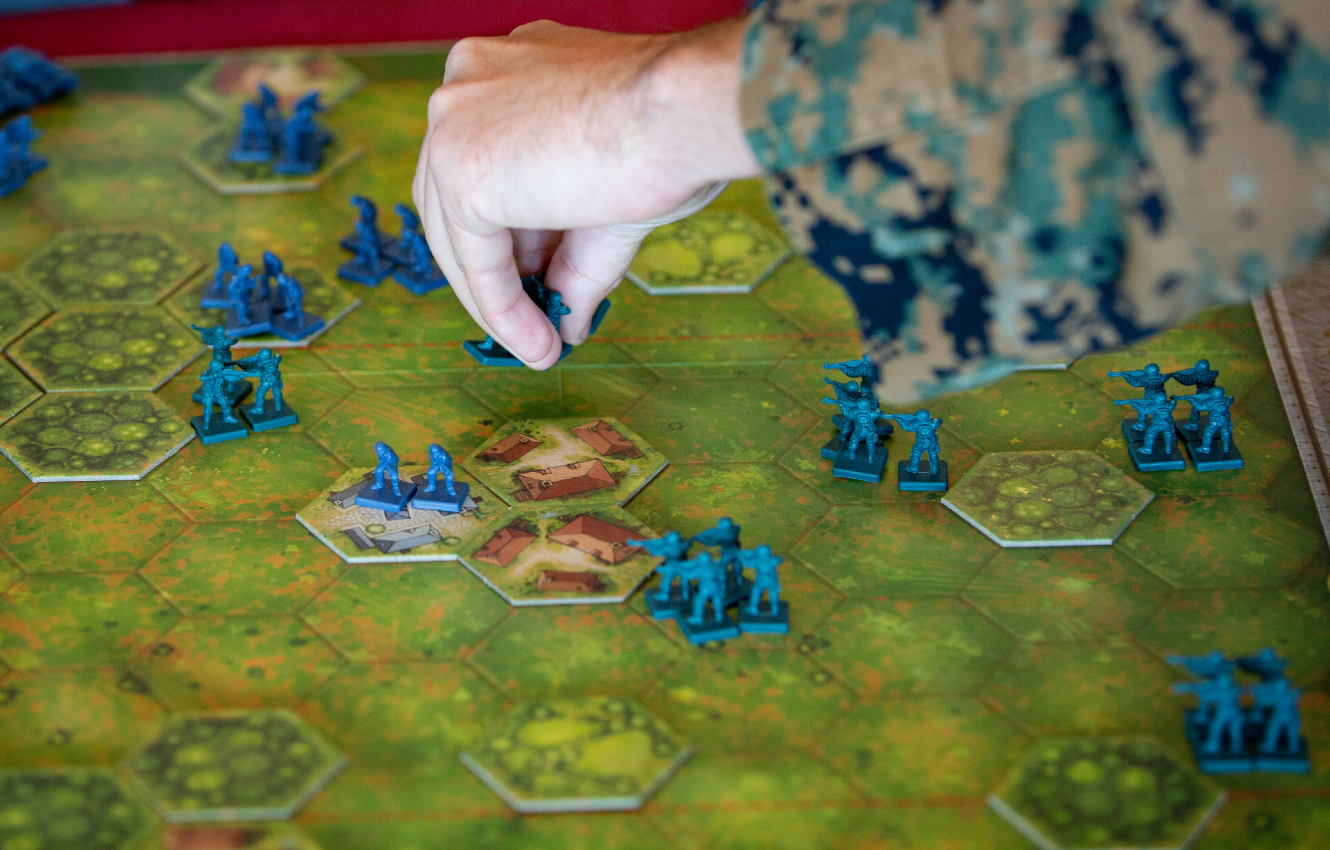
Reflections on Teaching Wargame Design
Disaster loomed for the hard-pressed U.S. Strategic Command team and the nascent U.S. Space Force. Negotiators toiled to maintain an international
The surprising traits of good remote leaders
Strong in-person leadership skills don’t necessarily translate to being a good virtual leader. Instead, organisation and competency reign supreme.

Pax Machina — Institutions in a World with Powerful AI
Proposals and debate, for institutions in a world with powerful AI.
AI, Geopolitics, and National Security (Chapter 8)
Artificial intelligence is reshaping geopolitics by transforming how states generate, interpret, and project power. Rather than producing a single new weapon, AI operates as a general-purpose technology that scales perception, prediction, and decision-making across military, civilian, and informational domains. This chapter argues that AI rivalry increasingly depends on control over material and organizational foundations, including semiconductors, compute infrastructure, data centers, industrial coordination, and institutional adoption. It examines battlefield integration, U.S.–China competition, semiconductor statecraft, cyber operations, information power, and governance. The chapter shows that AI capabilities diffuse rapidly through commercial platforms, open-source ecosystems, and wartime experimentation, while frontier development remains constrained by infrastructure and supply-chain chokepoints. Because AI capability is difficult to measure or verify, governance is shifting away from traditional arms-control models toward export controls, standards, voluntary commitments, and multistakeholder coordination.
Guerrilla Warfare by Ernesto "Che" Guevara (1998-09-01)
Che Guevara, the larger-than-life hero of the 1959 revo…

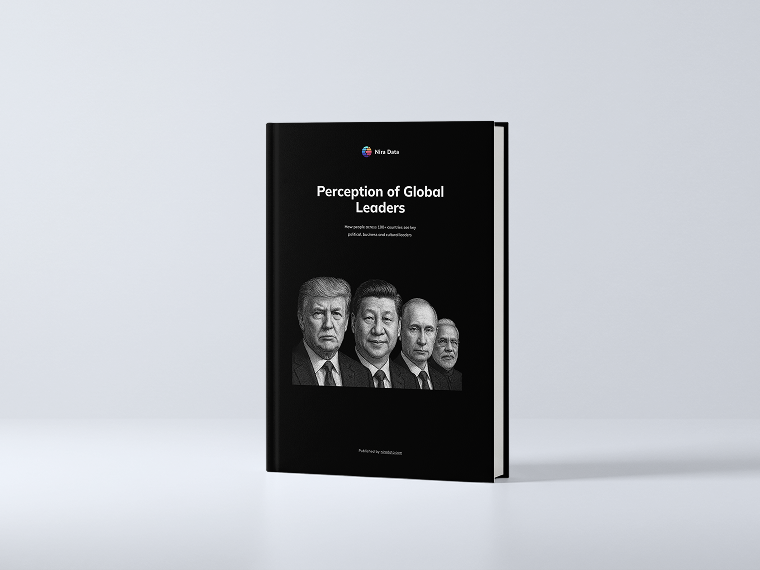
Perception of Global Leaders - Nira Data
Discover global leader rankings, approval ratings, and reputation insights in the 2025 Perception of World Leaders report.
(PDF) Leadership Failure in the Eyes of Subordinates: Perception, Antecedents, and Consequences *
PDF | Effective leaders and leadership behaviors and practices are well-researched areas in the domain of leadership and management. However,... | Find, read and cite all the research you need on ResearchGate

How the U.S. Military Learned to Embrace AI Warfare
A review of Katrina Manson, “Project Maven: A Marine Colonel, His Team, and the Dawn of AI Warfare” (Norton, 2026).
Arcs in Strategy Games
It is common to hear players talk about “tactics” and “strategy” in games. In this case, the colloquial understanding of these terms happens to be pretty useful, in that it …

The Four Factors for Organizations - Future Mending Radio
When I pick an organization for the podcast or the map at Futuremending.com, I’m not just picking businesses out of a hat – I have a system for evaluating orgs which I call the Four Factors for Organizations. The Four Factors are Multi-solving, Sharing, Sufficiency and Transparency.This episode is in two parts. The opening minutes are a bit of an emotional check-in to see how people are processing the unprecedented political turmoil in the United States. The second part of the podcast discusses the Four Factors for Organizations and why seeking out certain vectors of change makes more sense than trying to lay out a detailed plan for a better future. Read about the Four Factors: https://www.futuremending.com/whatMatt’s Blue Sky account: https://bsky.app/profile/mattliepaehlke.bsky.socialWired Magazine coverage of the crisis in the U.S. : https://www.wired.com/tag/elon-musk/Rebecca Solnit’s newsletter: https://meditations-in-an-emergency.ghost.io/welcome-to-meditations-in-an-emergency/ Google's AI Policy: https://www.theguardian.com/technology/2025/feb/05/google-owner-drops-promise-not-to-use-ai-for-weapons Future Mending Map: https://www.futuremending.com/toronto Music Credits:'Epilogue' by The Slow Motions. Used with permission of the artist.‘Fashion’ by Alex Productions. Creative Commons. https://www.youtube.com/watch?v=OV1miCgT7J4‘Miss you’ by Middle Child. Creative Commons. https://www.youtube.com/watch?v=dayIKHEIYqY‘Opening’ by Phillip Glass. Arr. by Karl Michelson. Performed by The Union Guitar Trio. Used with permission of the artists.Union Guitar Trio on Spotify - https://open.spotify.com/track/2E0NidLjIzBAO7t0BBPFUDUnion Guitar Trio on Apple Music - https://music.apple.com/us/artist/the-union-guitar-trio/1592543833Sound Effects:BBC News November 9th, 1989: https://www.youtube.com/watch?v=fjNz1lvXgzUwood hit low glass bowl 3.mp3 by ascap -- https://freesound.org/s/242388/ -- License: Attribution NonCommercial 4.0Brightness by sonically_sound -- https://freesound.org/s/632762/ -- License: Creative Commons 0

"Teams working across organizational boundaries, sharing structured data, and building on each other’s work with ease." I know it's called "adversarial interop", but it actually feels like "community interop", at least right now

Toni Schneider
Conference Takeaways I’m back from ATmosphereConf in Vancouver, and I'm processing what I saw and heard. The atproto developer community could not have been nicer and more welcoming. Here are some takeaways. ... toni.org/2026/04/03/conference-takeawa…
