In cybernetics, the term variety denotes the total number of distinguishable elements of a set, most often the set of states, inputs, or outputs of a finite-state machine or transformation, or the binary logarithm of the same quantity.[1] Variety is used in cybernetics as an information theory that is easily related to deterministic finite automata, and less formally as a conceptual tool for thinking about organization, regulation, and stability. It is an early theory of complexity in automata, complex systems,[1]: 6 and operations research.[2]
A theory of type polymorphism in programming
The aim of this work is largely a practical one. A widely employed style of programming, particularly in structure-processing languages which impose n…
Requisite variety and its implications for the control of complex systems
Recent work on the fundamental processes of regulation in biology (Ashby, 1956) has shown the importance of a certain quantitative relation called the law of requisite variety. After this relation had been found, we appreciated that it was related to a theorem in a world far removed from the biological—that of Shannon on the quantity of noise or error that could be removed through a correction-channel (Shannon and Weaver, 1949; theorem 10). In this paper I propose to show the relationship between the two theorems, and to indicate something of their implications for regulation, in the cybernetic sense, when the system to be regulated is extremely complex. Since the law of requisite variety uses concepts more primitive than those used by entropy, I will start by giving an account of that law.
Towards Foundations of Categorical Cybernetics
We propose a categorical framework for processes which interact bidirectionally with both an environment and a 'controller'. Examples include open learners, in which the controller is an optimiser...

Knowledge Networks and the Politics of Protocols
Harmony without loss of Variety; Variety without loss of Harmony.
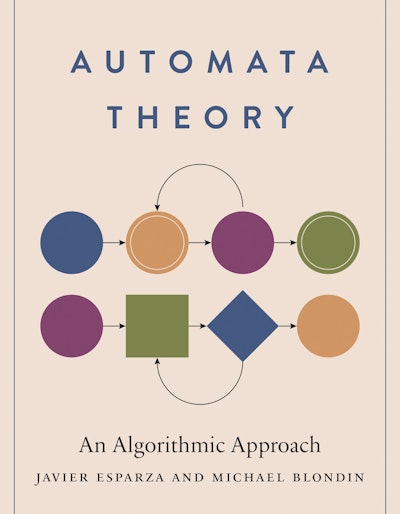
Automata Theory by Javier Esparza
A comprehensive introduction to automata theory that uses the novel approach of viewing automata as data structures.

Agentic AI, explained | MIT Sloan
The age of agentic AI — systems that are semi- or fully autonomous and can act on their own — has arrived. Here’s what you need to know, according to MIT experts.

The language of generalization.
Eryk Salvaggio: Critical AI & Culture | Glossary — Cybernetic Forests.
Stochastic Flocks, Systems From Nowhere and other citable terms for describing AI systems without borrowing from cognition, by Eryk Salvaggio.

Requisite Variety - gordonbrander.com
If a system is to be stable, the number of states of its control mechanism must be greater than or equal to the number of states in the system being controlled.
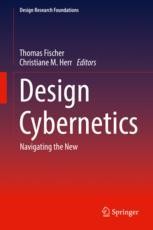
Design Cybernetics
This book offers practical guidance for cybernetic processes of design and innovation. It also develops theoretical principles. The authors use accessible, non-technical language, which will help a wide range of readers gain knowledge of this important field.
Yi Ma on Twitter / X
In system theory, it is called "linearization"... which has been studied and used for decades. Honestly, folks, there is no need to invent or introduce any new terminology. Remember, there is rarely anything new under the sun... https://t.co/yNLIv7Ptoh— Yi Ma (@YiMaTweets) March 14, 2026
Grade 3 » Operations & Algebraic Thinking » Represent and solve problems involving multiplication and division. » 1 | Common Core State Standards Initiative
Interpret products of whole numbers, e.g., interpret 5 × 7 as the total number of objects in 5 groups of 7 objects each. For example, describe a context in which a total number of objects can be expressed as 5 × 7.