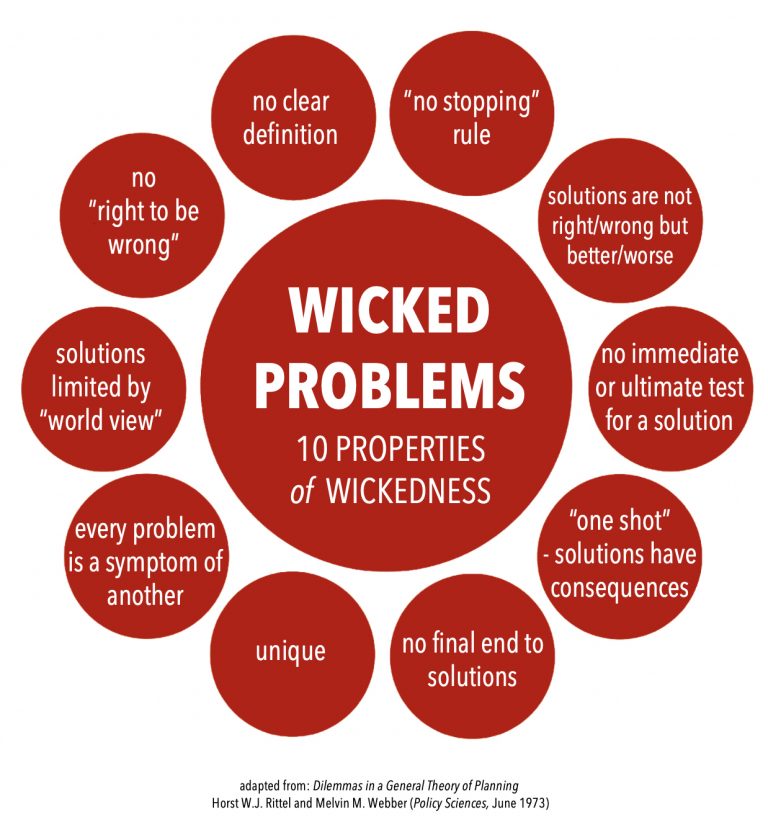
In planning and policy, a wicked problem is a problem that is difficult or impossible to solve because of incomplete, contradictory, and changing requirements that are often difficult to recognize. It refers to an idea or problem that cannot be fixed, where there is no single solution to the problem; "wicked" does not indicate evil, but rather resistance to resolution. Another definition is "a problem whose social complexity means that it has no determinable stopping point". Because of complex interdependencies, the effort to solve one aspect of a wicked problem may reveal or create other problems. Due to their complexity, wicked problems are often characterized by organized irresponsibility.
PUBLIC POLICY NETWORKS AND ‘WICKED PROBLEMS’: A NASCENT SOLUTION?
The last two decades have seen a shift in public services organizations from hierarchies to networks. Network forms are seen as particularly suited to handling ‘wicked problems'. We make an assessmen...

Dilemmas in a general theory of planning
The search for scientific bases for confronting problems of social policy is bound to fail, becuase of the nature of these problems. They are “wicked” problems, whereas science has developed to deal with “tame” problems. Policy problems cannot be definitively described. Moreover, in a pluralistic society there is nothing like the undisputable public good; there is no objective definition of equity; policies that respond to social problems cannot be meaningfully correct or false; and it makes no sense to talk about “optimal solutions” to social problems unless severe qualifications are imposed first. Even worse, there are no “solutions” in the sense of definitive and objective answers.

You don't have to be smart if you can think clearly
When you’re on fire, problems are transparent: they’re solved simply by the act of looking at them. Even complicated layers of multiple problems can simply be glanced through like stacked panes of glass. But nobody can work that way all the time.

Bridges & scruples
For your own sanity, you have to remember that not all problems can be solved. Not all problems can be solved, but all problems can be illuminated. —Ursula Franklin

The Unreasonable Sufficiency of Protocols Web
The Unreasonable Sufficiency of Protocols Venkatesh Rao, Tim Beiko, Danny Ryan, Josh Stark, Trent Van Epps, and Bastian Aue 1. Introduction Complex coordination problems have an air of doomed intractability about them. We speak in fatalistic terms of economics being a “dismal” science, of sociological phenomena being dominated by the

The Paradox of Perfection: When ‘Good Enough’ is Actually Better
Exploring the tension between engineering perfectionism and pragmatic delivery. Discover why striving for the perfect solution often prevents us from shipping valuable improvements and how to find the balance.
People Spend Too Much Time On Decisions with Equally Satisfying Outcomes
The pitfalls of analysis paralysis

How Complex Systems Fail
All of the interesting systems (e.g. transportation, healthcare, power generation) are inherently and unavoidably hazardous by the own nature. The frequency of hazard exposure can sometimes be changed but the processes involved in the system are themselves intrinsically and irreducibly hazardous. It is the presence of these hazards that drives the creation of defenses against hazard that characterize these systems.
A beautiful constraint – summary
A beautiful constraint. How to transform your limitations into advantages. By Adam Morgan & Mark Barden. Summarised by paul_arnold@me.com – Strategic facilitator, planner and trainer. Th…

The Tragedy of the Commons
The population problem has no technical solution; it requires a fundamental extension in morality.

Eigenmorality
This post is about an idea I had around 1997, when I was 16 years old and a freshman computer-science major at Cornell. Back then, I was extremely impressed by a research project called CLEVER, wh…

Convivial Computing
In 1973, Ivan Illich published Tools for Conviviality, a book about man's relation to tools 1. Illich pleaded for a pluralism of responsibly limited tools that guarantee an individual’s right to work with independent efficiency, the development of which is "as unpredictable, creative and lively as the people who use them" (Illich, 1973) 2. He pointed to overgrowth and overproduction threatening the right to a liveable environment, which unfortunately led him to ideas on gender and population control that are highly problematic 3. His ideas are included in the Catalog because of their influence on other practices, that picked up on his ideas about limited tools and turned a blind eye to the less appealing parts of his writing.
Your Solution Doesn't Know Your Problem Exists
If your problem is structural, your approach must be radical.
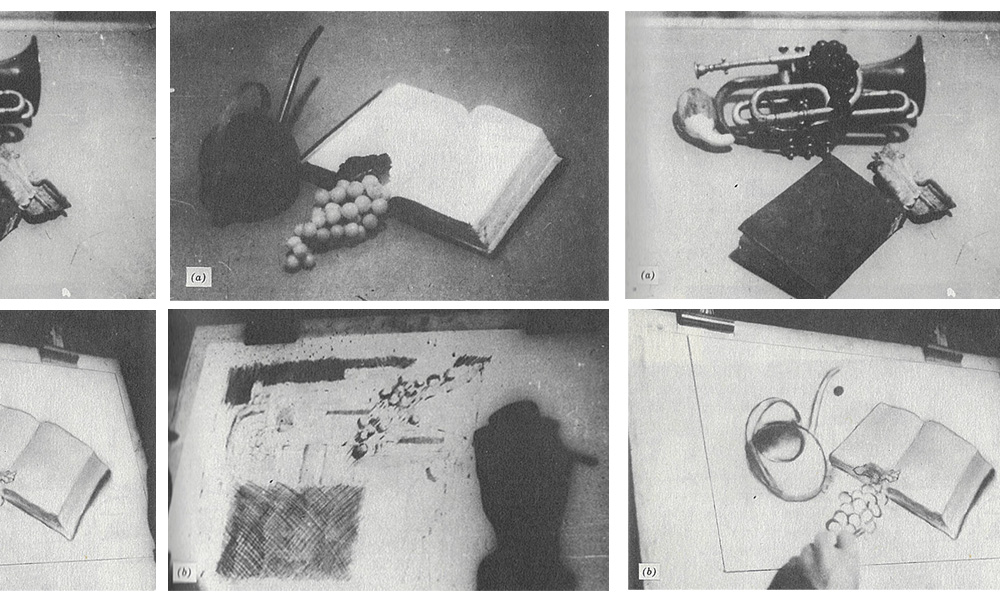
The 1960s Art School Experiment That Redefined Creativity
A groundbreaking study revealed that the most compelling artists seek to find problems, not solve them.
A Year of Magical Thinking
Elite impunity has fueled the fantasy that catastrophes are for other people.