

This guideline applies to machine translation tools that include a large language model ("LLM"). Assume that it applies to any online translation tool unless you have confirmed there is no LLM element.
Large language model
A large language model (LLM) is a neural network trained on a vast amount of text for natural language processing tasks, especially language generation. LLMs can typically generate, summarize, translate, and analyze text in many contexts, and are a foundational technology behind modern chatbots.[1] Biased or inaccurate training data can make an LLM's output less reliable.[2]

ToolSandbox: A Stateful, Conversational, Interactive Evaluation Benchmark for LLM Tool Use Capabilities
Recent large language models (LLMs) advancements sparked a growing research interest in tool assisted LLMs solving real-world challenges…


LLM in a Flash: Efficient Large Language Model Inference with Limited Memory
Large language models (LLMs) are central to modern natural language processing, delivering exceptional performance in various tasks…
https://svelte.dev/docs/llms
We support the llms.txt convention for making documentation available to large language models and the applications that make use of them.

Mitigating Cross-Lingual Cultural Inconsistencies in LLMs via...
Despite their impressive capabilities, multilingual large language models (MLLMs) frequently exhibit inconsistent behaviour when the prompt's language changes. While such adaptation is generally...

chad/whichlang
What programming language do LLMs default to when you don't tell them? A small benchmark.
distil labs — Replace LLMs with Custom Small Language Models
Train and deploy custom small language models that are faster, cheaper, and just as accurate as LLMs.
Wikipedia:Writing articles with large language models
Text generated by large language models (LLMs)[a] often violates several of Wikipedia's core content policies. For this reason, the use of LLMs to generate or rewrite article content is prohibited,[b] save for these two exceptions:
The Case Against LLMs as Rerankers
Authors: Apoorva Joshi, Zhenmei Shi, Akshay Goindani, Hong LiuResearch Leads: Zhenmei Shi, Akshay Goindani, Hong Liu Large language models are increasingly being used for a broad range of tasks, in…

Take caution in using LLMs as human surrogates | PNAS
Recent studies suggest large language models (LLMs) can generate human-like responses, aligning with human behavior in economic experiments, survey...

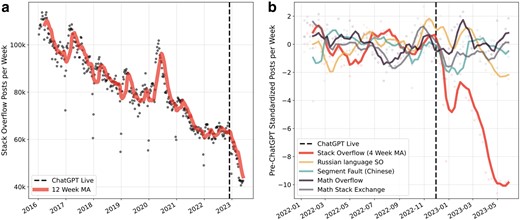
Large language models reduce public knowledge sharing on online Q&A platforms
Abstract. Large language models (LLMs) are a potential substitute for human-generated data and knowledge resources. This substitution, however, can present
Wolfram LLM Benchmarking Project
Results from Wolfram's ongoing tracking of LLM performance. The benchmark is based on a Wolfram Language code generation task.

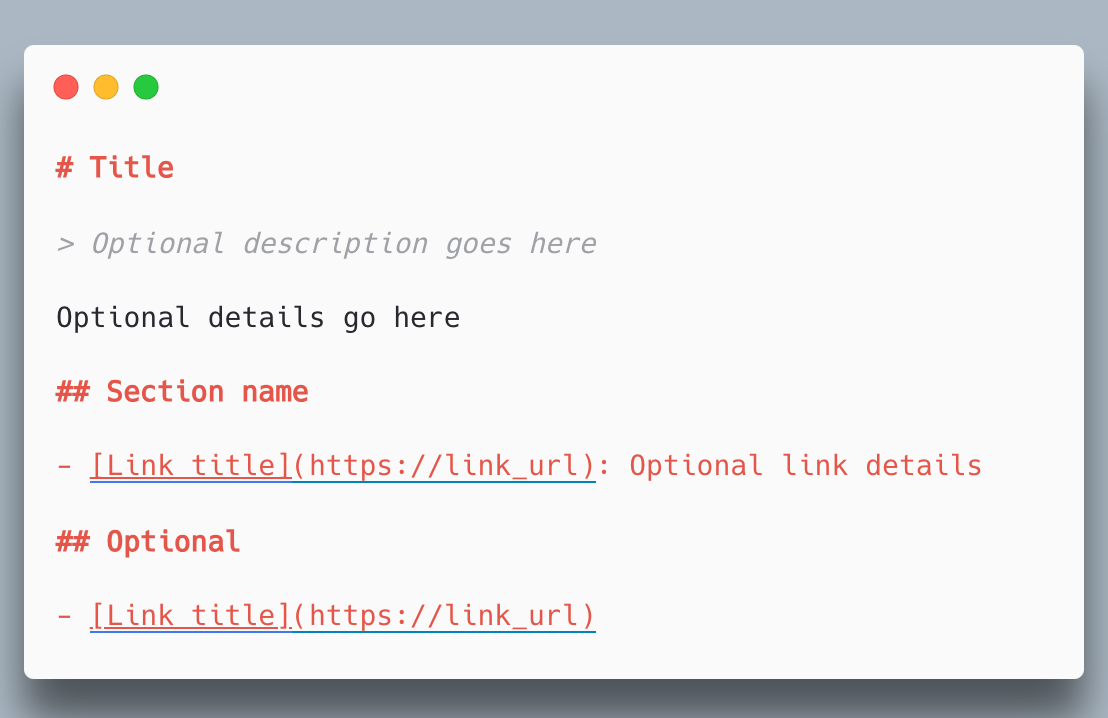
The /llms.txt file – llms-txt
A proposal to standardise on using an /llms.txt file to provide information to help LLMs use a website at inference time.
576 - Using LLMs at Oxide | RFD | Oxide
Large language models (LLMs) are an indisputable breakthrough of the last five years, potentially profoundly changing the way that we work. As with any extraordinarily powerful tool, LLM use has both promise and peril — and that they are so general-purpose leaves real questions about how and when they should be used. The landscape is shifting so rapidly that static prescription is unlikely — but that LLMs are evolving so quickly also gives urgency to the question: how should LLMs be used at Oxide?