Coined by American author Michael Crichton in a 2002 speech, named after American physicist Murray Gell-Mann (see quotation).
People are not friction
The Gell-Mann Amnesia Effect of AI is a pretty well documented phenomenon: The Gell-Mann amnesia effect is a cognitive bias describing the tendency of individuals to critically assess media reports in a domain they are knowledgeable about, yet continue to trust reporting in other areas despite recognizing similar potential inaccuracies.
Jürgen Leschner on Twitter / X
Making organizational memories == agent memories is the unlock. https://t.co/Tk9fV17iny— Jürgen Leschner (@jldec) July 28, 2025
Joelle McTigue | Artist
Joelle McTigue is an artist examining memory as unstable matter shaped by movement, repetition, access, power, and erasure.
Release notes | Anthropic Help Center
Memory in Claude Cowork, editable topics, and a sensitive topics setting

Alfred Korzybski
Alfred Habdank Skarbek Korzybski was a Polish-American philosopher and independent scholar who developed a field called general semantics, which he viewed as both distinct from, and more encompassing than, the field of semantics. He argued that human knowledge of the world is limited both by the human nervous system and the languages humans have developed, and thus no one can have direct access to reality, given that the most we can know is that which is filtered through the brain's responses to reality. His best known dictum is "The map is not the territory". Many of his ideas were presented in his book Science and Sanity (1933).
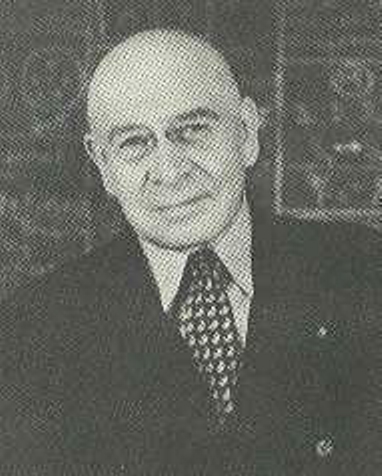
Alfred Korzybski
Alfred Habdank Skarbek Korzybski was a Polish-American philosopher and independent scholar who developed a field called general semantics, which he viewed as both distinct from, and more encompassing than, the field of semantics. He argued that human knowledge of the world is limited both by the human nervous system and the languages humans have developed, and thus no one can have direct access to reality, given that the most we can know is that which is filtered through the brain's responses to reality. His best known dictum is "The map is not the territory". Many of his ideas were presented in his book Science and Sanity (1933).
The Cyclical Theory of Open Source
In an attempt to explain the periodic fluctuations in American history, the historian Arthur Schlesinger – the Schlesinger the Harvard library is named after, not his son Arthur Schlesinger Jr that worked in Kennedy’s administration – posited that history runs in cycles. Specifically, his cyclical theory argued that American history swung back and forth between
Casey Muratori – The Big OOPs: Anatomy of a Thirty-five-year Mistake – BSC 2025
Timothy Morton
Timothy Bloxam Morton is a professor and Rita Shea Guffey Chair in English at Rice University. A member of the object-oriented philosophy movement, Morton explores the intersection of object-oriented thought and ecological studies. Morton's use of the term 'hyperobjects' was inspired by Björk's 1996 single 'Hyperballad', although the term 'Hyper-objects' has also been used in computer science since 1967. Morton uses the term to explain objects so massively distributed in time and space as to transcend localization, such as climate change and styrofoam.

Claude carries memory into work - Sensemaker
Chat and cloud Cowork now share remembered topics; continuity improves, but so can the reach of a mistake.
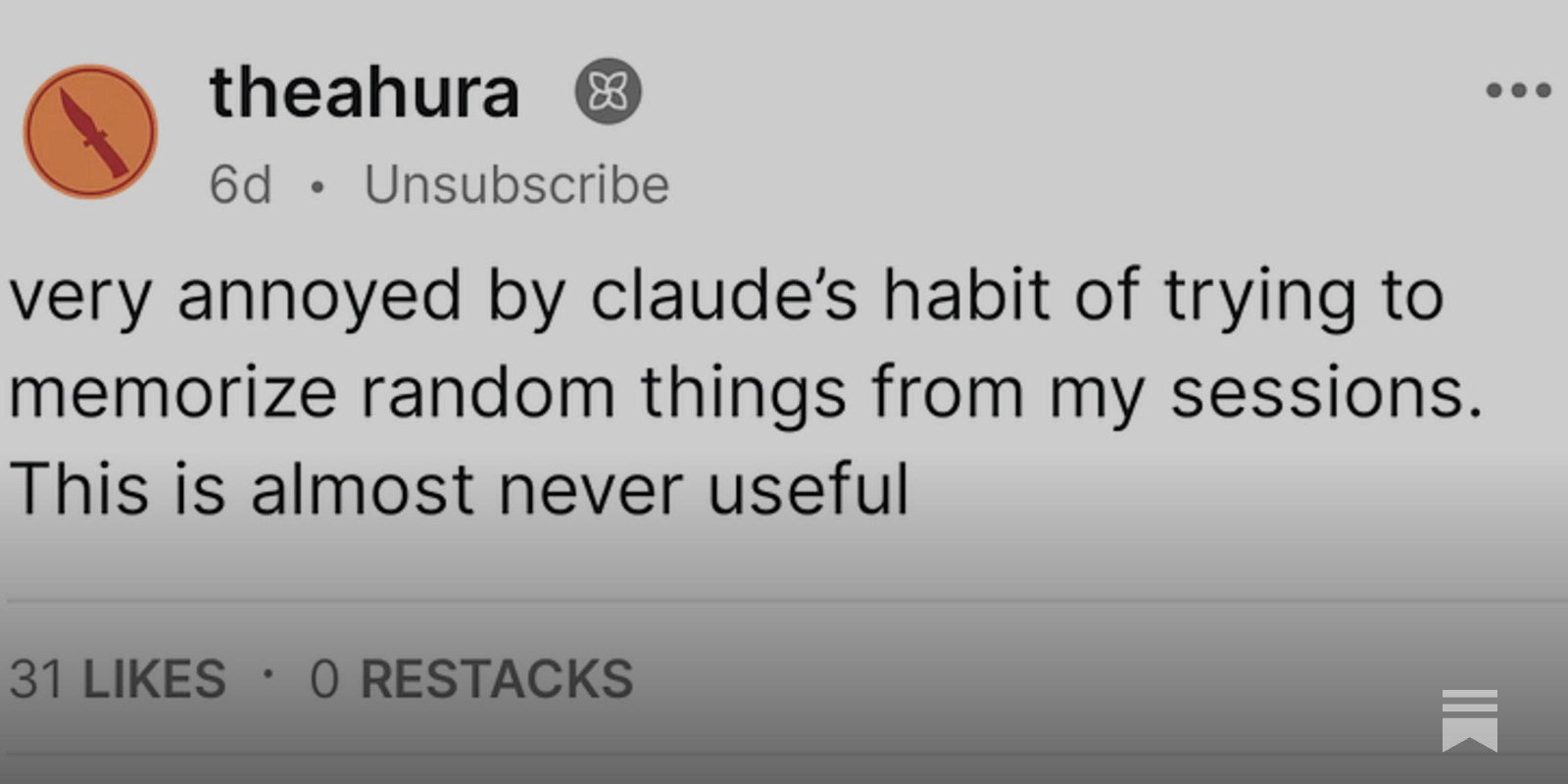
Agentics: Memorizing Session Transcripts Isn't Useful
Keep track of artifacts, not scratch. Alt title: Claude, please stop trying to memorize random crap
To Remember, the Brain Must Actively Forget | Quanta Magazine
Researchers find evidence that neural systems actively remove memories, suggesting that forgetting may be the default mode of the brain.

A Mathematical Theory of Communication
"A Mathematical Theory of Communication" is an article by mathematician Claude Shannon published in Bell System Technical Journal in 1948. It was renamed The Mathematical Theory of Communication in the 1949 book of the same name, a small but significant title change after realizing the generality of this work. It has tens of thousands of citations, being one of the most influential and cited scientific papers of all time, as it gave rise to the field of information theory, with Scientific American referring to the paper as the "Magna Carta of the Information Age", while the electrical engineer Robert G. Gallager called the paper a "blueprint for the digital era". Historian James Gleick rated the paper as the most important development of 1948, placing the transistor second in the same time period, with Gleick emphasizing that the paper by Shannon was "even more profound and more fundamental" than the transistor.

Claude Memory: A Different Philosophy
A breakdown of Claude's memory implementation, how it differs from ChatGPT, and what these opposite approaches reveal about each company's philosophy.