


I don’t know how it happened. Maybe the bodystealers murdered Rationality and gave its skinsuit to Madness. My theory is more reserved: I think there was a recent change in the fabric of the universe. Either way, something happened that reductio ad absurdum is no longer a method of falsification. It’s now the sign of a good argument. Today, every visionary idea in Silicon Valley, from “cure for death” longevity research, through the full gamut of AI speculation, to Dark Right social accelerationism, stands on the new standard of logical proof: that a premise is true if it leads to absurd conclusions.
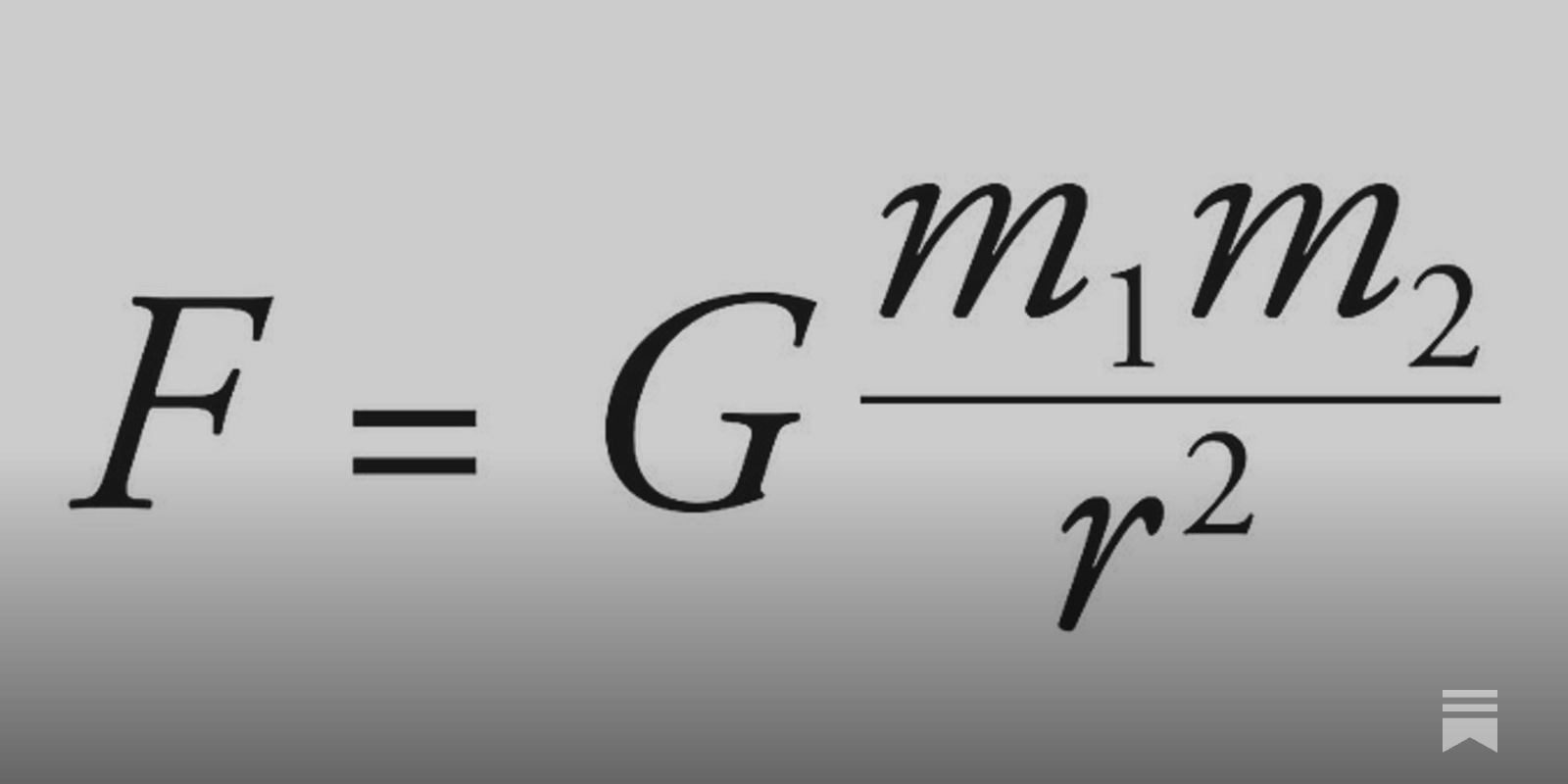
Newton's "Absurdity"
A look at the history of scientific progress through an often unused perspective: the people that actually lived it.
The Cult of Bayes' Theorem
I'm no longer a skeptic, but still I can't resist the old skeptic urge to do a bit of debunking. After all, there are a lot of crackpots out there. There are people, for example, who believe that a superintelligent computer will arise in the next twenty years and then promptly either destroy humanity or cure death and set us free. There are people who believe that one of the best works of English literature is an unfinished Harry Potter fanfic by someone who can barely write a comprehensible English sentence. There are even people who believe the best thing you can do to help the poor and the starving is become a city stockbroker or Silicon Valley entrepreneur! And more often than not, the same people believe all these crazy things!
Hyperstition
A hyperstition is a self-fulfilling idea that becomes real through its own existence.[1] The price of Bitcoin,[2] Roko's Basilisk,[3] accelerationism,[4] and the QAnon conspiracy theory[5] have all been described as hyperstitions. Self-fulfilling prophecies are a kind of hyperstition where predictions are made about the future that become true by being known.[6] The concept was coined by Nick Land in 1995 as a portmanteau of hyper- and superstition,[7] during his time at the Cybernetic Culture Research Unit developing the philosophy of accelerationism.[3][8]
The Irrational Decision
How the computer revolution shaped our conception of rationality—and why human problems require solutions rooted in human intuition, morality, and judgment

Being rational all the time isn’t going to do you any favors
When Daniel Kahneman and Amos Tversky published their paper on Prospect Theory in 1979, few people could have imagined the long-term implications.

Andreas De Block on Twitter / X
It took Nature three years to publish this rebuttal, which clearly demonstrates the fundamental flaws in the original paper. In the meantime, the paper's conclusions influenced scientific debate and policy decisions. Such delays in correcting flawed research do real damage. https://t.co/QI3Ei3PE70— Andreas De Block (@DeblockBlock) August 13, 2026
Cognitive Autonomous Zones: against “framework fundamentalism” — Belshaw Brain Archive
In my previous post on the “cash value” of truth, I explored how Pragmatist philosophy offers a way to test beliefs through their practical consequences. Is something, as William James would put it, “

The rationalists are not ok
Who, or what, are the rationalists? They are an internet-spawned sub-culture who ‘practice the art of rationality’. This means they spend lots of time thinking about topics like cognitive biases, Bayesian reasoning, probability and statistics, computer science, AI, decision theory, game theory, transhumanism, etc. Demographically they skew heavily toward STEM students from elite universities and tech guys in the bay area.

everything is a nail, or at least it ought to be
“the irrational decision” by Ben Recht

Extropia's Children, Chapter 2: This Demon-Haunted World
The rise of the rationalist movement has led to multiple strange and dark offshoots - demons, cults, hells, suicides. How and why could dedication to rational thought result in such fantastically weird and grim outcomes?

The Death Of Expertise
To reject the notion of expertise, and to replace it with a sanctimonious insistence that every person has a right to his or her own opinion, is silly.

What's Wrong with Bullshit
Past philosophical analyses of bullshit have generally presented bullshit as a formidable threat to truth. However, most of these analyses also reduce bullshit to a mere symptom of a greater evil (e.g. indifference towards truth). In this paper, I introduce a new account of bullshit which, I argue, is more suited to understand the threat posed by bullshit. I begin by introducing a few examples of “truth-tracking bullshit”, before arguing that these examples cannot be accommodated by past, process-based accounts of bullshit. I then introduce my new, output-based account of bullshit, according to which a claim is bullshit when it is presented as or appears as interesting at first sight but is revealed not to be that interesting under closer scrutiny. I present several arguments in favor of this account, then argue that it is more promising than past accounts when it comes to explaining how bullshit spreads and why it is a serious threat to truth.
Believing what we do not believe: Acquiescence to superstitious beliefs and other powerful intuitions.
The phony comforts of useful idiots
On Casey Newton and the shallowness of anti-skepticism.
I missed a lot of #metascience discourse in hospital, and am mostly sad I didn't get a chance to wade in on the absurdity of this being a paper in Nature in 2026; ignoring a decade of commentary from statisticians on OSC 2015 paper. nature.com/articles/s41586-025-10078-y

Investigating the replicability of the social and behavioural sciences - Nature
www.nature.com