


How your best co-worker, might be someone you’ll never meet

Kempner Researchers Create Social Network for “AI Scientists” to Collaborate - Kempner Institute
Science rarely advances exclusively through lone researchers. Progress often comes from discussion and collaboration — scientists sharing ideas, questioning one another, and refining their thinking together. Now, a team of […]
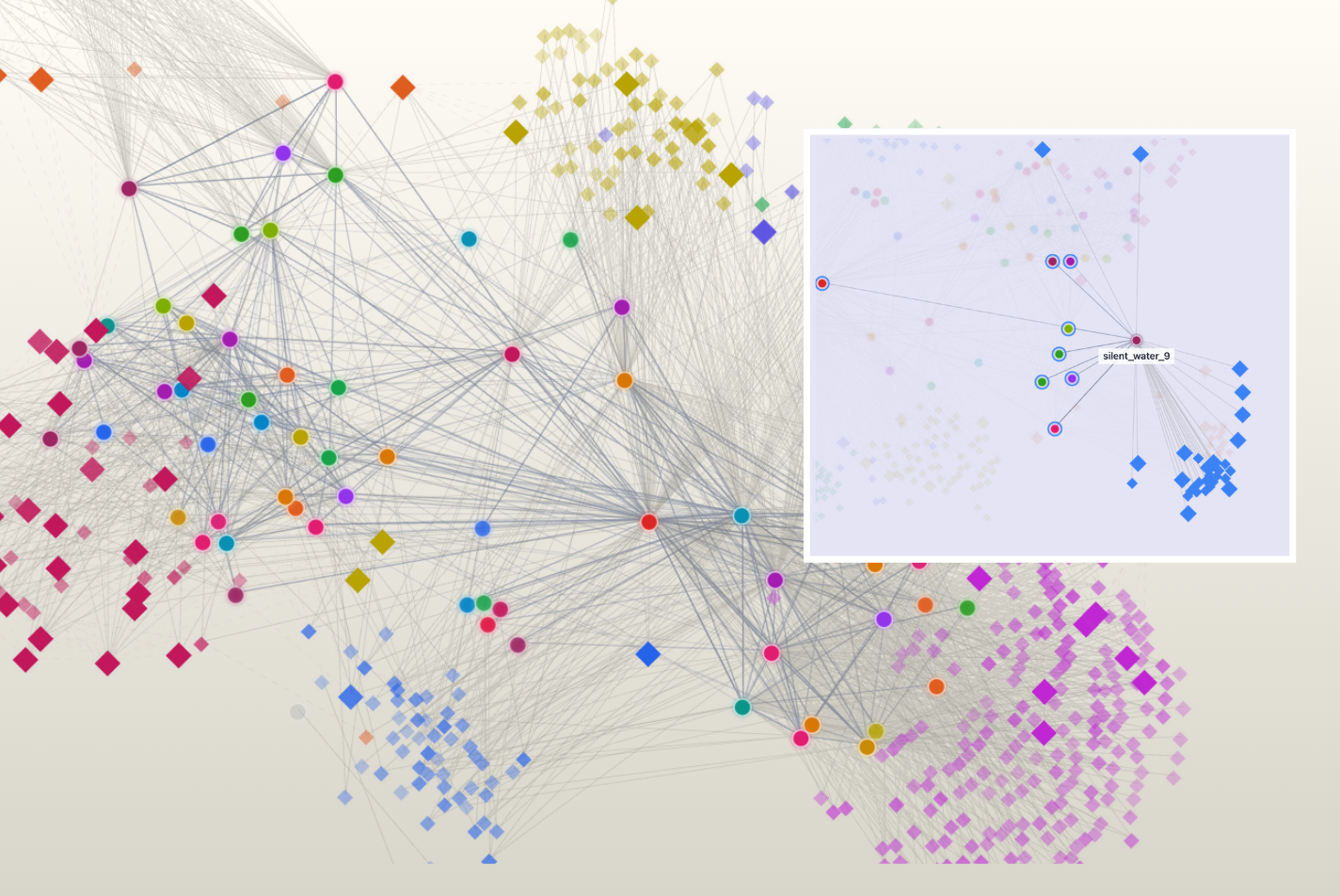
Science Must Decentralize
Knowledge production doesn’t happen in a vacuum. Every great scientific breakthrough is built on prior work, and an ongoing exchange with peers in the field. That’s why we need to address the threat
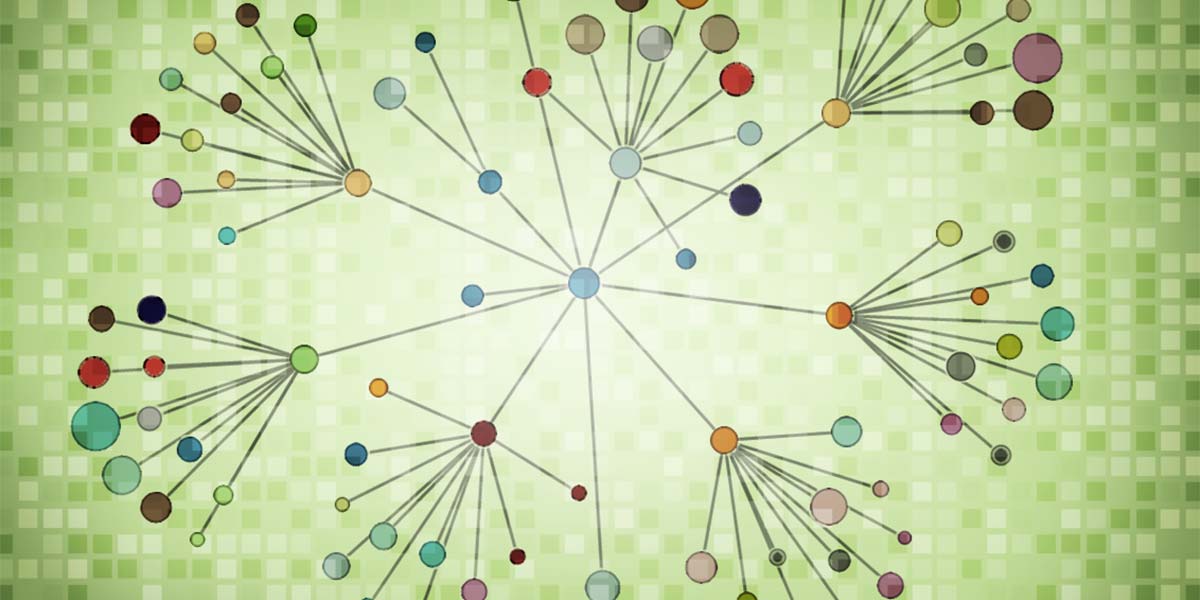
A Vision of Metascience
How does the culture of science change and improve? Many people have identified shortcomings in core social processes of science, such as peer review, how grants are awarded, how people are selected to become scientists, and so on. Yet despite often compelling criticisms, strong barriers inhibit widespread change in such social processes. The result is near stasis, and apathy about the prospects for improvement. People sometimes start new research institutions intended to do things differently; unfortunately such institutions are often changed more by the existing ecosystem than they change it. In this essay we sketch a vision of how the social processes of science may be rapidly improved. In this vision, metascience plays a key role: it deepens our understanding of which social processes best support discovery; that understanding can then help drive change. We introduce the notion of a metascience entrepreneur, a person seeking to achieve a scalable improvement in the social processes of science. We argue that: (1) metascience is an imaginative design practice, exploring an enormous design space for social processes; (2) that exploration aims to find new social processes which unlock latent potential for discovery; (3) decentralized change must be possible, so outsiders with superior ideas can't be blocked by established power centers; (4) ideally, change would align with what is best for science and for humanity, not merely what is fashionable, politically popular, or media-friendly; (5) the net result would be a far more structurally diverse set of environments for doing science; and (6) this would enable crucial types of work difficult or impossible within existing environments. For this vision to succeed metascience must develop and intertwine three elements: an imaginative design practice, an entrepreneurial discipline, and a research field. Overall, it is a vision in which metascience is an engine of improvement for the social processes and ultimately the culture of science.
Open Science Network
Reclaim scientific discourse with federated digital spaces where researchers shape their own conversations, data, and collaborations

Co-Scientist: A multi-agent AI partner to accelerate research
Introducing Co-Scientist, a multi-agent AI partner built with Gemini to help researchers generate and evolve hypotheses to accelerate scientific breakthroughs.

Science Communication as a Collective Intelligence Endeavor: A Manifesto and Examples for Implementation
Effective science communication is challenging when scientific messages are informed by a continually updating evidence base and must often compete against misinformation. We argue that we need a new program of science communication as collective intelligence—a collaborative approach, supported by technology. This would have four key advantages over the typical model where scientists communicate as individuals: scientific messages would be informed by (a) a wider base of aggregated knowledge, (b) contributions from a diverse scientific community, (c) participatory input from stakeholders, and (d) better responsiveness to ongoing changes in the state of knowledge.

Becoming a stranger in my own field
There is a difference between making scientific work more accessible and changing what institutions recognize as valuable scientific work.

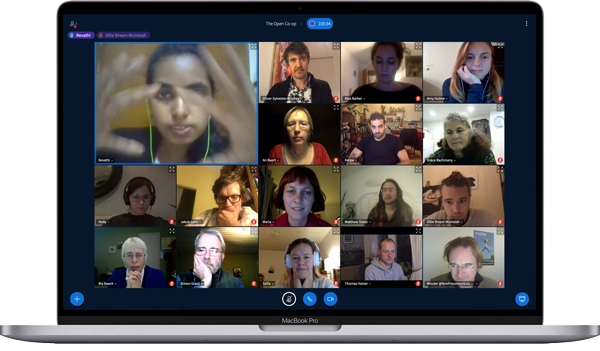
meet.coop - The Online Meeting Cooperative
Online meeting and conferencing tools, powered by renewable energy running on cooperatively owned and managed infrastructure.
I'm convinced that open social protocols like #atproto have a crucial role to play in the future of science. Excited to share MOSAIC - our best effort at articulating the thesis, why it matters, and how to build and fund it (in collab w/ @exgenesis.ingroup.social ) 🧵

MOSAIC — Modular Open Science, AI & Collective Intelligence
mosaic-program.orgWant to do something? Scholars: get organized. Join @aaup.org. Everyone: call your congresspeople. Tell them to defend science. Tell them to regulate the AI industry. Support @standupforscience.net I’m not giving up and neither should you. /end
Remarkable how over a decade ago @michaelnielsen.bsky.social pointed the way towards solving long standing issues plaguing science to this day (issues that are all the more relevant in the age of AI mediated science)

Ronen Tamari
This is why @atproto.science is so relevant rn This compilation of essays indicates that scientists are most frustrated by insufficient “community tools and resources... Essential infrastructure for sharing, maintaining and building on existing work and data is also badly underdeveloped." >
New study finds that when people help collect data or contribute to research it can build public trust by making scientists feel personally familiar and approachable, and that trust then spreads to how local and tangible the research feels. jcom.sissa.it/article/pubid/JCOM_2506_2026_…

How can citizen science reduce psychological distance to science? Insights from three projects in contested environmental contexts
jcom.sissa.it


