New study first to establish causal link between use of the platform and reported worsening in anxiety and depression among college students
Facebook’s Mental Health Problem
The most important thing I learned in 2015? That depression and social media do not go well together at all.

A "gold standard" study finds deleting Facebook is great for your mental health
A unique study praised for its rigor finds numerous upsides to deactivating your Facebook account

Criticism of Facebook
Facebook (and parent company Meta Platforms) has been the subject of criticism and legal action since it was founded in 2004.[1] Criticisms include the outsize influence Facebook has on the lives and health of its users and employees, as well as Facebook's influence on the way media, specifically news, is reported and distributed. Notable issues include Internet privacy, such as use of a widespread "like" button on third-party websites tracking users,[2][3] possible indefinite records of user information,[4] automatic facial recognition software,[5][6] and its role in the workplace, including employer-employee account disclosure.[7] The use of Facebook can have negative psychological and physiological effects[8] that include feelings of sexual jealousy,[9][10] stress,[11][12] lack of attention,[13] and social media addiction that in some cases is comparable to drug addiction.[14][15]
Social Media and Depression Symptoms: a Meta-Analysis
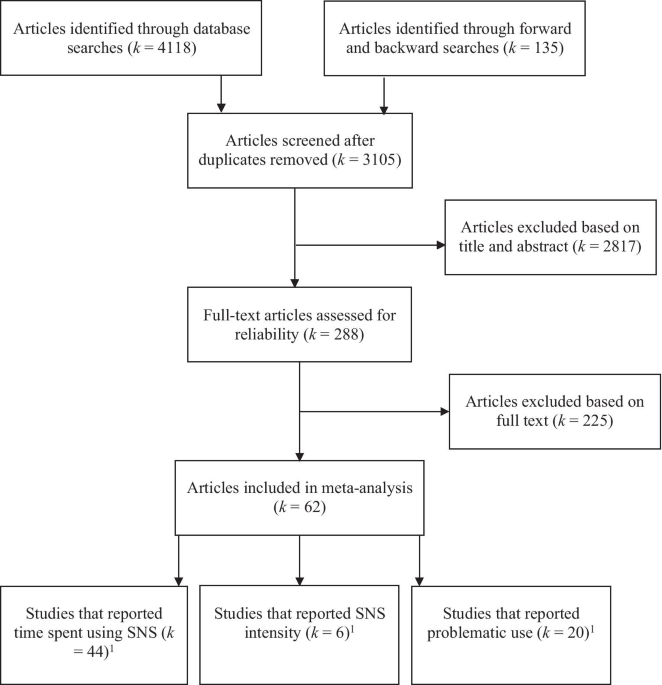
Social Networking Sites (SNS) have close to 3 billion users worldwide. Recently, however, SNS have come under media scrutiny for their potential association with depression. Two previous meta-analyses failed to find evidence for a robust concurrent association between SNS use and depression symptoms. However, these analyses focused primarily on the time spent using SNS. The current meta-analysis is the first to consider the multi-dimensional nature of SNS use, and examines separately the quantitative associations of depression symptoms to SNS use in three types of SNS studies examining three distinct constructs of SNS use: time spent using SNS, intensity of SNS use, and problematic SNS use. Sixty-two studies (N = 451, 229) met inclusion criteria. Depression symptoms were significantly, but weakly, associated with time spent using SNS (r = 0.11) and intensity of SNS use (r = 0.09). However, the association of depression symptoms to problematic SNS use was moderate (r = 0.29), was significantly higher than for time spent using SNS (Qbetween = 35.85, p < 0.001) or intensity of SNS use (Qbetween = 13.95, p < 0.001), and was not significantly moderated by age, gender, year of study publication, or mode of recruitment. These results suggest that future research examining causal models of the relation of SNS use and depression, as well as research on intervention and prevention, should focus in more detail on individuals who are engaging in a pattern of problematic SNS use.
The Longitudinal Association Between Social-Media Use and Depressive Symptoms Among Adolescents and Young Adults: An Empirical Reply to Twenge et al. (2018)
Research by Twenge, Joiner, Rogers, and Martin has indicated that there may be an association between social-media use and depressive symptoms among adolescents. However, because of the cross-sectional nature of this work, the relationship among these variables over time remains unclear. Thus, in this longitudinal study we examined the associations between social-media use and depressive symptoms over time using two samples: 594 adolescents ( M age = 12.21) who were surveyed annually for 2 years, and 1,132 undergraduate students ( M age = 19.06) who were surveyed annually for 6 years. Results indicate that among both samples, social-media use did not predict depressive symptoms over time for males or females. However, greater depressive symptoms predicted more frequent social-media use only among adolescent girls. Thus, while it is often assumed that social-media use may lead to depressive symptoms, our results indicate that this assumption may be unwarranted.

Social Media and Change in Psychological Distress Over Time: The Role of Social Causation
Abstract This article tests the relationship between information and communication technologies (ICT), such as the Internet, cell phones, and social media, and change over time in psychological distress (PD) and risk of serious psychological distress (SPD) associated with depression and anxiety disorders. Using a longitudinal panel design, survey data from a representative sample of American adults, findings revealed that home Internet and social network site (SNS) use are associated with decreased PD over time. Having extended family who are also Internet users further decreases PD. PD increased or decreased in relation to change in the PD of extended family who also use SNSs. For most people, ICT substantively reduce PD; in rare cases, an extreme spike in PD of extended family also on SNSs, there was a trivial increase to the risk of SPD. PD did not change when extended family not on social media experienced a change in their PD.
Does Using Social Media Jeopardize Well-Being? The Importance of Separating Within- From Between-Person Effects
Social networking sites (SNS) are frequently criticized as a driving force behind rising depression rates. Yet empirical studies exploring the associations between SNS use and well-being have been predominantly cross-sectional, while the few existing longitudinal studies provided mixed results. We examined prospective associations between SNS use and multiple indicators of well-being in a nationally representative sample of Dutch adults ( N ∼ 10,000), comprising six waves of annual measures of SNS use and well-being. We used an analytic method that estimated prospective effects of SNS use and well-being while also estimating time-invariant between-person associations between these variables. Between individuals, SNS use was associated with lower well-being. However, within individuals, year-to-year changes in SNS use were not prospectively associated with changes in well-being (or vice versa). Overall, our analyses suggest that the conclusions about the causal impact of social media on rising mental health problems in the population might be premature.
The Impact of Internet and Social Media Use on Well-Being: A Longitudinal Analysis of Adolescents Across Nine Years
Abstract The present research examines the longitudinal average impact of frequency of use of Internet and social networking sites (SNS) on subjective well-being of adolescents in Germany. Based on five-wave panel data that cover a period of nine years, we disentangle between-person and within-person effects of media use on depressive symptomatology and life satisfaction as indicators of subjective well-being. Additionally, we control for confounders such as TV use, self-esteem, and satisfaction with friends. We found that frequency of Internet use in general and use of SNS in particular is not substantially related subjective well-being. The explanatory power of general Internet use or SNS use to predict between-person differences or within-person change in subjective well-being is close to zero. TV use, a potentially confounding variable, is negatively related to satisfaction with life, but it does not affect depressive symptomatology. However, this effect is too small to be of practical relevance.
Ten Myths About the Effect of Social Media Use on Well-Being
This viewpoint reviews the empirical evidence regarding the association between social media use and well-being, including life satisfaction and affective well-being, and the association between social media use and ill-being, including loneliness, anxiety, and depressive symptomology. To frame this discussion, this viewpoint will present 10 widely believed myths about social media, each drawn from popular discourse on the topic. In rebuttal, this viewpoint will offer a warranted claim supported by the research. The goal is to bring popular beliefs into dialogue with state-of-the-art quantitative social scientific evidence. It is the intention of this viewpoint to provide a more accurate and nuanced claim to challenge each myth. This viewpoint will bring attention to the importance of using rigorous scientific evidence to inform public debates about social media use and well-being, especially among adolescents and young adults.

Estimating the association between Facebook adoption and well-being in 72 countries
Social media's potential effects on well-being have received considerable research interest, but much of past work is hampered by an exclusive focus on demographics in the Global North and inaccurate self-reports of social media engagement. We describe associations linking 72 countries' Facebook adoption to the well-being of 946 798 individuals from 2008 to 2019. We found no evidence suggesting that the global penetration of social media is associated with widespread psychological harm: Facebook adoption predicted life satisfaction and positive experiences positively, and negative experiences negatively, both between countries and within countries over time. Nevertheless, the observed associations were small and did not reach a conventional 97.5% one-sided credibility threshold in all cases. Facebook adoption predicted aspects of well-being more positively for younger individuals, but country-specific results were mixed. To move beyond studying aggregates and to better understand social media's roles in people's lives, and their potential causal effects, we need more transparent collaborative research between independent scientists and the technology industry.

How to Fix Facebook—Before It Fixes Us
An early investor explains why the social media platform’s business model is such a threat—and what to do about it.

The Impact of Social Media on Adolescent Mental Health: A Meta-Analysis
Introduction: The proliferation of social media has raised significant concerns about its potential effects on the mental health of adolescents. This meta-analysis aims to provide a comprehensive assessment of the existing research on the relationship between social media use and various mental health outcomes in adolescents. Methods: A systematic search of electronic databases (PubMed, PsycINFO, Scopus, Web of Science) from January 2018 to June 2024 was conducted to identify relevant studies. Studies were included if they examined the association between social media use and mental health outcomes in adolescents (aged 10-19) and reported quantitative data. Effect sizes were calculated and pooled using random-effects models. Results: A total of 45 studies (N = 153,285 adolescents) met the inclusion criteria. The meta-analysis revealed small but significant associations between increased social media use and increased depressive symptoms (r = 0.12), anxiety (r = 0.10), and loneliness (r = 0.15). Furthermore, a significant negative association was found between social media use and self-esteem (r = -0.08). The analysis also identified several moderators of these effects, including gender, age, and type of social media platform. Conclusion: The findings of this meta-analysis suggest that increased social media use is associated with a range of negative mental health outcomes in adolescents. However, the effects are small, and the relationship is complex, with several moderating factors. Further research is needed to understand the mechanisms underlying these associations and to develop effective interventions to mitigate the potential negative effects of social media on adolescent mental health.
Facebook’s Unethical Experiment Manipulated Users’ Emotions
Facebook has been experimenting on us. A new paper in the Proceedings of the National Academy of Sciences reveals that Facebook intentionally...
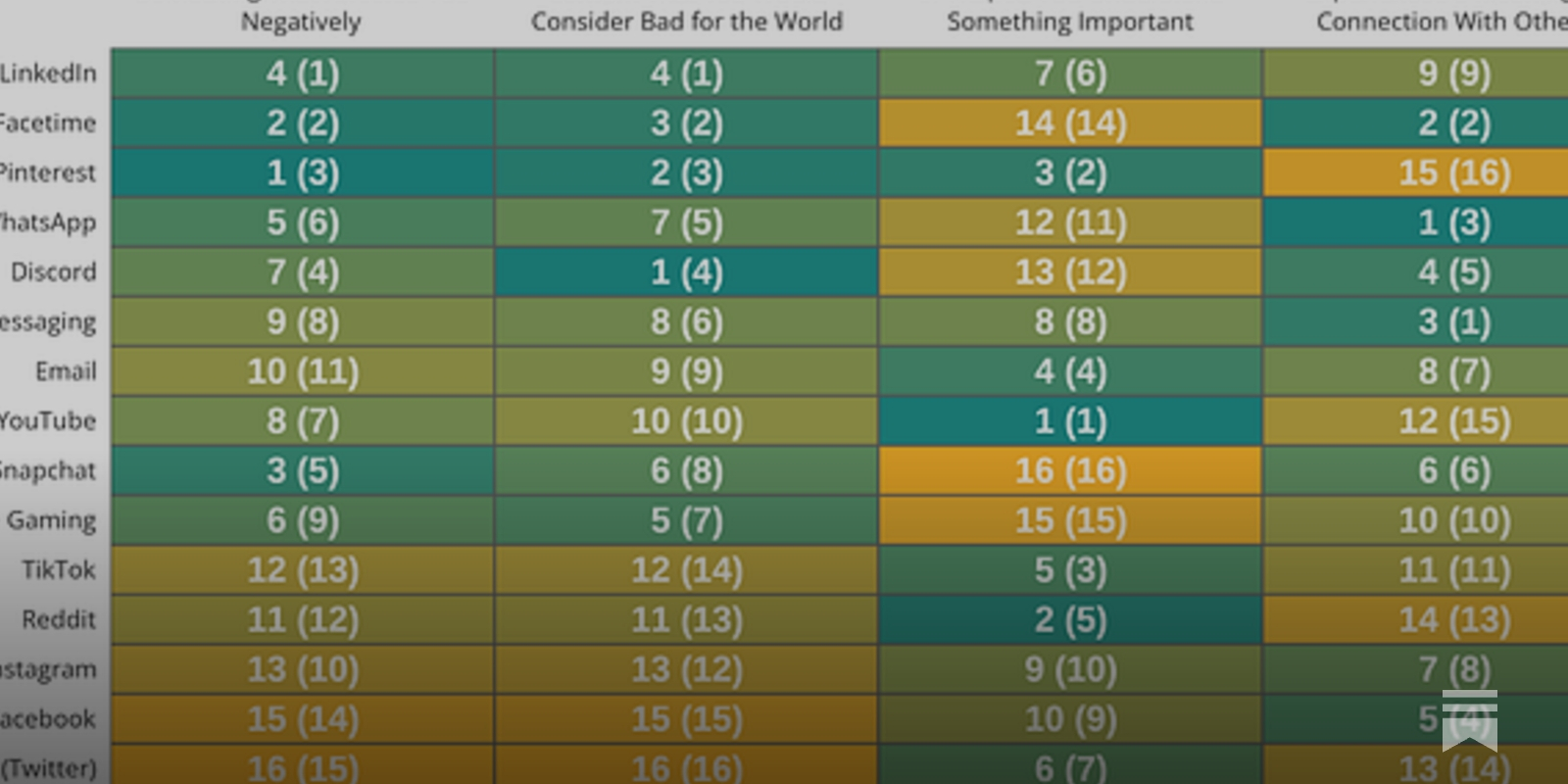
Social Media Experiences Across Nearly 2 Years Since Launching the Social Media Index
With new data through January 2025, we find that social media use is decreasing, bad experiences are mostly holding steady, and positive experiences are increasing on some platforms
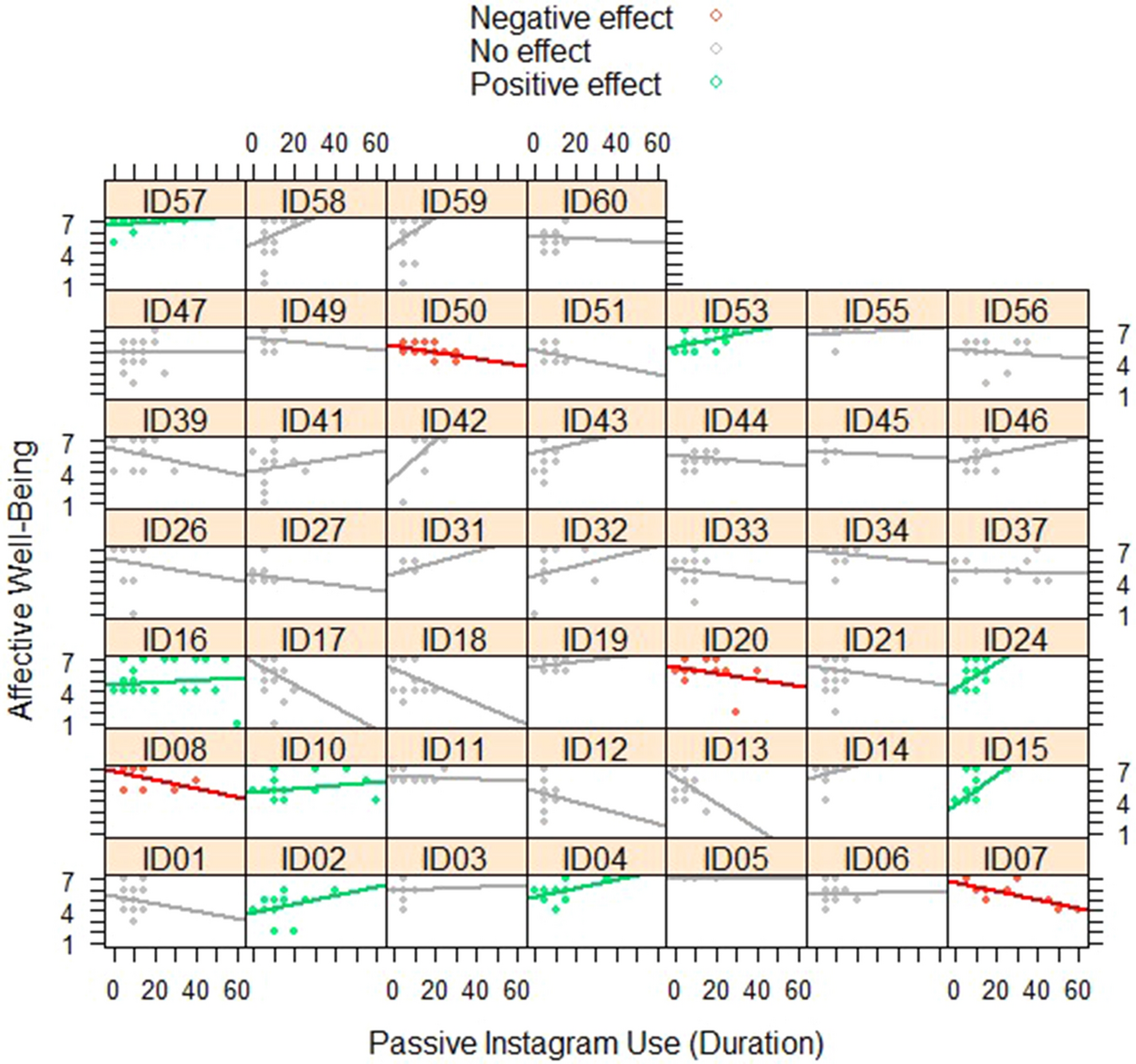
The effect of social media on well-being differs from adolescent to adolescent
The question whether social media use benefits or undermines adolescents’ well-being is an important societal concern. Previous empirical studies have mostly established across-the-board effects among (sub)populations of adolescents. As a result, it is still an open question whether the effects are unique for each individual adolescent. We sampled adolescents’ experiences six times per day for one week to quantify differences in their susceptibility to the effects of social media on their momentary affective well-being. Rigorous analyses of 2,155 real-time assessments showed that the association between social media use and affective well-being differs strongly across adolescents: While 44% did not feel better or worse after passive social media use, 46% felt better, and 10% felt worse. Our results imply that person-specific effects can no longer be ignored in research, as well as in prevention and intervention programs.
The great rewiring: is social media really behind an epidemic of teenage mental illness?
The evidence is equivocal on whether screen time is to blame for rising levels of teen depression and anxiety — and rising hysteria could distract us from tackling the real causes.