

Take the free EPA 608 Universal practice test now: 100 questions across Core, Type I, Type II, and Type III. Pass each section at 72% (18 of 25).
EPA 608 Practice Test 2026: Free, Exam Format, All 5 Sections
This free EPA 608 practice test comes from the federal rule and names your weak section. Start with no signup, and all 604 stay free with an account.
Free EPA 608 Test Study Guide 2026: All Sections + Cheat Sheet
Free EPA 608 test study guide for Core, Type 1, 2, and 3, plus a printable cheat sheet with every number, date, and leak rate the exam tests. No PDF hunt, no signup.
Manuals
Looking for EPA certification study guides? View the manuals from Mainstream Engineering by visiting our site today. We have the materials to help you pass your test.
Multiple Hypothesis Testing
Sign in to access your institutional or personal subscription or get immediate access to your online copy - available in PDF and ePub formats

a11y.quest - 128 questions to level up your accessibility game
128 questions to level up your web accessibility game. Practice WCAG 2.2, ARIA, semantic HTML, keyboard, and contrast, with plain-English answers.
trace-tests/docs/levels.md at 46c9c0e2e9216d66e1ae10b1a78324f7ca08a1ed · agentrust-io/trace-tests
TRACE compliance test suite. Conformance tests for TRACE Certification. - agentrust-io/trace-tests
Practice tests help you remember—even if you don’t check if you’re correct
Re-reading study guides is not nearly as helpful.

PFAS Statewide Sampling Dataset: PFAS drinking water sampling data from U.S. community water systems
This repository contains a sample of U.S. community water systems (CWS) included in the PFAS statewide sampling dataset. In the first versions of this dataset, 18 states were included as part of Liddie et al., 2023. The statewide sampling dataset now includes compiled data from 28 U.S. statewide sampling campaigns of CWS for per- and polyfluoroalkyl substances (PFAS) in drinking water. The full dataset of samples spans the 2016-2024 period. All data were either publicly available or provided by state agencies upon request. The full dataset contains approximately 98,000 samples from 11,138 CWS in Alabama, Arizona, California, Colorado, Georgia, Illinois, Indiana, Iowa, Kentucky, Maine, Maryland, Massachusetts, Michigan, Minnesota, Missouri, New Hampshire, New Jersey, New York, Ohio, Pennsylvania, Rhode Island, South Carolina, Tennessee, Utah, Vermont, Virginia, Washington, and Wisconsin. Concentrations of 5-40 targeted PFAS were analyzed by multiple labs contracted by the states using comparable methods, including either US EPA Method 537, 537.1, or 533. We assigned a conservative, uniform detection limit at the 98th percentile of all reports detection limits (5 ng/L) for the 5 PFAS that were measured in all states consistently. This dataset also incorporates data from the US EPA’s Safe Drinking Water Information System, including the source water type, county served, zip code, system city, and total population served. The 8-digit hydrological unit code in which a CWS intake is estimated to reside is also provided using data from the United States Geological Survey. This was done by geocoding each CWS using geographical data provided by state agencies, reported zip codes (when available), or based on additional information provided by each system (e.g., system name, city, city served). At this time, the full datasets (either system-level or sample-level) are available by request (see contact information below). Note that additional fields, such continuous concentration data, reported detection limits, concentrations of other PFAS analytes, are also available. Proper citation of both this repository and the original associated paper (see recommended citations below) are required for use of these data. Due to the significant time investment required to curate these data, additional data requests beyond the scope of the details listed here are welcomed but should be agreed upon (e.g., in terms of co-authorship) with the primary point of contact. Please contact Jahred Liddie (jliddie@g.harvard.edu) for questions/suggestions, access to additional variables, or access to the full sampling datasets.
Public testing is beginning
Rex is ready for public testing and we're beginning to invite our mailing list.
Revisiting Joel's Test - exe.dev blog
Joel Spolsky's twelve questions still hold, but agents demand nine more. Call it the Shelley test.
Re-evaluating GPT-4’s bar exam performance
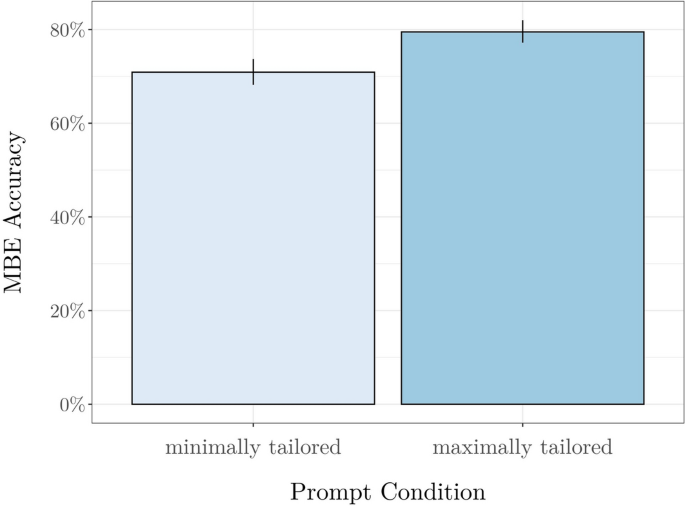
Perhaps the most widely touted of GPT-4’s at-launch, zero-shot capabilities has been its reported 90th-percentile performance on the Uniform Bar Exam. This paper begins by investigating the methodological challenges in documenting and verifying the 90th-percentile claim, presenting four sets of findings that indicate that OpenAI’s estimates of GPT-4’s UBE percentile are overinflated. First, although GPT-4’s UBE score nears the 90th percentile when examining approximate conversions from February administrations of the Illinois Bar Exam, these estimates are heavily skewed towards repeat test-takers who failed the July administration and score significantly lower than the general test-taking population. Second, data from a recent July administration of the same exam suggests GPT-4’s overall UBE percentile was below the 69th percentile, and $$\sim$$48th percentile on essays. Third, examining official NCBE data and using several conservative statistical assumptions, GPT-4’s performance against first-time test takers is estimated to be $$\sim$$62nd percentile, including $$\sim$$42nd percentile on essays. Fourth, when examining only those who passed the exam (i.e. licensed or license-pending attorneys), GPT-4’s performance is estimated to drop to $$\sim$$48th percentile overall, and $$\sim$$15th percentile on essays. In addition to investigating the validity of the percentile claim, the paper also investigates the validity of GPT-4’s reported scaled UBE score of 298. The paper successfully replicates the MBE score, but highlights several methodological issues in the grading of the MPT + MEE components of the exam, which call into question the validity of the reported essay score. Finally, the paper investigates the effect of different hyperparameter combinations on GPT-4’s MBE performance, finding no significant effect of adjusting temperature settings, and a significant effect of few-shot chain-of-thought prompting over basic zero-shot prompting. Taken together, these findings carry timely insights for the desirability and feasibility of outsourcing legally relevant tasks to AI models, as well as for the importance for AI developers to implement rigorous and transparent capabilities evaluations to help secure safe and trustworthy AI.
Benchmark dose calculations for PFAS exposure based on two data sets on immunotoxic effects
Exposure to perfluorinated alkylate substances (PFAS) is associated with harmful effects on human health, including developmental immunotoxicity. This outcome was chosen as the critical effect by the European Food Safety Authority (EFSA), which calculated a new joint reference dose for four PFAS using a Benchmark Dose (BMD) analysis of a study of 1-year old children. However, the U.S. Environmental Protection Agency (EPA) recently proposed much lower exposure limits.
8 Sample Size Justification – Improving Your Statistical Inferences
This open educational resource contains information to improve statistical inferences, design better experiments, and report scientific research more transparently.
Standards in Your State | Common Core State Standards Initiative
Forty-one states, the District of Columbia, four territories, and the Department of Defense Education Activity (DoDEA) have adopted the Common Core State Standards. The map below provides information about the process each state or territory followed to adopt their academic standards. Please note that states routinely review their academic standards and may choose to change or add onto the standards to best meet the needs of their students. The map provides links to the website in each state and territory that provides the most up-to-date information on a state’s specific academic standards.
introducing 👀 💨 atproto-smoke 💨: one of the most comprehensive smoke/e2e test suites, primarily for PDS developers clone the repo, write a very small adapter, give it two accounts and start the test! tangled.org/alice.mosphere.at/atproto-smo…
