

A free online philosophy magazine, delivered monthly
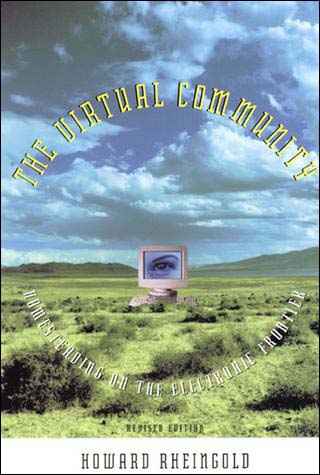
The virtual community: homesteading on the electronic frontier
Howard Rheingold tours the "virtual community" of onlin…

The Virtual Community: Homesteading on the Electronic Frontier
Howard Rheingold tours the 'virtual community' of online networking.Howard Rheingold has been called the First Citizen of the Internet. In this book he tou
We speak often of AI as if it were a future event. But it is already here in the fabric of our being. What Karl Ove Knausgaard captures with devastating clarity in his recent essay ‘The Reenchanted… | Kenneth Mikkelsen | 19 comments
We speak often of AI as if it were a future event. But it is already here in the fabric of our being. What Karl Ove Knausgaard captures with devastating clarity in his recent essay ‘The Reenchanted World’ is the departure of the real. “We live in a virtual world, as if the world had been lifted out of itself, into the air, like a giant roof suspended above the ground,” he writes. It is an existential condition. Across philosophy, from Heidegger to Baudrillard, from Don DeLillo to Debord, a singular thread weaves: the world, once our shelter from the self, has become self-referential. Where once we encountered beings in our Zuhandensein—ready-to-hand, intimate, meaningful—we now face a procession of Vorhandensein: inert, objectified, mediated. Simulation replaces encounter. Perception is swallowed by spectacle. And the digital era, in Knausgaard’s terms, “distances culture from the body”. “It is not just the body that disappears—it is the awareness that we are dying,” he writes. What we face is not merely technological change, but what I would call existential dissonance: the erosion of resonance between our inner world, our social world, and the material world. It is the tension that arises when the way one lives, acts, and relates is misaligned with one’s deeper sense of meaning, reality, and value. It manifests itself as a disturbance in being — an unease that is not merely emotional, but rooted in a felt gap between one’s existence as it is and as it could or should be. It is the voice of the self calling from within the noise of the world. This is why Knausgaard’s essay matters for anyone working in, with, or around AI. Because the question isn’t: What can these systems do? It is: What do they undo? “We can explain everything. But we understand nothing,” he writes. Manipulated constructions of truth, in such a time, becomes a currency. As shown in recent events—from Francesca Gino’s research fraud at Harvard to Bezos’ all-female crew venture into space, and Trump’s detention camp —truth is no longer that which corresponds with reality, but that which performs and sells. As Baudrillard warned, the simulation no longer hides the real—it becomes it. And yet, something remains. Knausgaard writes not to despair, but to stay. In the body. In death. In silence. In the concrete. If you seek to understand what is happening—not just in AI, but in the very metaphysics of modern life—I suggest we begin not with data, but with dissonance. With the feeling that something vital is slipping from view, and that “being in the world” now requires resistance. “We are surrounded by mystery. And yet we act as if everything were known,” he writes. AI will never understand this. But we must. Knausgaard’s full essay from Harper’s Magazine can be read via link in comments. | 19 comments on LinkedIn

Weird Studies
Professor Phil Ford and writer J. F. Martel host a series of conversations on art and philosophy, dwelling on ideas that are hard to think and art that opens up rifts in what we are pleased to call "reality."

Assemblage (philosophy)
Assemblage (from everyday French: agencement, – arrangement, layout, "a collection of things which have been gathered together or assembled") is a philosophical concept developed by Gilles Deleuze and Félix Guattari[1] and subsequently taken up by other theorists, such as Bruno Latour and Michel Callon who developed actor-network theory,[2] Manuel DeLanda in his work on assemblage theory,[3] and Jane Bennett who combines Latour with Deleuze and Guattari forming her own assemblage theory.[4][5][6] Bennett’s assemblage thinking has influenced environmental philosophy (e.g. Timothy Morton’s Hyperobjects), political theory (e.g. William Connolly’s work on complexity and politics), and new materialism (e.g. Rosi Braidotti, Karen Barad).

Thoughts on Cyberpositionality: The Construction of Digital Communities in Digital Spaces, Damien Patrick Williams
I found Rebecca Monteleone, Martin Perez Comisso, and Elma Hajric’s “Cyberpositionality: Sociotechnical Location in the Digital Age” (2024) to be an extremely timely and important article which can…

Bluesky COO Rose Wang On Building a Better Social Network
After Cybernetics: Treatise for Future Urbanisms — Against Catastrophe
Since 2014, Zaha Hadid Virtual Reality Group, part of Hadid Partners Architecture Firm, has had a focus on cybernetic architecture. This architecture involves what they label the ‘metaverse’. The metaverse integrates physical with digital worlds seamlessly. In industry parlance it is a world populated by what are euphemistically titled ‘cyber-physical’ assets.

Naqoyqatsi
Godfrey Reggio takes on the digital revolution in the final chapter of his Qatsi Trilogy. Through a variety of cinematic techniques, including slow motion, time-lapse, computer- generated imagery, and found footage, the film tells of a world that has completed the transition from the natural to the artificial. Globalization has been accomplished, all of our interactions are technologically mediated, and all images are manipulated. From this (virtual) reality, Reggio sculpts a frenetic yet ruminative portrait of an era in which the cacophony of “communication” has rendered humankind effectively postlanguage.

The World Doesn’t Exist: William Gibson, William Blake, and Navigating an Algorithmic Hall of Mirrors | ODDCRITIC
Scrolling the TL revealed distorted realities, shaped by algorithms and biases.

Metagov Short Talks (June 14, 2023) : Metagovernance Seminar
Nick Kaufmann and Matt Crittenden present Spectra: the virtual city that builds real cities, a talk discussing how to combine multi-scale cooperative...

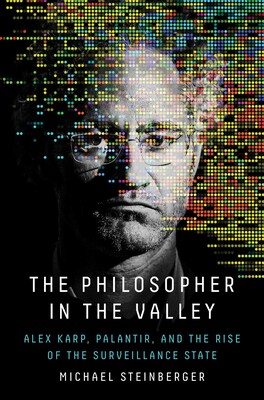
The Philosopher in the Valley
An acclaimed New York Times Magazine writer brings us into the world of the controversial technology firm Palantir and its very colorful and outspo...
De-google-ify Internet - Main Page
The web giants centralize our digital lives in exchange for their services The Free Software community offers alternative ethical services The Framasoft network intends to prove itby hosting them

Science x social media

Lea: research-oriented social media

Mastodon pilot for research and education

We appreciate the love ❤️ But limited engagement and few followers on Bsky makes some (not us!) question whether it's worth it Be sure to…

In an era where research evaluation methods are evolving, the Research Contribution Claim Network makes trustworthy tracking of non-traditional research output easy!

This feed built with love by your local #FAccT2026 publicity chair and #1 fan of @graze.social. If you're interested in fairness and ethics…
ATProto Science Community Garden (by ATProto Science) — Semble