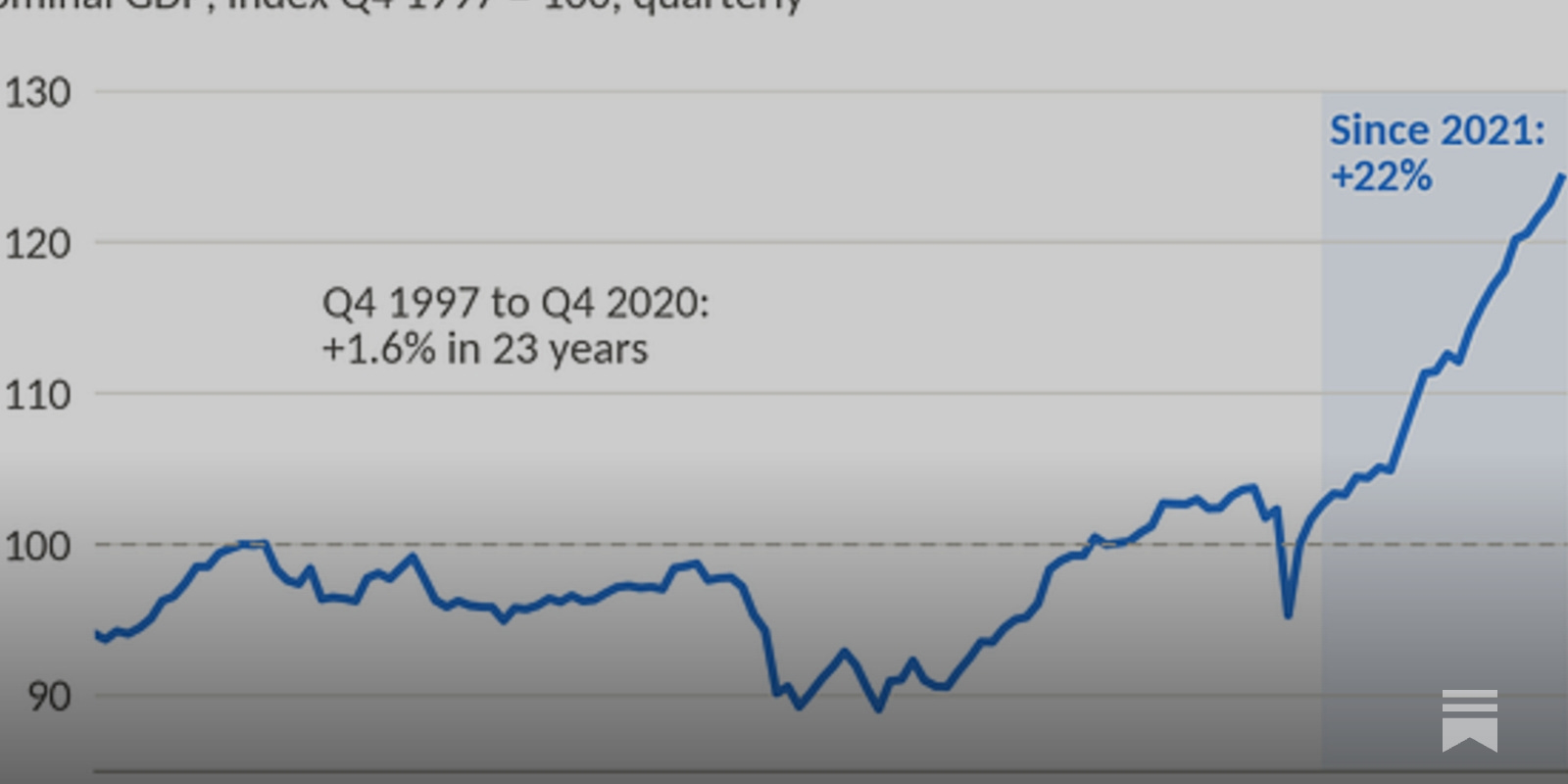
The bear market in bonds is a trend, with three fundamental causes
Resilience, Risk, and Transformation
AI-related market corrections, sharp rises in sovereign bond yields, and cyber threats could trigger market turmoil, while financial vulnerabilities could amplify these risks into systemic events. The growing footprint of hedge funds could further exacerbate adverse market dynamics during periods of stress.

ICO Ethics, Filecoin, Short-term Fear & Long-term Greed
This is a hybrid post about what I think we need to see in order to avoid a hard landing for the ICO ecosystem (once the market inevitably…


The stock market fetish
The most recent turmoil in the stock market caused by Donald Trump’s ill-considered policy to impose tariffs on the entire world, has brought up one legitimate question: what is the correct attitude towards stock market declines and crashes?


The Fallacy of Endless Economic Growth
What economists around the world get wrong about the future.

The Arbitrage Principle in Financial Economics
The importance of arbitrage conditions in financial economics has been recognized since Modigliani and Miller's classic work on the financial structure of the firm. They showed that if a firm could change its market value by purely financial operations such as adjusting its debt-equity ratio, then individual shareholders and bondholders could engage in analogous portfolio transactions that would yield pure arbitrage profits. If the market was efficient enough to eliminate arbitrage profits for the individual shareholders, then it would eliminate arbitrage profits for the firm as well. Subsequently, financial economists have used arbitrage arguments to examine a variety of other issues involving asset pricing. One of the major advances in financial economics in the past two decades has been to clarify and formalize the exact meaning of "no arbitrage" and to apply this idea systematically to uncover hidden relationships in asset prices. Many important results of financial economics are based squarely on the hypothesis of no arbitrage, and it serves as one of the most basic unifying principles of the study of financial markets. In this essay we will examine some of these results.
With rising interest rates, something deeper than inflation is going on
Typically, bond rates rise when an economy is doing well and inflation appears to be moving up. But something much deeper and more structural is currently going on.
Consumer Rationality and Credit Cards
Borrowing on credit cards at high interest rates might appear irrational. However, even low transactions costs can make credit cards attractive relative to bank loans. Credit cards also provide liquidity services by allowing consumers to avoid some of the opportunity costs of holding money. The effect of alternative interest rates on the demand for card debits can explain why credit card interest rates only partially reflect changes in the cost of funds. Credit card interest rates that are inflexible relative to the cost of funds are not inconsistent with a competitive equilibrium that yields zero profits for the marginal entrant.
The Bitcoin Flaw: Monero Rising
The Bitcoin Flaw: Monero Rising By Izzy Otomakan Follow @cryptoizzy I recognize the irony that barely a few months afte...
Interest Rates: Prices Hidden in Plain Sight
I study ways the shift in credit price disclosures from dollar terms to interest rates has impacted consumer and firm behavior. In an experiment, I find that co


Nature Risk Rising: Why the Crisis Engulfing Nature Matters for Business and the Economy
Nature Risk Rising, the first report in the NNE series, explains how nature-related risks matter to business, why they must be urgently mainstreamed into risk management strategies and why it is vital to prioritize the protection of nature’s assets and services within the broader global economic growth agenda.

Disclosing the costs of co-holding liquid assets and high-interest debt has limited impact on behavior
Why do consumers simultaneously maintain low-yield liquid assets and high-interest revolving debt? This behavior, known as "co-holding," affects 23% o
The Quiet Rewiring of American Finance
Stablecoins, Treasury markets, and the most significant shift in financial infrastructure that almost nobody is discussing.

Borrowing on the Wrong Credit Card? Evidence from Mexico
We establish new facts about the way consumers allocate debt among their credit cards using data for a representative sample of cardholders in Mexico. We find that relative prices are weak predictors of the allocation of debt, purchases, and payments. Consumers allocate a large fraction of their debt to high-interest cards, incurring a cost of 31 percent above the minimum. Using an experiment, we find that consumers do not substitute in the price margin, although they respond to salient temporary low-interest offers. We conclude that limited attention and mental accounting best rationalize our results and discuss implications for the market.