

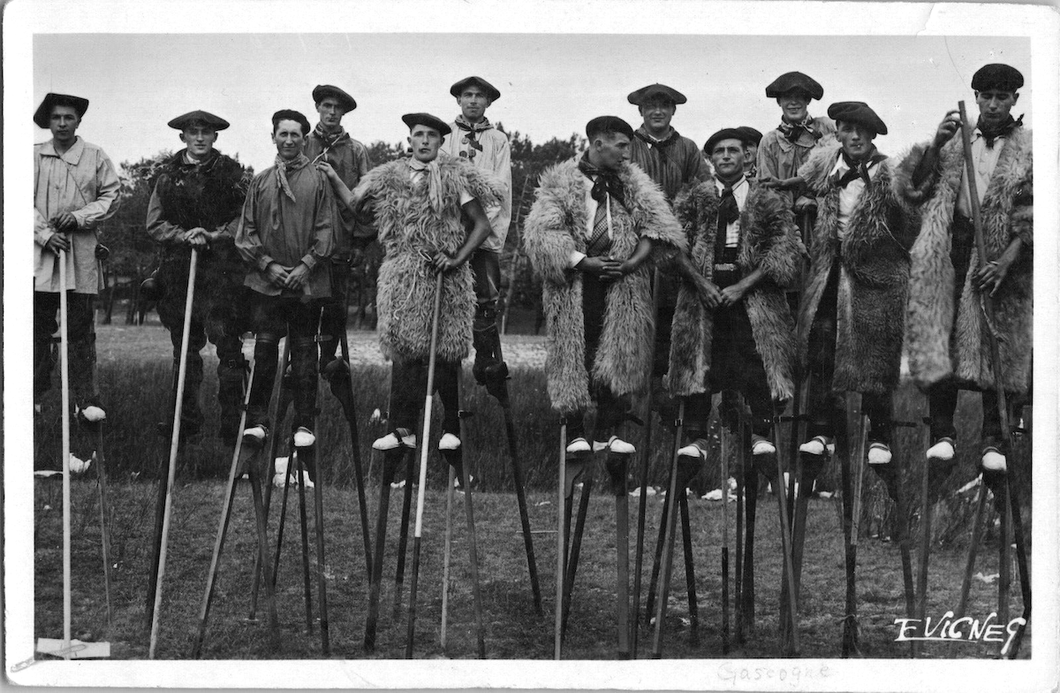
On the social internet, people who have used the biggest platforms and networks enter new ones expecting to find ~standard affordances *and* expecting that familiar interface cues will map to familiar affordances. When newer systems and tools confound those expectations, people get, *at best*, confused. At worst, they try to walk across a solid-looking but sink-into-able surface and get stuck in a bog.
10 Examples of Affordances - The Boffins Portal
Affordance is a concept in design that refers to the possible actions or uses that an object or environment offers a user. It is the relationship between an object and the person using it and what the person perceives they can do with the object based on its physical characteristics. In other words, affordance is ... Read more

Spatial Web Browsing
Adding spatial affordances to the experience of browsing the web
What are Affordances? — updated 2026
Affordances are the characteristics or properties of an object that suggest how it can be used. It shows a user that an object can be interacted with.
Affordance
In psychology, affordance is what the environment offers the individual. In design, affordance has a narrower meaning; it refers to possible actions that an actor can readily perceive.

Semble: Collective knowledge foraging in trail-based social networks beyond feeds (Lightning Talk)
Article: Pace Layering: How Complex Systems Learn and Keep Learning
Boris Mann's digital garden and personal site.

Revisiting creative behaviour as an epistemic process: lessons from 12 computational artists and designers | Proceedings of the 35th Australian Computer-Human Interaction Conference
As part of the Digital Library's transition to Open Access, new features for researchers are available in the Premium Edition. Click here to learn more.

Cognitive Debt and ChatGPT
Maggie's digital garden filled with visual essays on programming, design, and anthropology
(PDF) The Loop and Reasons to Break It: Investigating Infinite Scrolling Behaviour in Social Media Applications and Reasons to Stop
PDF | Today's social media (SM) platforms are toolkits consisting of features with different use cases, some strongly related to habitual and regretful... | Find, read and cite all the research you need on ResearchGate

Agency Among Agents: Designing with Hypertextual Friction in the Algorithmic Web
Today's algorithm-driven interfaces, from recommendation feeds to GenAI tools, often prioritize engagement and efficiency at the expense of user agency. As systems take on more decision-making, users have less control over what they see and how meaning or relationships between content are constructed. This paper introduces "Hypertextual Friction," a conceptual design stance that repositions classical hypertext principles--friction, traceability, and structure--as actionable values for reclaiming agency in algorithmically mediated environments. Through a comparative analysis of real-world interfaces--Wikipedia vs. Instagram Explore, and Are.na vs. GenAI image tools--we examine how different systems structure user experience, navigation, and authorship. We show that hypertext systems emphasize provenance, associative thinking, and user-driven meaning-making, while algorithmic systems tend to obscure process and flatten participation. We contribute: (1) a comparative analysis of how interface structures shape agency in user-driven versus agent-driven systems, and (2) a conceptual stance that offers hypertextual values as design commitments for reclaiming agency in an increasingly algorithmic web.
Collective knowledge foraging in trail-based social networks beyond feeds
Sharing insights about moving beyond feeds from building Semble, a community knowledge garden built on the AT Protocol. The World Wide Web is called a web for good reason. We navigate this web of interconnected websites by clicking hyperlinks and opening new tabs in tools called browsers. This kind of browsing experience is defined by its open-endedness and interwoveness; every website we visit becomes a step along a path. With the rise of social media, we lost touch with this vast trail network. Rather than creating a social web where our trails got woven onto a shared map, they were instead paved over by information superhighways: the algorithmic feeds. Hyper-scaled social media platforms reduced the vast web of interconnected pages into a stripped down ad-ridden and attention-extracting monoculture. Our online experiences became reduced to the flick of a finger, the doom scroll. With the rise of open social protocols, like ATProto, we have an opportunity to leave these misaligned profit-driven and ad-based feeds behind and rediscover the magic of shared knowledge trails. what might that look like? In this lightning talk I’ll share insights and lessons my team and I have learned from building [Semble](https://semble.so/), a community knowledge garden built on ATProto. Semble is an open social network based on knowledge trails rather than feeds. I’ll explore what trail-based social networks of the future could look like, grounded in features and use-cases we’ve uncovered while building Semble. In the transition from feeds back to trails, we aim to co-create an open social web that centres the value of human attention and sparks a new era of collective wisdom. This lightning talk is an invitation to co-create this future together. It will similar to a prior [lightning talk](https://www.youtube.com/watch?v=ptOMKK1lC4Q) we gave at ATmosphereConf 2026, adapted for DWeb Camp. Recorded at DWeb Camp 2026, Open Social Space, 2026-07-10. Schedule entry: https://talx.dod.ngo/dwebcamp-2026/talk/TA3NY7/
Toward Wayfinding Infrastructure for the Living Web · Atlas Research Group
Our world is getting crazier by the day. Our old maps and compasses weren’t made for this complexity. While new tools may open up amazing possibilities, they also make it easier to lose ourselves – especially when they don’t belong to us, and make us vulnerable to other people’s hidden choices and unsavory intentions about what is worth attending to.

Rethink: Web - Open Space
When we struggle to explain the inherent qualities of a medium, we tend to defer to analogies and metaphors. This is especially true of the internet. Clouds, highways, streams, and real estate are just a few examples of the concepts employed to represent this intangible invention. Staring into a screen, it’s easy to imagine an […]

sense-making affordance design

Public Spaces Incubator | New_ Public
What are these new conversational tools appearing on some stories?

Outcomes Graph: A protocol for applied science coordination - DeepScience Ventures
Proposing Botwatch - 7hird Thoughts

Bycelium

Saving this one for when I need a slide about just how hard it is to make sense of reality in 2026