

Thermodynamics is really weird. Most people have probably encountered a bad explanation of the basics at some point in school, but probably don't remember more than
What Is Entropy? A Measure of Just How Little We Really Know. | Quanta Magazine
Exactly 200 years ago, a French engineer introduced an idea that would quantify the universe’s inexorable slide into decay. But entropy, as it’s currently understood, is less a fact about the world than a reflection of our growing ignorance. Embracing that truth is leading to a rethink of everything from rational decision-making to the limits of machines.

The Laws of Simplicity
John Maeda's book, The Laws of Simplicity, proposes ten laws for simplifying complex systems in business and life. Think of it as simplicity 101.

Frameworks v0.2
FRAMEWORKS v0.2 Many of the thoughts in this document draw on and synthesize concepts from economics, math, physics, chemistry, biology, and psychology. Here are a handful of core concepts that are often relied on as inputs: Activation energy Behavioral economics Cognitive biases Darwinism En...

AI-Newton: A Concept-Driven Physical Law Discovery System without Prior Physical Knowledge
While current AI-driven methods excel at deriving empirical models from individual experiments, a significant challenge remains in uncovering the common fundamental physics that underlie these models -- a task at which human physicists are adept. To bridge this gap, we introduce AI-Newton, a novel framework for concept-driven scientific discovery. Our system autonomously derives general physical laws directly from raw, multi-experiment data, operating without supervision or prior physical knowledge. Its core innovations are twofold: (1) proposing interpretable physical concepts to construct laws, and (2) progressively generalizing these laws to broader domains. Applied to a large, noisy dataset of mechanics experiments, AI-Newton successfully rediscovers foundational and universal laws, such as Newton's second law, the conservation of energy, and the universal gravitation. This work represents a significant advance toward autonomous, human-like scientific discovery.

Illusions of Understanding in the Sciences
Scientists seek to understand the causes of observed phenomena. Beliefs that they have succeeded are based on understanding that is rarely or possibly never complete, and varies in depth and quality. Most often scientists believe they understand more than they do, making their belief an illusion. This illusion then persists in explanations scientists provide in print, in talks, or in discussions. The illusion that a scientist has a valid and complete explanation tends to be magnified when the data are well described by mathematical and computer simulation models due to the precision of such models and their ability to predict well; prediction does not imply causality, but gives the illusion that it does. The first part of this essay supports the case for the universality of partial and incomplete levels of understanding by showing the difficulty of reaching a deep level of understanding for even a simple analysis and model that most scientists use and believe they understand: linear regression. The second part highlights some implications of the existence of many levels of understanding and explanation, and their use by scientists for design, testing, analysis, and theory development. It discusses the way that deduction and induction depend on the levels of understanding and the implications of the illusion that a scientist’s understanding is deep. It makes a case that the many incomplete levels of understanding affect, often unwittingly, the ways scientists design experiments, test theories, comprehend, communicate, and teach.

The New Thermodynamic Understanding of Clocks - Slashdot
Studies of the simplest possible clocks have revealed their fundamental limitations -- as well as insights into the nature of time itself. Natalie Wolchover, writing for Quanta Magazine: [...] Over the past five years, through studies of the simplest conceivable clocks, the researchers have discover...

Maximum power principle
The maximum power principle or Lotka's principle has been proposed as the fourth principle of energetics in open system thermodynamics, where an example of an open system is a biological cell. According to Howard T. Odum, "The maximum power principle can be stated: During self-organization, system designs develop and prevail that maximize power intake, energy transformation, and those uses that reinforce production and efficiency."

All you need is links
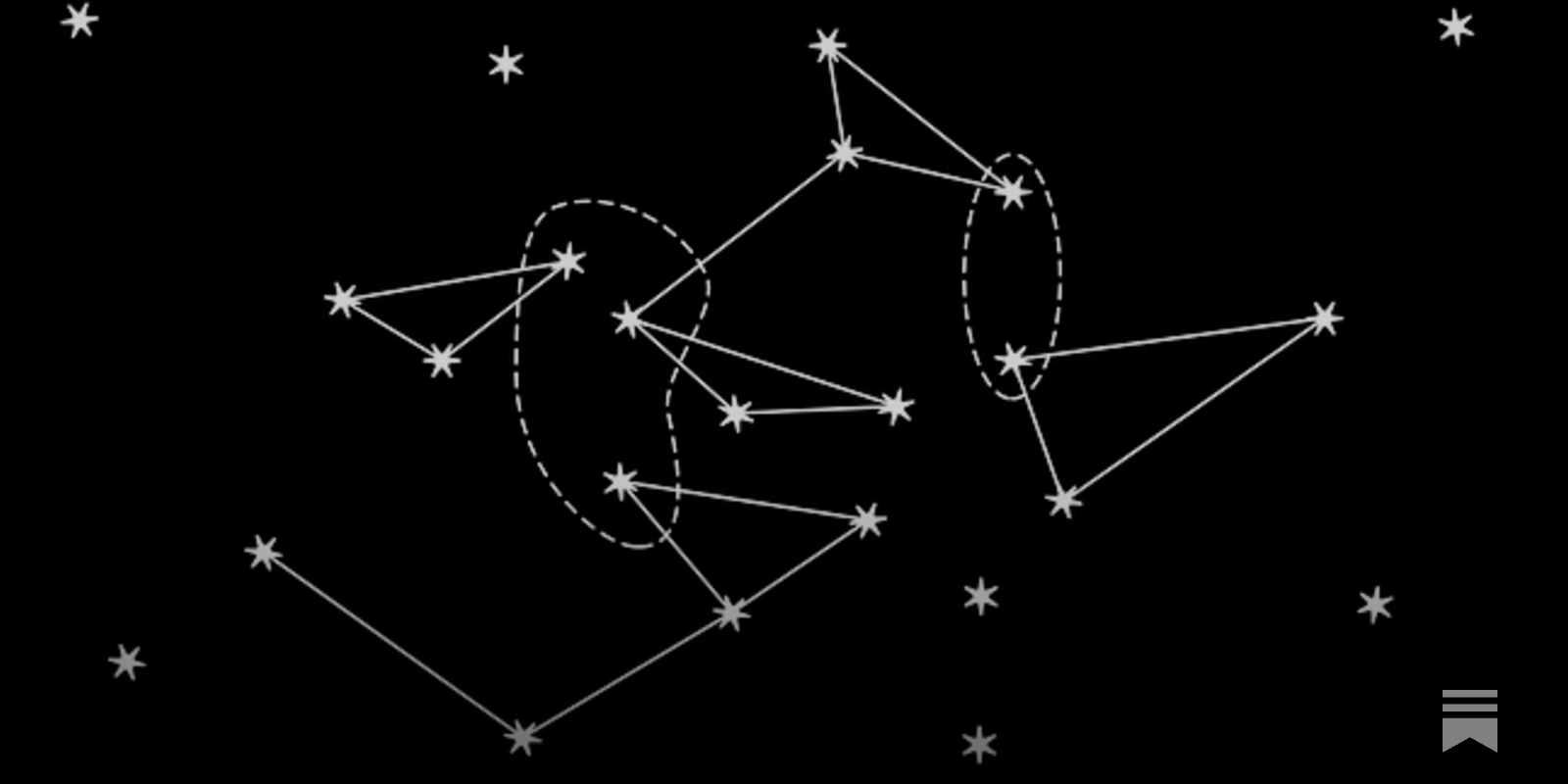
When Tim Berners Lee talks about how he designed the web, he uses an analogy from physics, describing his process as a quest to find “fundamental laws” which can generate a desired system:
All you need is links
When Tim Berners Lee talks about how he designed the web, he uses an analogy from physics, describing his process as a quest to find “fundamental laws” which can generate a desired system:
All you need is links
When Tim Berners Lee talks about how he designed the web, he uses an analogy from physics, describing his process as a quest to find “fundamental laws” which can generate a desired system:
All you need is links
When Tim Berners Lee talks about how he designed the web, he uses an analogy from physics, describing his process as a quest to find “fundamental laws” which can generate a desired system:
Weirding Diary: 9
I'm noticing a resurgence of interest in classical systems theory that mildly worries me. I suspect it is being driven by an infectious desire to theorize the…

Maximum power in evolution, ecology and economics
Ludwig Boltzmann suggested that natural selection was fundamentally a struggle among organisms for available energy. Alfred Lotka argued that organisms that capture and use more energy than their competition will have a selective advantage in the evolutionary process, i.e. the Darwinian notion of evolution was based on a fundamental, generalized energy principle. He extended this general principle from the energetics of a single organism or species to the energetics of entire energy pathways through ecosystems. Howard Odum and Richard Pinkerton, building on Lotka, extended this concept to ‘The maximum power principle’ and applied it to many biological and physical systems including human economies. We examine this history and how these ideas relate to concepts from other disciplines including philosophy. But there has been considerable confusion in understanding and applying these concepts which we attempt to resolve while providing various examples from routine life and discussing some unresolved issues. This article is part of the theme issue ‘Thermodynamics 2.0: Bridging the natural and social sciences (Part 2)’.
Entropy
Entropy is a tactical turn-based RPG inspired by classic JRPGs. Assemble your party of mercenaries and forge your own path towards an expedition into hell to stop the demonic incursion. Choices you make along the way will determine the fate of your world.

101 Things I Learned in Engineering School
In this unique primer, an experienced civil engineer and instructor presents the physics and fundamentals that underlie the many fields of engineering. Far from a dry, nuts-and-bolts exposition, however, 101 THINGS I LEARNED® IN ENGINEERING SCHOOL probes real-world examples to show how the engine...
