

Historians and social scientists have long been preoccupied with understanding and documenting periods of crisis. Such emphasis is only growing, and becoming more pressing, as the world continues to face a number of interrelated stressors in the form of irreversible climate change, major ecological shocks and disease outbreaks, eruptions of military violence, economic disruptions and deepening inequalities, political polarization and unrest, the rise of authoritarian and nationalist regimes. Crises in these domains are not new, but have been recurrent features of past societies. Although these periods have typically led to massive loss of life, the failure of critical institutions, and even complete societal collapse, there are instances in the historical record of societies managing to turn the tide of crisis even as violence and social turmoil grow. Here, we focus on four such cases of crises mitigated with structural reforms revealed from our previous historical analyses: early Republican Rome, mid-19th century England and Russia, USA during the the late 20th to early 21st centuries. Utilizing structural demographic theory as a lens to explore these cases, we seek to expose the pressures that built up leading to crisis and the early signs of violent confrontation revealed by these societies, as well as to examine the conditions and key decisions made in the midst of this unrest that allowed these societies to turn the tide and enact significant structural adaptations. Our findings have clear relevance to understanding and navigating similar crises in contemporary societies.
The Prospects of a Pluriversal Transition to a Post-Capitalist, Post-C
This book critically engages with a central dilemma facing counter-hegemonic movements as global crises intensify: how to foster systemic change while

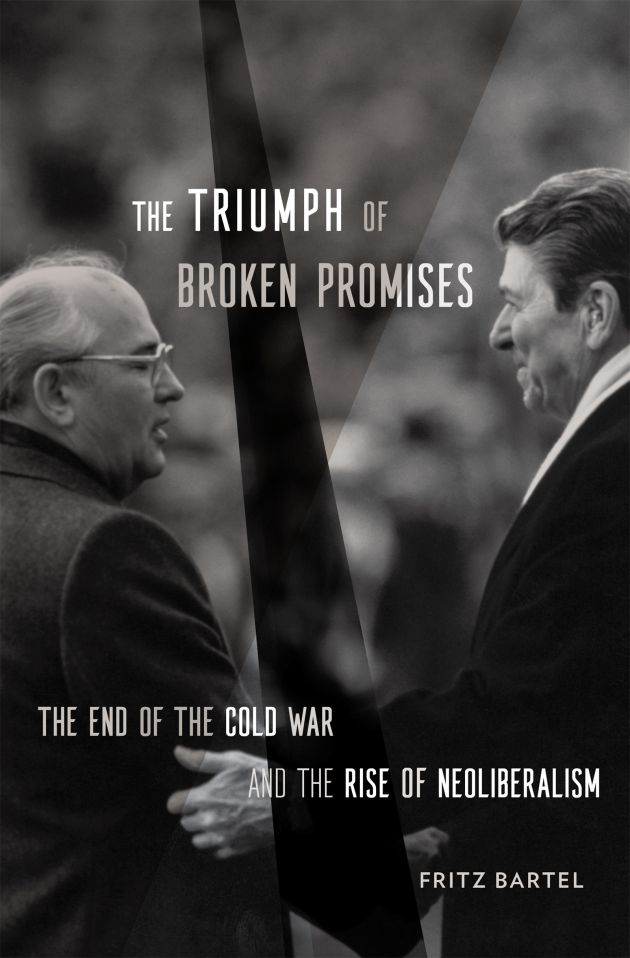
The Triumph of Broken Promises — Harvard University Press
A powerful case that the economic shocks of the 1970s hastened both the end of the Cold War and the rise of neoliberalism by forcing governments to impose austerity on their own people.Why did the Cold War come to a peaceful end? And why did neoliberal economics sweep across the world in the late twentieth century? In this pathbreaking study, Fritz Bartel argues that the answer to these questions is one and the same. The Cold War began as a competition between capitalist and communist governments to expand their social contracts as they raced to deliver their people a better life. But the economic shocks of the 1970s made promises of better living untenable on both sides of the Iron Curtain. Energy and financial markets placed immense pressure on governments to discipline their social contracts. Rather than make promises, political leaders were forced to break them.In a sweeping narrative, The Triumph of Broken Promises tells the story of how the pressure to break promises spurred the end of the Cold War. In the West, neoliberalism provided Western leaders like Ronald Reagan and Margaret Thatcher with the political and ideological tools to shut down industries, impose austerity, and favor the interests of capital over labor. But in Eastern Europe, revolutionaries like Lech Walesa in Poland resisted any attempt at imposing market discipline. Mikhail Gorbachev tried in vain to reform the Soviet system, but the necessary changes ultimately presented too great a challenge.Faced with imposing economic discipline antithetical to communist ideals, Soviet-style governments found their legitimacy irreparably damaged. But in the West, politicians could promote austerity as an antidote to the excesses of ideological opponents, setting the stage for the rise of the neoliberal global economy.
The 1918 Influenza Pandemic and the Rise of Italian Fascism: A Cross-City Quantitative and Historical Text Qualitative Analysis
Evidence linking past experiences of worsening health with support for radical political views has generated concerns about the consequences of the COVID-19 pandemic. The influenza pandemic that began in 1918 had a devastating health impact: 4.1 million Italians contracted influenza and about 500 000 died. We tested the hypothesis that deaths from the 1918 influenza pandemic contributed to the rise of Fascism in Italy. To provide a “thicker” interpretation of these patterns, we applied historical text mining to the newspaper Il Popolo d’Italia (Mussolini’s newspaper). Our observations were consistent with evidence from other contexts that worsening mortality rates can fuel radical politics. Unequal impacts of pandemics may contribute to political polarization. (Am J Public Health. 2022;112(2):242–247. https://doi.org/10.2105/AJPH.2021.306574)

The 1918 Influenza Pandemic and the Rise of Italian Fascism: A Cross-City Quantitative and Historical Text Qualitative Analysis
Evidence linking past experiences of worsening health with support for radical political views has generated concerns about the consequences of the COVID-19 pandemic. The influenza pandemic that began in 1918 had a devastating health impact: 4.1 million Italians contracted influenza and about 500 000 died. We tested the hypothesis that deaths from the 1918 influenza pandemic contributed to the rise of Fascism in Italy. To provide a “thicker” interpretation of these patterns, we applied historical text mining to the newspaper Il Popolo d’Italia (Mussolini’s newspaper). Our observations were consistent with evidence from other contexts that worsening mortality rates can fuel radical politics. Unequal impacts of pandemics may contribute to political polarization. (Am J Public Health. 2022;112(2):242–247. https://doi.org/10.2105/AJPH.2021.306574 )

Nick Land-Meltdown
The body count climbs through a series of globewars. Emergent Planetary Commercium trashes the Holy Roman Empire, the Napoleonic Continental System, the Second and Third Reich, and the Soviet International, cranking-up world disorder through compressing phases. Deregulation and the state arms-race each other into cyberspace.
Radical Futurisms: Ecologies of Collapse, Chronopolitics, and Justice-to-Come
Ecologies of Collapse, Chronopolitics, and Justice-to-Come
Their Side Is Organized; We Need to Be Organized, Too
Trump and his far-right acolytes wield their power to disinvest from public services, terrorize our neighborhoods with ICE agents, and ensure that opposition to genocide becomes a fireable, and deportable, offense. In the face of these grim and terrifying developments, it could scarcely be more urgent that we learn lessons from movements and organizing traditions that confronted repression, surveillance, and powerful opposition in the (recent and distant) past. We’ve put together a reading list of key books to help inform ongoing efforts to build and sustain durable organizations, and forge effective strategies, for both short term survival and long term social transformation. What fuels and sustains activism and organizing when it feels like our worlds are collapsing? Let This Radicalize You is a practical and imaginative resource for activists and organizers building power in an era of destabilization and catastrophe. “Anyone trying to rebuild an effective U.S. labor movement needs to read Class Struggle Unionism by Joe Burns. He lays out the fundamental principles that UE has tried to uphold for the last 85 years. For a union to be worthwhile to the working class, it needs to know which side it is on and it has to recognize that the fight itself is what allows workers to gain the knowledge and power they need.”—Carl Rosen From two co-founders of the largest tenants union in the country, this deeply reported account of the resurgent tenant movement centers poor and working-class people who are fighting back, staying put, and remaking the city in the process. A collection of essays from the Stop Cop City movement on the fight for police abolition and for a liveable planet for all, with gripping reporting from activists on the ground and rousing articles from renowned radical academics. In this remarkable collaborative work, leading scholar-activists Angela Y. Davis, Gina Dent, Erica R. Meiners, and Beth E. Richie surface the often unrecognized genealogies of queer, anti-capitalist, internationalist, grassroots, and women-of-color-led feminist movements, struggles, and organizations that have helped to define abolition and feminism in the twenty-first century. This guide, based on the collective experience of organizers and workers in non-unionized workplaces, is a critical tool to help you and your coworkers organize for justice at work. Drawing from over twenty years of activism on local and national levels, this striking book offers an organizer’s perspective on the intersections of immigrant rights, racial justice, and prison abolition. At a political moment when Liberatory Harm Reduction and mutual aid are more important than ever, this book serves as an inspiration and a catalyst for radical transformation of our world. Even the River Starts Small is a collection from the movement to stop construction of the Line 3 pipeline through northern Minnesota, featuring anonymous writing, art, and photos spanning nearly a decade, and including reflections on many of the diverse experiences that made up this grassroots resistance. “Tracing revolutionary uprisings from 1989 to 2019, this book is a map of resistance and resilience in the face of tremendous odds. The case studies, as well as the introductory essay, lead us through situations where the victory of capitalism over humanity was anything but assured. And yet the book is not a wistful history about what could have been. Rather, it is a strategic assessment of near-victories to prepare us for the fire next time.” —Tithi Bhattacharya As isolated individuals, debtors have little influence. But as a bloc, we can leverage our debts and devise new tactics to challenge the corporate creditor class and help win reparative, universal public goods. Individually, our debts overwhelm us. But together, our debts can make us powerful. What does the politics of solidarity look like in practice, and how can left-wing organizations grow—in numbers and power—while remaining accountable to the broader movements of which they are a part? An oral history and critical genealogy of “accountability,” the complex abolitionist concept that pushes us to ask: just what do we mean by “community?” Environmentalism from Below takes readers inside the popular struggles for environmental liberation in the Global South. These communities—among the most vulnerable to but also least responsible for the climate crisis—have long been at the forefront of the fight to protect imperiled worlds. This volume—the Socialist Register’s first-ever reader—grapples with the question of whether political organization is a necessary part of the struggle by the working-class to overthrow capitalism. In pieces published over the course of publication’s entire history contributors, from Ralph Miliband to Jean-Paul Satre, examine various aspects of this theme. The Socialist Challenge Today presents an essential historical, theoretical, and critical perspective for understanding the potential as well as the limits of three important recent phenomena: the Sanders electoral insurgency in the United States; the Syriza experience in Greece; and Corbyn's leadership of the Labour Party in the United Kingdom. This book surveys revolutionary socialist ideas and engages a gallery of contentious political thinkers, offering an indispensable assessment of the place of revolutionary collectives in this radical tradition. A trenchant history of community organizing and a must-read for the next generation of organizers seeking to learn from the successes, failures, and contradictions of the past. In an era of stark racial injustice, Aaron Dixon dedicated his life to revolution, founding the Seattle chapter of the Black Panther Party in 1968 at age nineteen. In My People Are Rising, he traces the course of his own radicalization, and that of a generation. SNCC: The New Abolitionists influenced a generation of activists struggling for civil rights and seeking to learn from the successes and failures of those who built the fantastically influential Student Nonviolent Coordinating Committee. Detroit: I Do Mind Dying tracks the extraordinary development of the Dodge Revolutionary Union Movement and the League of Revolutionary Black Workers as they became two of the landmark political organizations of the 1960s and 1970s. It is widely heralded as one the most important books on the Black liberation movement. A landmark account of a key radical feminist organization, offering lessons for today’s women’s liberation movement. Boston Female Liberation member Nancy Rosenstock expertly weaves together the reflections of her fellow-activists, describing how they became feminists, recounting the breadth of their organizing work, and linking their achievements and experience to contemporary struggles against sexism. In this rousing and insightful participant's account, Hal Draper recounts the now iconic events of the Berkeley Free Speech Movement. From the impromptu speak out atop a police car after the administration decided to clamp down on students “distributing communist literature,” to the inspiring Student Strike that shut down the entire campus, Draper's narrative captures the energy and dynamism of each twist and turn in the struggle, and offers invaluable analysis along the way. From the dawning of the industrial epoch, wage earners have organized themselves into unions, fought bitter strikes, and gone so far as to challenge the very premises of the system by creating institutions of democratic self-management aimed at controlling production without bosses. During the first two decades of the twentieth century the ideas of revolutionary syndicalism developed into a major influence within the trade union movement. Committed to destroying capitalism through direct industrial action and revolutionary trade union struggle, the movement raised fundamental questions for activists across the world. In this thorough, concise, and accessible introduction to Lenin’s theory and practice of revolutionary politics, Paul Le Blanc gives a vibrant sense of the historical context of the socialist movement (in Russia and abroad) from which Lenin’s ideas about revolutionary organization spring. What emerges from Le Blanc’s partisan yet measured account is an image of a collaborative, ever adaptive, and dynamically engaged network of revolutionary activists who formed the core of the Bolshevik party.
Further Back to the Future: Neo-Royalism, the Trump Administration, and the Emerging International System
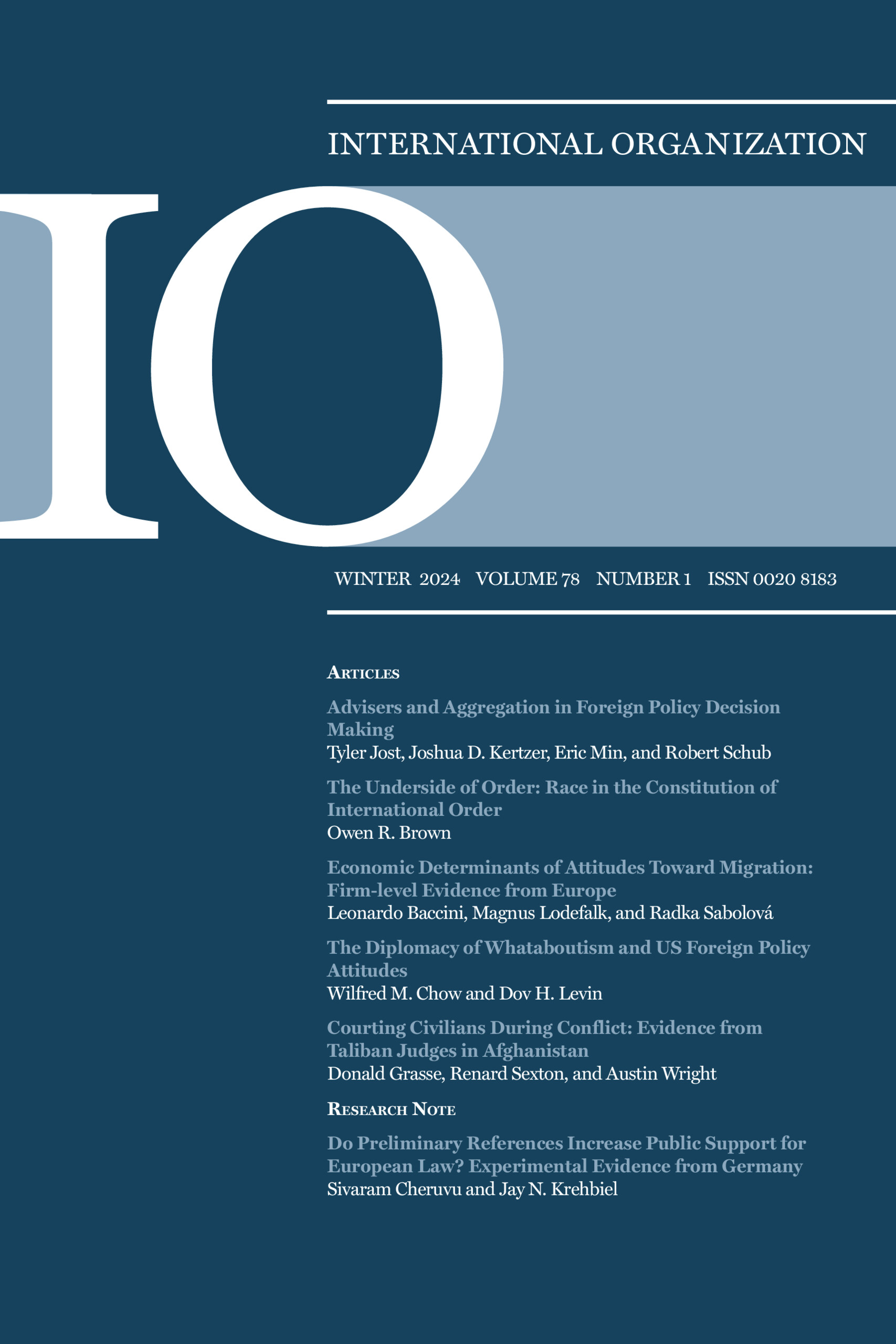
With the Liberal International Order (LIO) in decline, scholars have focused increasingly on the possible return to a Westphalian great power system marked by sovereigntist claims and balancing among states. The actions of the Trump administration, however, raise a number of significant puzzles for such accounts—the US seems willing to sign deals with traditional adversaries including Russia and China, while targeting long-standing allies like Canada and Denmark. At the same time, transactional politics often serve narrow personalist interests rather than national objectives. In short, a Westphalian lens focused on states and sovereignty may generate intellectual blinders that misreads the emerging international order. To overcome these limitations, we propose an alternative account, which we label neo-royalism. The neo-royalist order centers on an international system structured by a small group of hyper elites, which we term cliques. Such cliques seek to legitimize their authority through appeals to their exceptionalism in order to generate durable material and status hierarchies based on the extraction of financial and cultural tributes. This short paper lays out the key elements of the neo-royalist order, differentiating it from the Westphalian and Liberal International Orders, and applies its insights to better grapple with the emerging system being promoted by the United States under Donald J. Trump. For policymakers and scholars, the neo-royalist approach clarifies recent events in US foreign policy. Theoretically, the field should take contending ideas of international order seriously, and establish a research agenda beyond a backward looking view to the Westphalian moment.
John Vervaeke: “The Meaning Crisis: Wisdom, Purpose, and the Search for Coherence” - The Great Simplification
The crises that our world is facing seem to be constantly growing, leading to enormous and devastating systemic effects across the globe.

‘Self-termination is most likely’: the history and future of societal collapse
An epic analysis of 5,000 years of civilisation argues that a global collapse is coming unless inequality is vanquished

Imperial Ends: The Decay, Collapse, and Revival of Empires
Despite their historical importance, empires have received scant attention from social scientists. Now, Alexander J. Motyl examines the structure, dynamics, and continuing relevance of empire—and asks, "Why do empires decline? Why do some empires collapse? And why do some collapsed empires revive?"Rejecting choice-centered theories of imperial decline, Motyl maintains that the very structure of empires promotes decay and that decay in turn facilitates the progressive loss of territory. Although most major empires have in fact declined in this manner, some, such as the Soviet Union, have collapsed suddenly and comprehensively. Motyl explains how and why collapse occurs, why such an outcome is hard to foresee, and why some collapsed empires revive. While broad-ranging historically and empirically, Imperial Ends focuses on five modern empires: the Soviet, Romanov, Ottoman, Habsburg, and Wilhelmine.Examining the possibility of a revival of the Soviet empire, Motyl points out that the expansion of NATO and the European Union, along with increasing globalization, will isolate Russia and its neighbors, promoting their dependence upon one another and perhaps facilitating the rise of the former core. With boldly stated conclusions and concise analytical interpretations, Imperial Ends cohesively illustrates to policymakers and social scientists alike the importance of possible imperial revivals and the rise of future empires.

Differences Between Tight and Loose Cultures: A 33-Nation Study
The differences across cultures in the enforcement of conformity may reflect their specific histories. , With data from 33 nations, we illustrate the differences between cultures that are tight (have many strong norms and a low tolerance of deviant behavior) versus loose (have weak social norms and a high tolerance of deviant behavior). Tightness-looseness is part of a complex, loosely integrated multilevel system that comprises distal ecological and historical threats (e.g., high population density, resource scarcity, a history of territorial conflict, and disease and environmental threats), broad versus narrow socialization in societal institutions (e.g., autocracy, media regulations), the strength of everyday recurring situations, and micro-level psychological affordances (e.g., prevention self-guides, high regulatory strength, need for structure). This research advances knowledge that can foster cross-cultural understanding in a world of increasing global interdependence and has implications for modeling cultural change.
The climate crisis: a war on the world
The climate crisis is a self-destructive war, with aggressors and victims

Political Scenarios for Climate Disaster - Dissent Magazine
In the Global North we often act as if our future will be a warmer version of today: liberal capitalism, plus flood insurance, minus coral reefs. That future is a fantasy.

America, América: a new history of the New World
"The story of how the United States' identity was formed is almost invariably told by looking east to Europe. But as Greg Grandin vividly demonstrates, the nation's unique sense of itself was in fact forged facing south-no less than Latin America's was indelibly stamped by the looming colossus to the north. In this stunningly original reinterpretation of the New World Grandin reveals how North and South emerged from a constant, turbulent engagement with each other. America, América traverses half a millennium, from the Spanish Conquest-the greatest mortality event in human history-through the eighteenth-century wars for independence, the Monroe Doctrine, the coups and revolutions of the twentieth century, and beyond. Grandin shows, among other things, how royalist Spanish America, by sending troops and supplies, helped save the republican American Revolution; how in response to U.S. interventions, Latin Americans remade the rules, leading directly to the founding of the United Nations; and how the Good Neighbor Policy allowed FDR to assume the moral authority to lead the fight against world fascism. Grandin's book sheds new light on well-known historical figures like Bartolomé de las Casas, Simón Bolívar, and Woodrow Wilson, as well as lesser-known actors such as the Venezuelan Francisco de Miranda, who almost lost his head in the French Revolution and conspired with Alexander Hamilton to free America from Spain; the Colombian Jorge Gaitán, whose unsolved murder inaugurated the rise of Cold War political terror, death squads, and disappearances; and the radical journalist Ernest Gruening, who in championing non-interventionism in Latin America, helped broker the most spectacularly successful policy reversal in United State history. This is a monumental work of scholarship that will fundamentally change the way we think of slavery and racism, the rise of universal humanism, and the role of social democracy in staving off extremism. At once comprehensive and accessible, America, América shows that centuries of bloodshed and diplomacy not only helped shape the political identities of the United States and Latin America but also the laws, institutions, and ideals that govern the modern world. A culmination of a decades-long engagement with hemispheric history, drawing on a vast array of sources, and told with authority and flair, this is a genuinely new history of the New World"-- Provided by publisher

Polycrisis - Cascade Institute
The polycrisis program examines how today’s multiple crises are linked and how the polycrisis could create possibilities for positive outcomes.
