


Definition → Decentralized adaptive strategies strengthen community infrastructure, local economic networks, and ecological systems against regional climate impacts. Decentralized planning empowers municipalities to design climate adaptation measures suited to specific geography and social demographics.
Green economic planning for rapid decarbonisation
Sustainable futures require deep social and economic transformations to address climate change adequately. The current landscape of intergovernmental and market-based coordination is not delivering...

Urban problems: nature-based solutions and a Green New Deal everywhere
Nature-based Solutions with localised Green New Deals could save our settlements, and provide a just transition to a low-carbon society

The ecosystem is moving
Considerations for distributed and decentralized technologies from the perspective of a product that many would like to see decentralize....
From global trends to local realities: A multi-scale scenario-building methodology for community infrastructure planning
This paper details a multi-scale scenario-building methodology designed to explore transport infrastructure futures in rapidly changing Circumpolar North communities, bridging global trends and national contexts with local realities. Focusing on Churchill, Canada, and Kirkenes, Norway, we employed a hybrid approach that combined top-down adaptation of existing global and regional socioeconomic scenarios with bottom-up, participatory ethnographic research to ensure local relevance and incorporate stakeholder knowledge. We developed coherent scenarios across global, regional (national), and local scales, allowing higher-level archetypes to manifest differently depending on locally specific features identified through fieldwork. This consecutive, nested process utilized morphological analysis and the Factor-Actor-Sector framework to maintain consistency while accommodating local specificities. The methodology centered not just on scenario creation but also on the function of scenarios as a tool for community dialogue, utilizing artistic visualizations in workshops to engage diverse stakeholders. This approach demonstrates a way to navigate the tension between global and national drivers versus local community needs, yielding distinct yet comparable local futures grounded in broader development pathways. It offers practical insights for deliberations and planning in uncertain environments, both built and unbuilt.
Adaptation as a catalyst for social change - MACC Hub
Explore how transformational adaptation can address climate risk, inequality and austerity by investing in people, wellbeing and more resilient societies.

Appropriate Technology, Permacomputing, Post Growth, and Ecomodernism.
To adapt to the changing climate, we need to radically rethink how and why we do the things we do. From technology, to social movements, to economics. The world is at stake. And we can change it.
Home - Schumacher Center for a New Economics
Our mission is to envision a just and regenerative economy; apply the concepts locally; then share the results for broad replication. Programs Library Lectures & Publications The Decentralism File Community Land Trust Local Currencies Reinventing The Commons All Programs eNewsletters All News “Since there is now increasing evidence of environmental deterioration, particularly in … Continued

ORGANISING PRINCIPLES — THE ALTERNATIVE
This makes the difference between a localism that cannot sustain itself because it is simply too small with limited resources of skills and expertise. And one that is able to build its own regenerative economy, entirely through access to the global commons.
Global Program on Sustainability
The Global Program on Sustainability (GPS) helps countries value nature as a driver of jobs, resilience, investment, and long-term prosperity.

The Coming Ecological Cold War
How the green transition is reshaping geopolitics

Grassroots Economics — Community-Powered Economies
Empowering communities across the World with community currencies, ecosystem restoration, and commitment pooling since 2010.
A City Is Not a Computer: Other Urban Intelligences
<strong>A bold reassessment of "smart cities" that reveals what is lost when we conceive of our urban spaces as computers</strong> Computational models of urbanism—smart cities that use data-driven planning and algorithmic administration—promise to deliver new urban efficiencies and conveniences. Yet these models limit our understanding of what we can know about a city. <i>A City Is Not a Computer</i> reveals how cities encompass myriad forms of local and indigenous intelligences and knowledge institutions, arguing that these resources are a vital supplement and corrective to increasingly prevalent algorithmic models. Shannon Mattern begins by examining the ethical and ontological implications of urban technologies and computational models, discussing how they shape and in many cases profoundly limit our engagement with cities. She looks at the methods and underlying assumptions of data-driven urbanism, and demonstrates how the "city-as-computer" metaphor, which undergirds much of today's urban policy and design, reduces place-based knowledge to information processing. Mattern then imagines how we might sustain institutions and infrastructures that constitute more diverse, open, inclusive urban forms. She shows how the public library functions as a steward of urban intelligence, and describes the scales of upkeep needed to sustain a city's many moving parts, from spinning hard drives to bridge repairs. Incorporating insights from urban studies, data science, and media and information studies, <i>A City Is Not a Computer</i> offers a visionary new approach to urban planning and design.
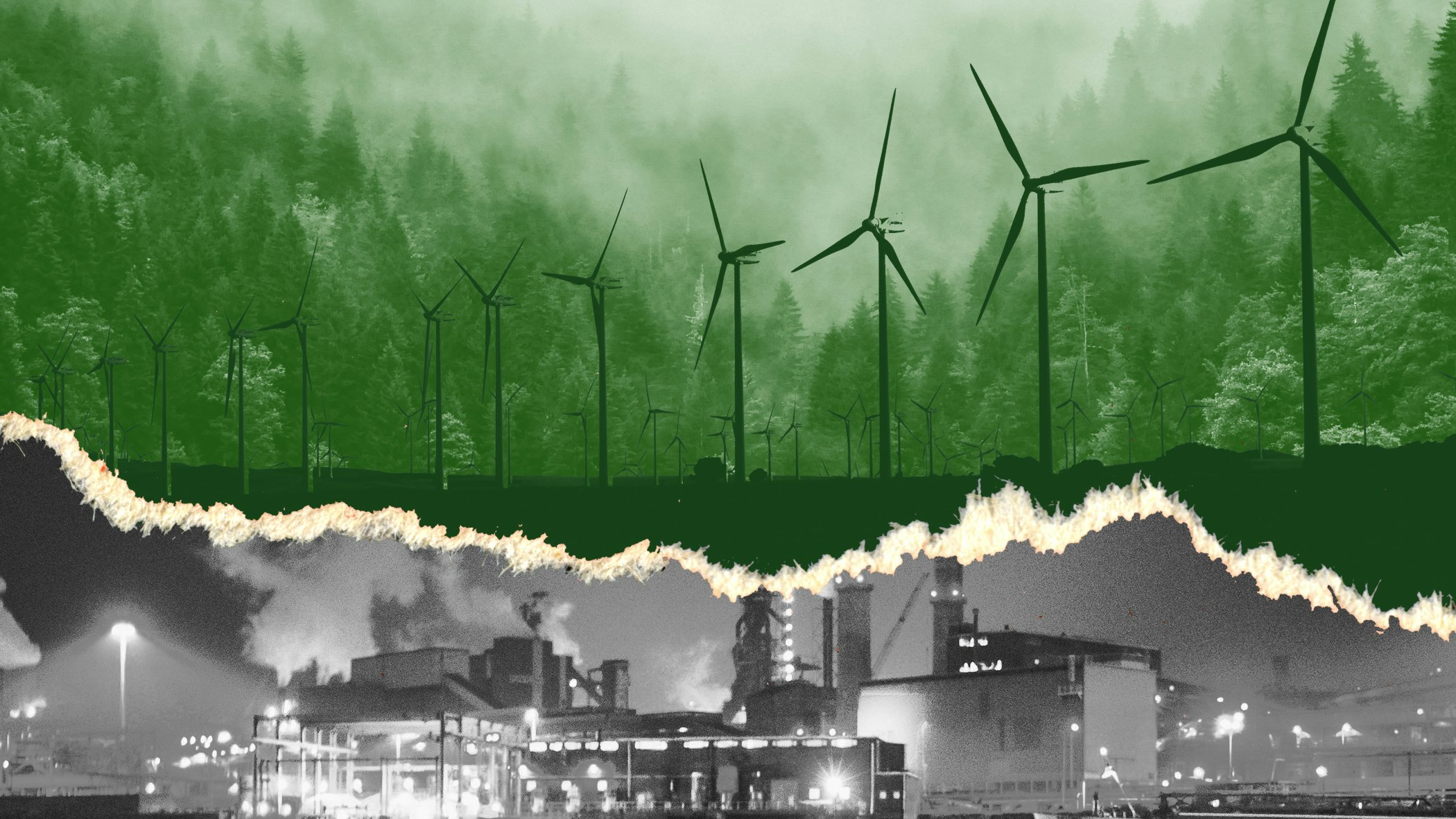
The New Geopolitics Of The Green Transition
The only path forward for tackling the climate crisis hinges on cooperative industrial strategies to coordinate clean energy investment and infrastructure development.
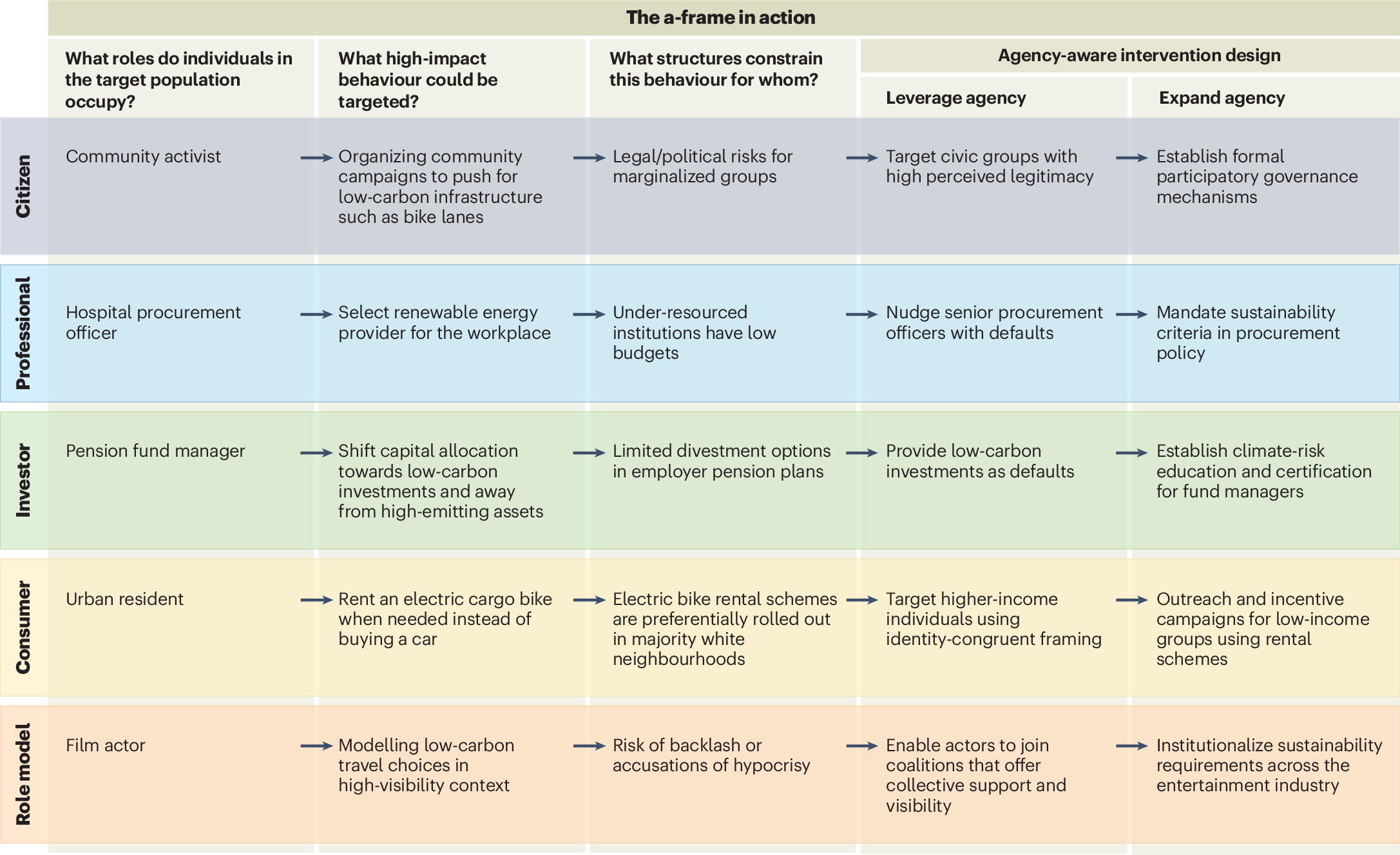
Leveraging agency for climate change mitigation
Climate debates often frame individual behaviour and systems change as distinct pathways to action. We suggest that social change arises from individuals’ agency within their roles in societal systems, and that this agency should be actively leveraged to achieve meaningful climate change mitigation.
I've been interested in understanding the distribution of PDSes and general 'ecosystem resilience' for a little bit now, and inspired by @billwpierce.co's talk at #ATmosphereConf I made a dashboard I hope can add to the conversation link: atproto.barn.city (served by my macmini so bear with me)
