Definition → Decentralized adaptive strategies strengthen community infrastructure, local economic networks, and ecological systems against regional climate impacts. Decentralized planning empowers municipalities to design climate adaptation measures suited to specific geography and social demographics.
To survive the Chaoscene, we will need resilient communities | Aeon Essays
The climate crisis is here. In order to thrive in these dangerous and precarious times, we must build resilient communities
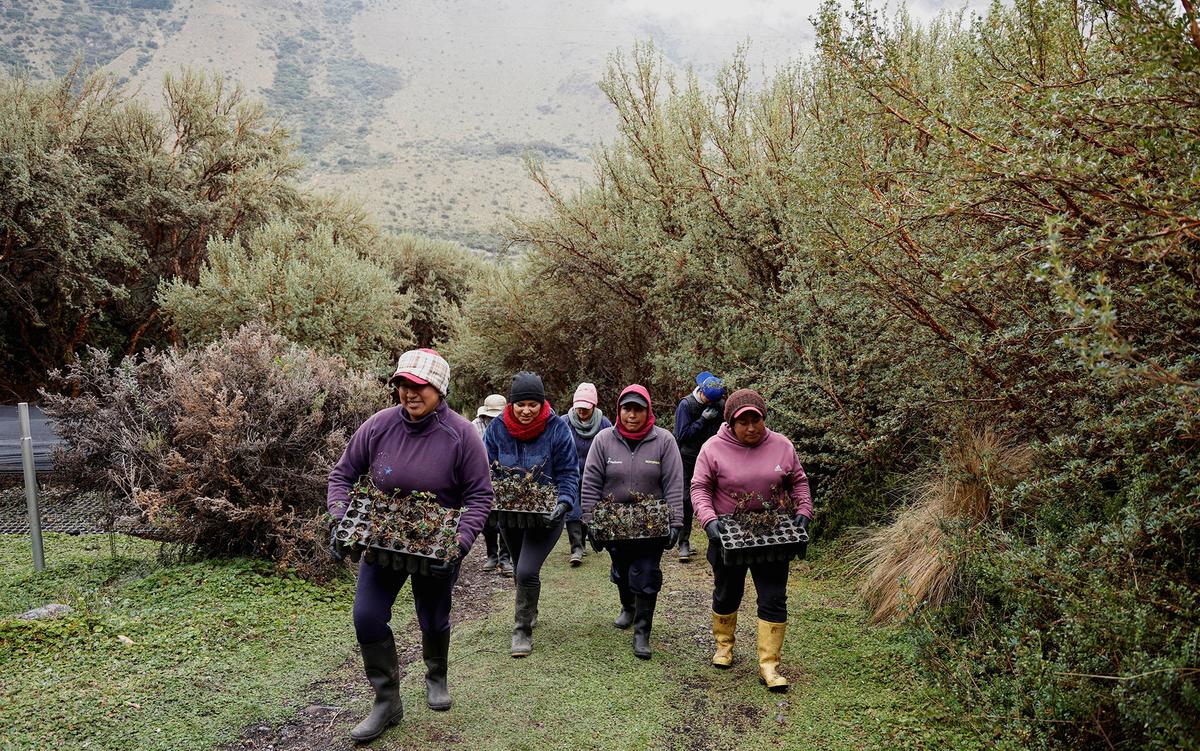
VillageOS™ — Resilient Land Development Software
Opensource orchestration software for the design and operation of resilient land developments in diverse climate zones around the world.

Green economic planning for rapid decarbonisation
Sustainable futures require deep social and economic transformations to address climate change adequately. The current landscape of intergovernmental and market-based coordination is not delivering...

Homepage
We support building community resilience as a hopeful and practical response to multiple emerging ecological and social challenges.

Building Resilient Neighbourhoods’ Connect & Prepare Learning Report
Through its partnership with Hey Neighbour Collective, Building Resilient Neighbourhoods helped to bring Connect & Prepare to three new BC municipalities, in collaboration with resident champions…

Urban problems: nature-based solutions and a Green New Deal everywhere
Nature-based Solutions with localised Green New Deals could save our settlements, and provide a just transition to a low-carbon society

The ecosystem is moving
Considerations for distributed and decentralized technologies from the perspective of a product that many would like to see decentralize....
From global trends to local realities: A multi-scale scenario-building methodology for community infrastructure planning
This paper details a multi-scale scenario-building methodology designed to explore transport infrastructure futures in rapidly changing Circumpolar North communities, bridging global trends and national contexts with local realities. Focusing on Churchill, Canada, and Kirkenes, Norway, we employed a hybrid approach that combined top-down adaptation of existing global and regional socioeconomic scenarios with bottom-up, participatory ethnographic research to ensure local relevance and incorporate stakeholder knowledge. We developed coherent scenarios across global, regional (national), and local scales, allowing higher-level archetypes to manifest differently depending on locally specific features identified through fieldwork. This consecutive, nested process utilized morphological analysis and the Factor-Actor-Sector framework to maintain consistency while accommodating local specificities. The methodology centered not just on scenario creation but also on the function of scenarios as a tool for community dialogue, utilizing artistic visualizations in workshops to engage diverse stakeholders. This approach demonstrates a way to navigate the tension between global and national drivers versus local community needs, yielding distinct yet comparable local futures grounded in broader development pathways. It offers practical insights for deliberations and planning in uncertain environments, both built and unbuilt.
Re:Permissioning the City — Unlocking cities’ growing underutilised spatial assets for an emergent…
In recent years, various macro-level shifts, including public health crises, demographic changes, and climate risks, have had cascading…

Adaptation as a catalyst for social change - MACC Hub
Explore how transformational adaptation can address climate risk, inequality and austerity by investing in people, wellbeing and more resilient societies.

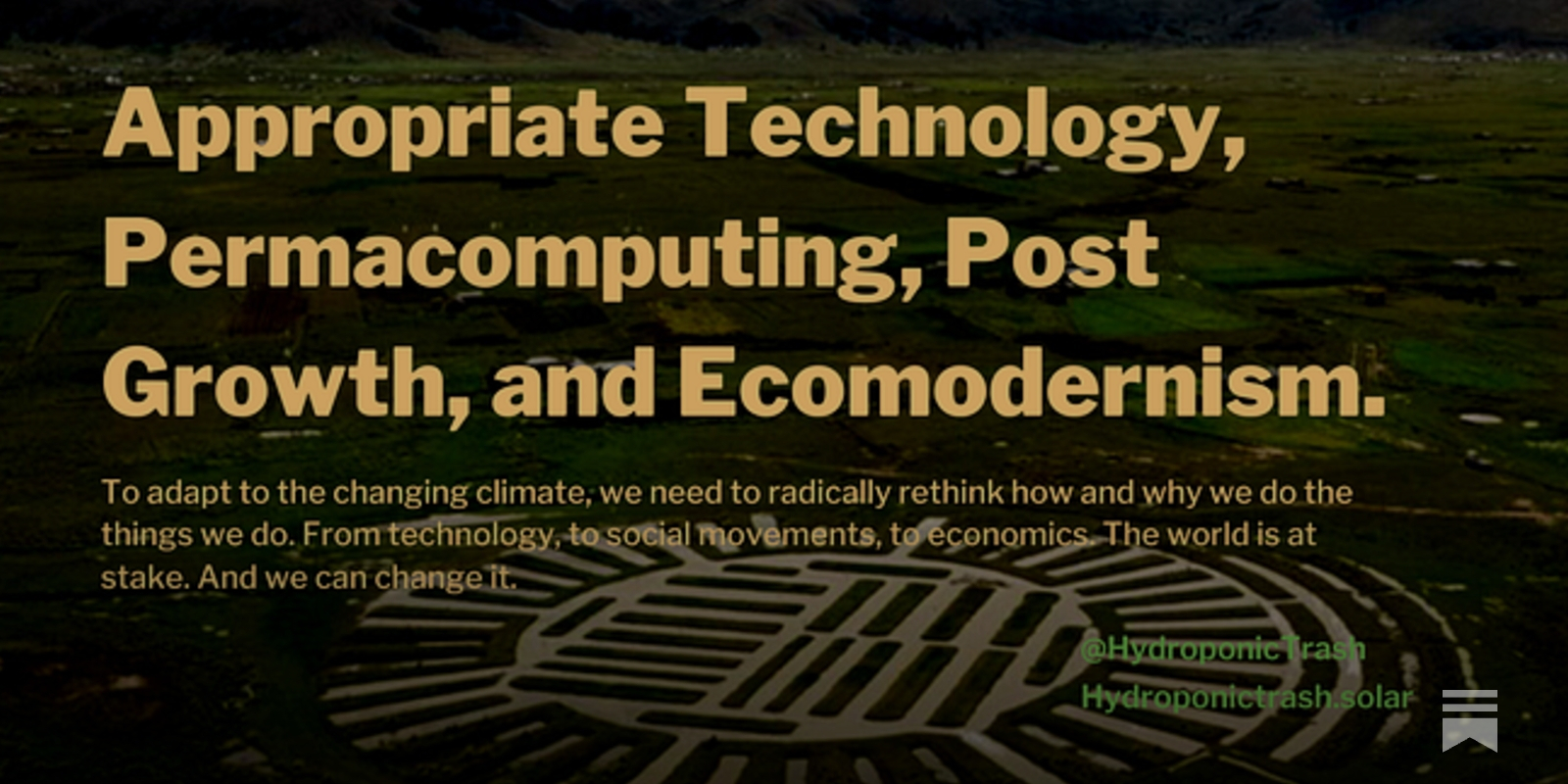
Appropriate Technology, Permacomputing, Post Growth, and Ecomodernism.
To adapt to the changing climate, we need to radically rethink how and why we do the things we do. From technology, to social movements, to economics. The world is at stake. And we can change it.
Sustainable Economies Law Center
Sustainable Economies Law Center cultivates a new legal landscape that supports community resilience and grassroots economic empowerment. We provide essential legal tools so communities everywhere can develop their own sustainable sources of food, housing, energy, jobs, and other vital aspects of a thriving community. We provide essential legal tools - education, research, advice, and advocacy - to support the transition to more just and resilient local economies.

Home - Schumacher Center for a New Economics
Our mission is to envision a just and regenerative economy; apply the concepts locally; then share the results for broad replication. Programs Library Lectures & Publications The Decentralism File Community Land Trust Local Currencies Reinventing The Commons All Programs eNewsletters All News “Since there is now increasing evidence of environmental deterioration, particularly in … Continued

ORGANISING PRINCIPLES — THE ALTERNATIVE
This makes the difference between a localism that cannot sustain itself because it is simply too small with limited resources of skills and expertise. And one that is able to build its own regenerative economy, entirely through access to the global commons.
Global Program on Sustainability
The Global Program on Sustainability (GPS) helps countries value nature as a driver of jobs, resilience, investment, and long-term prosperity.

The Coming Ecological Cold War
How the green transition is reshaping geopolitics