

"Ethelo is far more powerful than crowdsourcing. The sophisticated algorithm paired with the social media interface is unique in the marketplace".
The Web Is Being Made Accessible for AI, Not People
Jonathan Zong and Frank Elavsky critique how AI-driven infrastructure changes obscure accessibility and reveal whose needs society chooses to prioritize.

Why the Algorithm Loves a Villain, And How to Beat It
When the internet is full of distortions, fake news, and AI-generated slop, how can facts and journalism rise to the top? Former BBC and Vice journalist Sophia Smith Galer has one possible way to…

Artificial Artificial Artificial Intelligence: Crowd Workers Widely Use Large Language Models for Text Production Tasks
Large language models (LLMs) are remarkable data annotators. They can be used to generate high-fidelity supervised training data, as well as survey and experimental data. With the widespread adoption of LLMs, human gold--standard annotations are key to understanding the capabilities of LLMs and the validity of their results. However, crowdsourcing, an important, inexpensive way to obtain human annotations, may itself be impacted by LLMs, as crowd workers have financial incentives to use LLMs to increase their productivity and income. To investigate this concern, we conducted a case study on the prevalence of LLM usage by crowd workers. We reran an abstract summarization task from the literature on Amazon Mechanical Turk and, through a combination of keystroke detection and synthetic text classification, estimate that 33-46% of crowd workers used LLMs when completing the task. Although generalization to other, less LLM-friendly tasks is unclear, our results call for platforms, researchers, and crowd workers to find new ways to ensure that human data remain human, perhaps using the methodology proposed here as a stepping stone. Code/data: https://github.com/epfl-dlab/GPTurk

AI-generated responses are undermining crowdsourced research studies
Many answers to online research questions show signs of being generated by AI chatbots, raising doubts about the validity of behavioural data collected this way

Harnessing Crowds: Mapping the Genome of Collective Intelligence
Over the past decade, the rise of the Internet has enabled the emergence of surprising new forms of collective intelligence. Examples include Google, Wikipedia,

Medium CEO Tony Stubblebine on AI Slop, Quality Content & Social Media Fragmentation
Our Approach to Artificial Intelligence
We are experimenting with using AI tools to extend our work as a small nonprofit, so that we can focus our time on reinforcing human connections, conversations, and communities that have eroded.

Blaine Cook
Hi! I'm Blaine, a software programmer living in the Slocan Valley who works on decentralized technologies (<a href="https://www.eff.org/deeplinks/2019/10/adversarial-interoperability">this</a> kind, not that kind) in order to give communities the autonomy to self-determine in online spaces.

Luozhu on Twitter / X
For AI products, people generally think the intelligence dominates everything, while privacy and cost are seen as secondary. The industry’s path shows this: we’ve spent huge money in leading labs to build the largest models with exceptional intelligence.But I believe we’ve… pic.twitter.com/oobAyk55rh— Luozhu (@LuozhuZhang) September 10, 2025

The promise of ATproto is social media without corporate overlords | The Web Dev Podcast Series 1
Developers building apps on ATproto, the technology behind social media apps like Bluesky and Leaflet, are promising us a future where we own our content and aren’t at the whims of a tiny handful of companies. Software engineer Zeu Capua talks to host Jason Lengstorf about the promise of social media where we can actually own our own data.

[Keynote 05] Unlocking Social Intelligence in AI Agents
How large language models can reshape collective intelligence
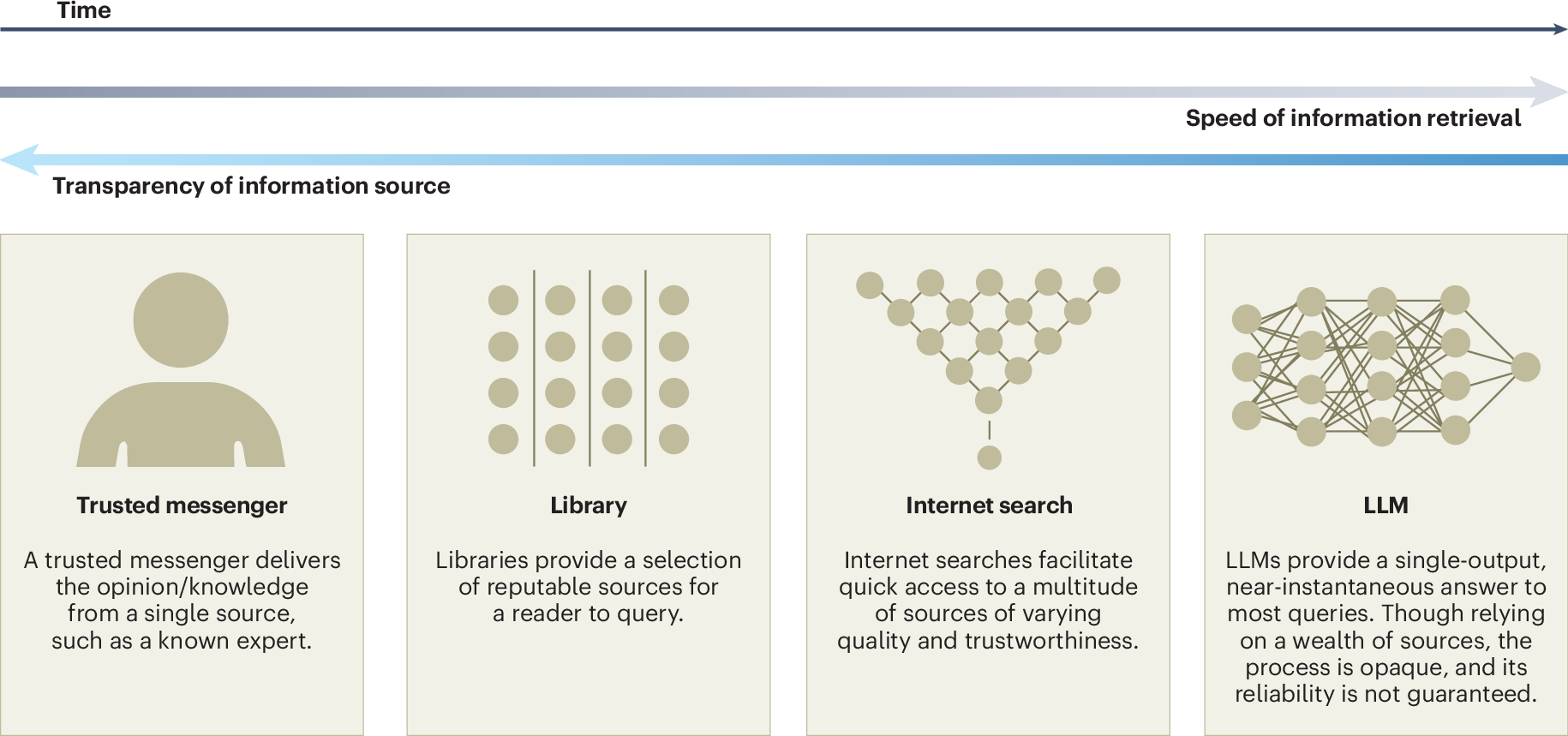
Collective intelligence underpins the success of groups, organizations, markets and societies. Through distributed cognition and coordination, collectives can achieve outcomes that exceed the capabilities of individuals—even experts—resulting in improved accuracy and novel capabilities. Often, collective intelligence is supported by information technology, such as online prediction markets that elicit the ‘wisdom of crowds’, online forums that structure collective deliberation or digital platforms that crowdsource knowledge from the public. Large language models, however, are transforming how information is aggregated, accessed and transmitted online. Here we focus on the unique opportunities and challenges this transformation poses for collective intelligence. We bring together interdisciplinary perspectives from industry and academia to identify potential benefits, risks, policy-relevant considerations and open research questions, culminating in a call for a closer examination of how large language models affect humans’ ability to collectively tackle complex problems.
Social media algorithms can be redesigned to bridge divides — here’s how
"It falls to both the tech companies that built these systems and an engaged public to create technologies designed for social cohesion."

AI-generated ‘slop’ is slowly killing the internet, so why is nobody trying to stop it? | Arwa Mahdawi
Low-quality ‘slop’ generated by AI is crowding out genuine humans across the internet, but instead of regulating it, platforms such as Facebook are positively encouraging it. Where does this end, asks Arwa Mahdawi

Anil Dash on The Web We Lost
✨New paper out @nature.com ✨ For 8 weeks around the 2024 US election, we randomly assigned 2,000 people to use social media algos we built ourselves. Do engagement-based algorithms amplify intergroup, moral & emotional (IME) content—and does that distort how we see political norms? 🧵🔗 👇
