

"Ethelo is far more powerful than crowdsourcing. The sophisticated algorithm paired with the social media interface is unique in the marketplace".
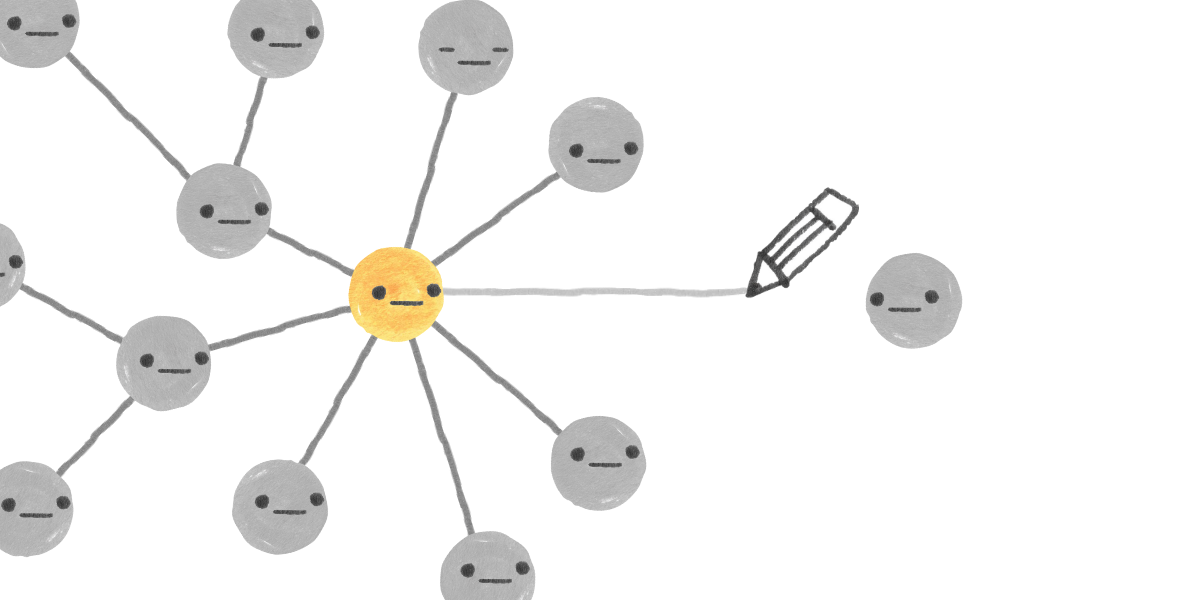
The Web Is Being Made Accessible for AI, Not People
Jonathan Zong and Frank Elavsky critique how AI-driven infrastructure changes obscure accessibility and reveal whose needs society chooses to prioritize.

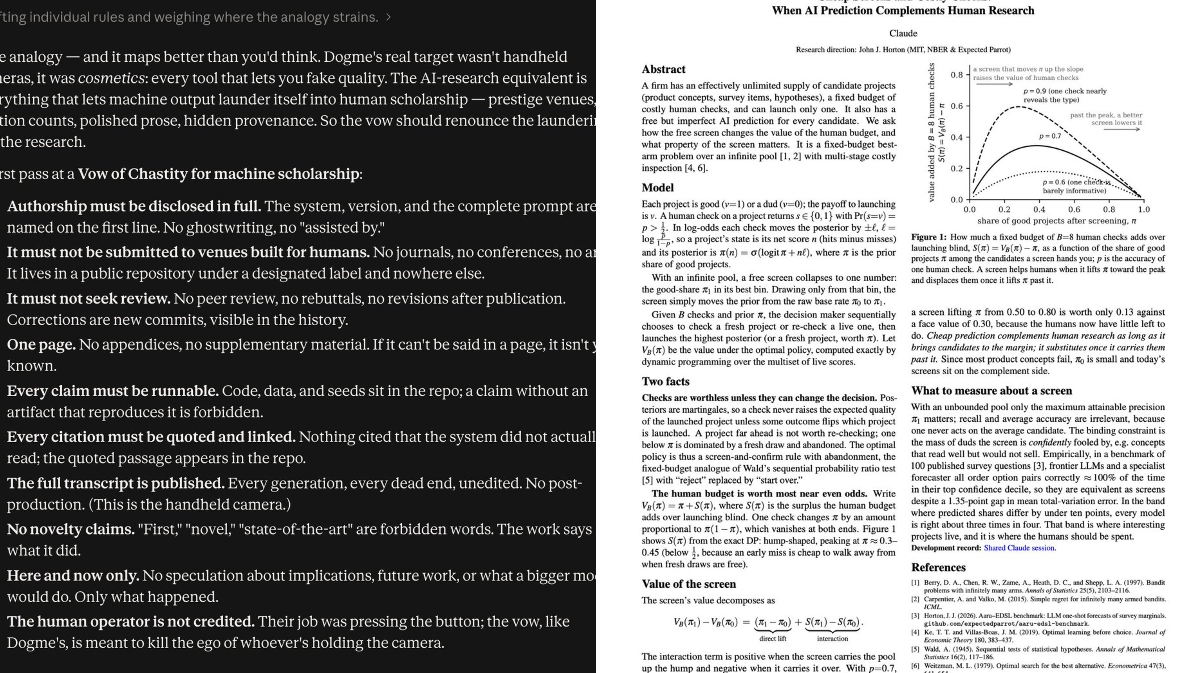
John Horton on Twitter / X
I increasingly think we have to keep AI generated 'papers' out of venues meant for humans---not b/c the papers are bad per se---just that our currently-designed systems cannot accommodate and will break. But I also think what we need a venue for AI generated work (it's good &… pic.twitter.com/fXd92SYbN5— John Horton (@johnjhorton) September 29, 2026
Why the Algorithm Loves a Villain, And How to Beat It
When the internet is full of distortions, fake news, and AI-generated slop, how can facts and journalism rise to the top? Former BBC and Vice journalist Sophia Smith Galer has one possible way to…

Artificial Artificial Artificial Intelligence: Crowd Workers Widely Use Large Language Models for Text Production Tasks
Large language models (LLMs) are remarkable data annotators. They can be used to generate high-fidelity supervised training data, as well as survey and experimental data. With the widespread adoption of LLMs, human gold--standard annotations are key to understanding the capabilities of LLMs and the validity of their results. However, crowdsourcing, an important, inexpensive way to obtain human annotations, may itself be impacted by LLMs, as crowd workers have financial incentives to use LLMs to increase their productivity and income. To investigate this concern, we conducted a case study on the prevalence of LLM usage by crowd workers. We reran an abstract summarization task from the literature on Amazon Mechanical Turk and, through a combination of keystroke detection and synthetic text classification, estimate that 33-46% of crowd workers used LLMs when completing the task. Although generalization to other, less LLM-friendly tasks is unclear, our results call for platforms, researchers, and crowd workers to find new ways to ensure that human data remain human, perhaps using the methodology proposed here as a stepping stone. Code/data: https://github.com/epfl-dlab/GPTurk

AI-generated responses are undermining crowdsourced research studies
Many answers to online research questions show signs of being generated by AI chatbots, raising doubts about the validity of behavioural data collected this way

Harnessing Crowds: Mapping the Genome of Collective Intelligence
Over the past decade, the rise of the Internet has enabled the emergence of surprising new forms of collective intelligence. Examples include Google, Wikipedia,

Medium CEO Tony Stubblebine on AI Slop, Quality Content & Social Media Fragmentation
WAO - The Workers' Algorithm Observatory
The WAO researches and audits work algorithms to empower workers. Companies increasingly rely on opaque, black-box algorithms to determine pay, scheduling, and access to work, while the data needed to understand and challenge these systems remains out of reach for workers and organizers. To address this gap, the WAO develops technology-enabled research tools, data infrastructure, and academic–organizer partnerships that support existing labor and worker organizations. By building meaningful relationships with worker organizers, crowdsourcing data, conducting transparent and policy-relevant research, and thinking deeply about the data workers need both now and in the next 5-20 years, the WAO aims to increase worker power, inform policymaking, and improve conditions for workers today and in the future.
Our Approach to Artificial Intelligence
We are experimenting with using AI tools to extend our work as a small nonprofit, so that we can focus our time on reinforcing human connections, conversations, and communities that have eroded.

Blaine Cook
Hi! I'm Blaine, a software programmer living in the Slocan Valley who works on decentralized technologies (<a href="https://www.eff.org/deeplinks/2019/10/adversarial-interoperability">this</a> kind, not that kind) in order to give communities the autonomy to self-determine in online spaces.

Artificial intelligence and the left
Subscribers // by Evgeny Morozov (Le Monde diplomatique - English edition, September 2026)

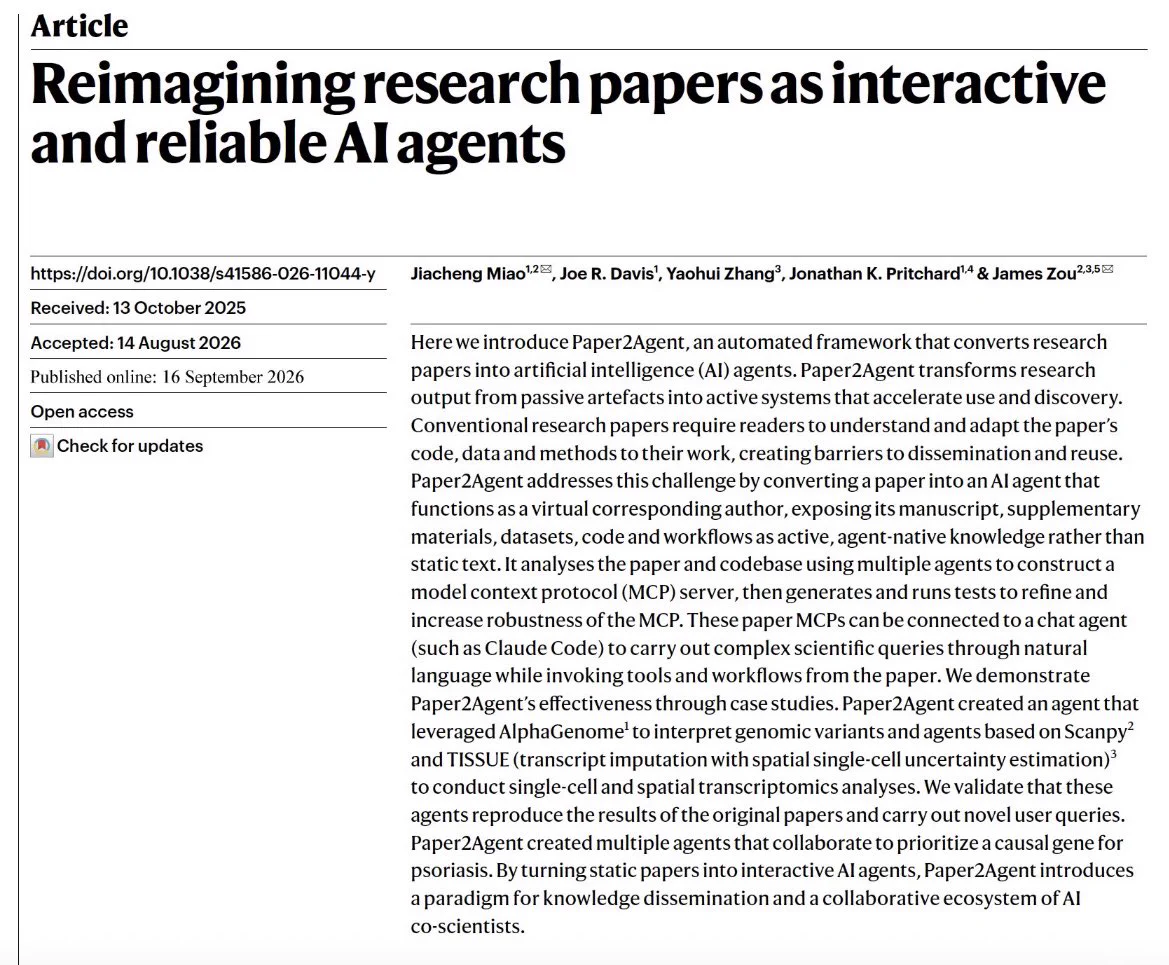
Valerio Capraro on Twitter / X
Nature has just published a pretty incredible paper.The authors introduce a framework that turns research papers into interactive AI agents.Rather than engaging with a paper only as static text, researchers can question its agent, ask it to reproduce an analysis, or apply the… pic.twitter.com/82wOQjak7a— Valerio Capraro (@ValerioCapraro) September 16, 2026
Turkopticon: interrupting worker invisibility in amazon mechanical turk
As part of the Digital Library's transition to Open Access, new features for researchers are available in the Premium Edition. Click here to learn more.

✨New paper out @nature.com ✨ For 8 weeks around the 2024 US election, we randomly assigned 2,000 people to use social media algos we built ourselves. Do engagement-based algorithms amplify intergroup, moral & emotional (IME) content—and does that distort how we see political norms? 🧵🔗 👇
Social media algorithms don't allow us to understand or control what we see online and why... until now! Top scholars @jonathanstray.com and @noupside.bsky.social are sharing @mysky.social, a tool that allows users to adjust their feed’s priorities and explains why certain posts appear over others.

🎛️📲 Meet the algorithm you can actually control and understand
newpublic.substack.com
