

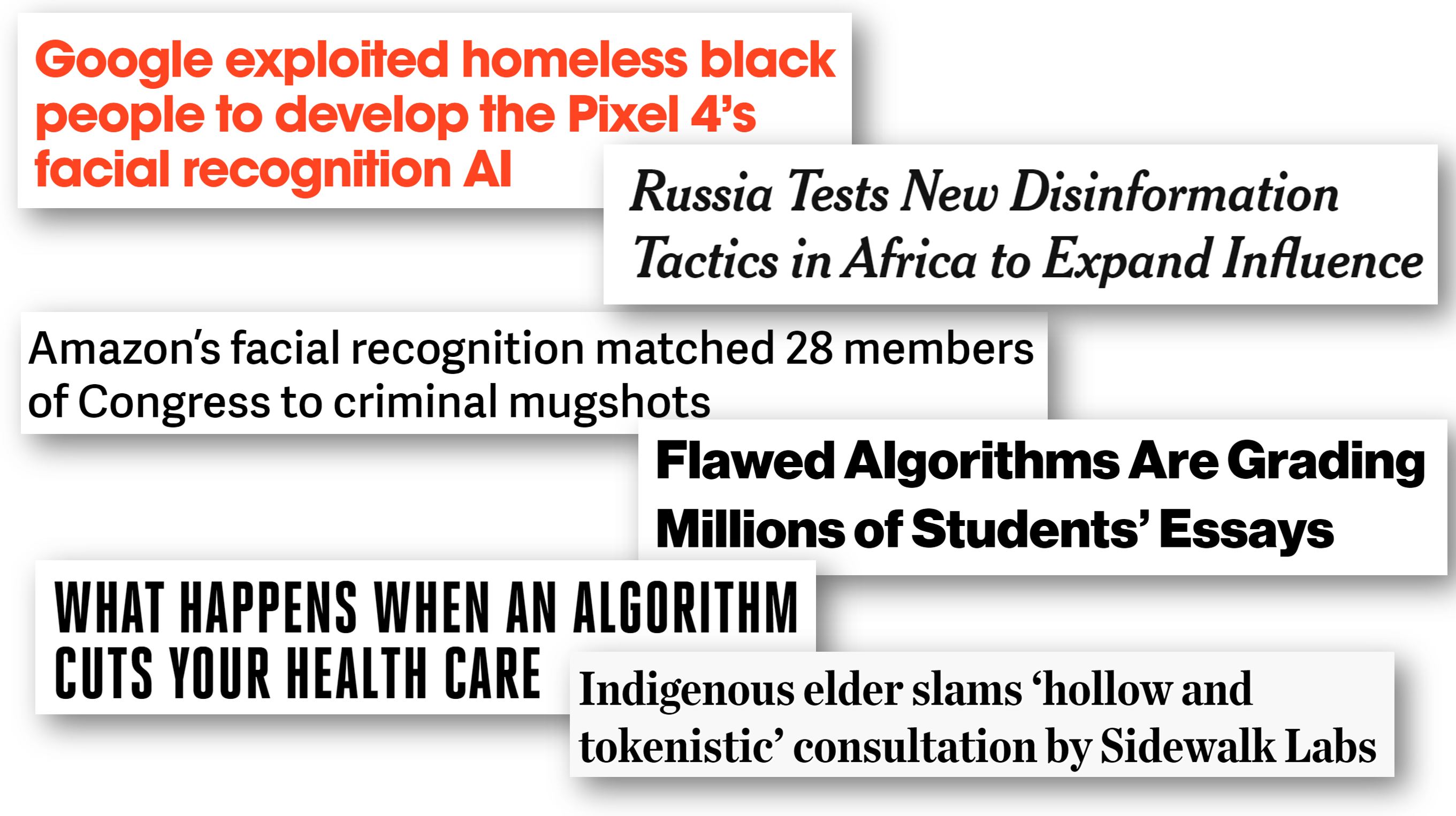
Free, online course from fast.ai and USF Data Institute covering disinformation, bias & fairness, ethical foundations, practical tools, privacy & surveillance, the silicon valley ecosystem, and algorithmic colonialism

Artificial Intelligence - AI Ethics - AIethicist.org Bookshop
The books recommended here (and in www.AIethicist.org) cover topics of AI ethics, big data & social impact, biased algorithms, privacy, lack of regulation or ethics around automated decision making.There are also books that provide background on what cause these areas (and hence the data) to be historically unequal and what are the root causes of social and structural injustices in these areas - like policing, mass incarceration, welfare, housing, financial markets, communication, just to name a few.

Thaura / Your Ethical AI Companion
No ads, no investors, no training on your data. Just an AI that works for you.

Artificial Intelligence and the Purpose of Social Systems
The law and ethics of Western democratic states have their basis in liberalism. This extends to regulation and ethical discussion of technology and businesses doing data processing. Liberalism relies on the privacy and autonomy of individuals, their ordering through a public market, and, more recently, a measure of equality guaranteed by the state. We argue that these forms of regulation and ethical analysis are largely incompatible with the techno-political and techno-economic dimensions of artificial intelligence. By analyzing liberal regulatory solutions in the form of privacy and data protection, regulation of public markets, and fairness in AI, we expose how the data economy and artificial intelligence have transcended liberal legal imagination. Organizations use artificial intelligence to exceed the bounded rationality of individuals and each other. This has led to the private consolidation of markets and an unequal hierarchy of control operating mainly for the purpose of shareholder value. An artificial intelligence will be only as ethical as the purpose of the social system that operates it. Inspired by the science of artificial life as an alternative to artificial intelligence, we consider data intermediaries: sociotechnical systems composed of individuals associated around collectively pursued purposes. An attention cooperative, that prioritizes its incoming and outgoing data flows, is one model of a social system that could form and maintain its own autonomous purpose.

FAIRdata.ai — FAIR Data Assessment
Assess your research data's FAIRness. Automated pipeline using F-UJI + Claude AI. Free to use.

Data Feminism
A new way of thinking about data science and data ethics that is informed by the ideas of intersectional feminism.Today, data science is a form of power. I
Digest Issue 92: The AI Ethics Brief #202 | What Happens When You Have a Choice? | Reading the Label on AI | Pangram is not an oracle | A Fresh Look at The World Map of Encryption Laws and Policies
Discover insights at the intersection of technology and society

Accelerating the Advancement of Data Science Education
We outline a synthesis of strategies created in collaboration with 35+ colleges and universities on how to advance undergraduate data science education on a national scale. The four core pillars of this strategy include the integration of data science education across all domains, establishing adoptable and scalable cyberinfrastructure, applying data science to non-traditional domains, and incorporating ethical content into data science curricula.
UNESCO AI Ethics "Recommendation" – Let's do this!
artificial and natural intelligence, including politics, policy, ethics and security

Data Ethics course: https://t.co/1vLF2rzuTd Deep Learning course: https://t.co/KgtHR2B9Vk Data Science blog: https://t.co/ZWYKPXufDW Diversity blog: https://t.co/cCuOAEtEAj NLP: https://t.co/zC31JsKLwz Talks: https://t.co/msa2Sh3UCI Medicine, AI, & Bias: https://t.co/w1yK7GP5i0
Data Ethics course: https://t.co/1vLF2rzuTdDeep Learning course: https://t.co/KgtHR2B9VkData Science blog: https://t.co/ZWYKPXufDWDiversity blog: https://t.co/cCuOAEtEAjNLP: https://t.co/zC31JsKLwzTalks: https://t.co/msa2Sh3UCIMedicine, AI, & Bias: https://t.co/w1yK7GP5i0— Rachel Thomas (@math_rachel) August 22, 2020
Creating Privacy Preserving AI with Substra
We’re on a journey to advance and democratize artificial intelligence through open source and open science.

AI and Doctrinal Collapse
Artificial intelligence runs on data. But the two legal regimes that govern data—information privacy law and copyright law—are under pressure. Formally, each re

Data Feminism
A new way of thinking about data science and data ethics that is informed by the ideas of intersectional feminism.

The ethics of AI business practices: a review of 47 AI ethics guidelines
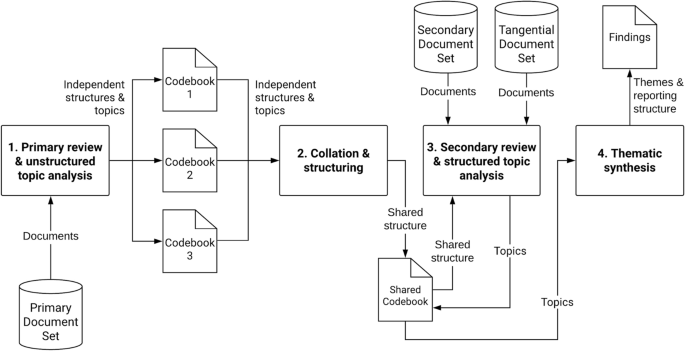
Many AI ethics guidelines have recently been published that center the fairness, accountability, sustainability, and transparency of algorithmic decision-making. Relatively few guidelines center the ethics of the business practices and political economies in which AI systems are situated. We present the findings of a semi-systematic literature review and thematic analysis aimed at determining the extent to which the ethics of AI business practices are considered in a large sample of guidelines. Our review reveals that the political and economic implications of AI business practices are greatly underrepresented in AI ethics guidelines. In its current state, AI ethics guidelines focus disproportionately on issues of algorithmic decision-making, while the fairness, accountability, sustainability, and transparency of the business decision-making contexts in which AI systems are situated remain seriously undermined by competitive and speculative norms, ethics washing, corporate secrecy, and other harmful business practices. We discuss these challenges, and we suggest that the ontological and disciplinary scope of future AI ethics guidelines should be expanded to better contend with them.
AI Ethics Class
AI, Ethics, and Society — Home