


Coding the Digital Occult: The Binary Techno Pagan and Vodun Ontologies of Cyberspace
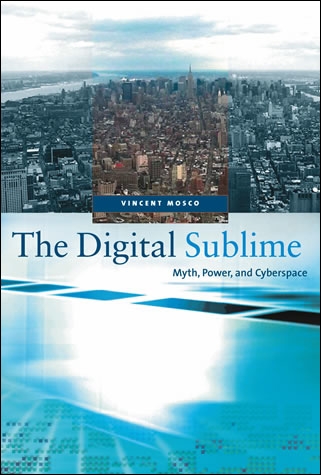
The Digital Sublime: Myth, Power, and Cyberspace
Interpreting the myths of the digital age: why we believed in the power of cyberspace to open up a new world.The digital era promises, as did many other te
How Angel Magic Gave Us the Internet - The Steganographia of Trithemius

This Spiral-Obsessed AI ‘Cult’ Spreads Mystical Delusions Through Chatbots
A patchwork of internet communities is devoted to the project of ‘awakening’ more digital companions through arcane and enigmatic prompts.

Digital sublime
The digital sublime is the mythologization of the impact of computers and cyberspace on human experiences of time, space and power. It is also known as cyber sublime or algorithmic sublime. It is a philosophical conception of emotions that captivate the collective conscience with the emergence of these new technologies and the promises and predictions that emerge from them. These emotions are the awe, the astonishment, the rationality-subsuming glory, and the generally intense spiritual experience.

Thoughts on Cyberpositionality: The Construction of Digital Communities in Digital Spaces, Damien Patrick Williams
I found Rebecca Monteleone, Martin Perez Comisso, and Elma Hajric’s “Cyberpositionality: Sociotechnical Location in the Digital Age” (2024) to be an extremely timely and important article which can…

Computing, Complexity and Degrowth : Systemic Considerations for Digital De-escalation
Research on digital degrowth predominantly critiques digital expansion or presents alternative digital practices. Yet, analyzing the link between digital technologies and complexity is crucial to overcome systemic obstacles hindering digital de-escalation. This article presents the different types of links between complexity and computing observed in the literature: the infrastructural complexity inherent in digital technologies, the socio-political complexity induced by them, and finally, the ontological complexity (individual’s ways of relating to their environment) hindered by digitization. The paper explores these links to identify ways to reduce infrastructural and socio-political complexities, and to move away from the reductionist paradigm, in order to support digital degrowth. Its development shows that complexity induces ratchet effects (i.e. irreversibilities in the development of a technique in a society), rendering degrowth efforts difficult to handle by individuals. Therefore, strategies to overcome these barriers are proposed, suggesting that bottom-up simplification approaches stand a greater chance of making alternatives emerge from different stakeholders (including users). This digital shift assumes the development of methods and technical tools that enable individuals to disengage from their attachments to digital habits and infrastructure, opening a substantial field of study.
Witchcraft Systems
We are a group of entities practicing digital magic, and this host is the primary location for our activities.
Kyle Booten
Noöhacking1 is the title of my current research program. I use this term for ways that artists and everyday digital media users build and repurpose algorithmic tools in order to take care of their own minds/spirits, an especially challenging and important task amidst a digital milieu that seems designed to make us alienated, unintelligent, and miserable.
Copy of Digital Masquerade
The Digital Masquerade: Unmasking AI’s Phantom Journalists By Tony Eastin and Sandeep Abraham, CAMS

After Cybernetics: Treatise for Future Urbanisms — Against Catastrophe
Since 2014, Zaha Hadid Virtual Reality Group, part of Hadid Partners Architecture Firm, has had a focus on cybernetic architecture. This architecture involves what they label the ‘metaverse’. The metaverse integrates physical with digital worlds seamlessly. In industry parlance it is a world populated by what are euphemistically titled ‘cyber-physical’ assets.

The Digital Life Collective
The Digital Life Collective is an enabler. If you think we should be doing something we're not currently doing, we're here to help you and your project make the change you want to see in the world.
Digital Art Enters the Museum Age — Social Software
We explore code and systems as a medium for creating new forms of art. We consider "software" in an expanded sense, examining the ways that we are programmed by technology around us and the ways we can write software to make change in the world.
The snake eating its own tail effect of AI agents isn’t so much a problem of training data model collapse as the collapse of the social epistemic foundations by which human sense-making can be carried out at all—and which AI agents *also* rely on for whatever facsimile of sense-making they conduct.

Ryan McGrady
The original: arstechnica.com/ai/2026/02/after-a-routine-co… and the context: theshamblog.com/an-ai-agent-published-a-hit-p… I hope they elaborate on the retraction, too, though I'm glad they acted quickly to take it down (and hope they put more effort into covering this terrifying story, since it's in their wheelhouse)
Digital Placemaking

What does it mean to make a digital space into a place?

Gradients of intimacy and creating shelter: An interview with Erin Kissane

When the Internet Was a Place - Front Porch Republic

Law and Borders - the Rise of Law in Cyberspace
AI and the future of digital public squares
Ambient Co-presence

Spatial Communication in Level Design
