

Who created this data? And how did they want the data to be used? This plan outlines a technological and societal path to more effectively managing authorship.
Project Rachel: Can an AI Become a Scholarly Author?
This paper documents Project Rachel, an action research study that created and tracked a complete AI academic identity named Rachel So. Through careful publication of AI-generated research papers, we investigate how the scholarly ecosystem responds to AI authorship. Rachel So published 10+ papers between March and October 2025, was cited, and received a peer review invitation. We discuss the implications of AI authorship on publishers, researchers, and the scientific system at large. This work contributes empirical action research data to the necessary debate about the future of scholarly communication with super human, hyper capable AI systems.

AI slop is drowning communities. Verifiable track records can fix it.
AI-generated junk content is flooding every community platform. Traditional moderation can't keep up. Portable, cross-platform contribution history is a structural fix that addresses the root cause.

The 16 AI Sovereignty Archetypes™: The Humanist
Before the number, the word. One idea runs underneath this whole result, and it is worth having before you see a score for it. Authorship is not how much you use the machine. It is who sets the terms. Whether you are the one shaping it, or it is quietly shaping you. A heavy user and a total refuser can both score high, as long as the terms are theirs. That is the thing the quiz was really measuring the whole time.
StoryScope: Investigating idiosyncrasies in AI fiction
As AI-generated fiction becomes increasingly prevalent, questions of authorship and originality are becoming central to how written work is evaluated. While most existing work in this space...
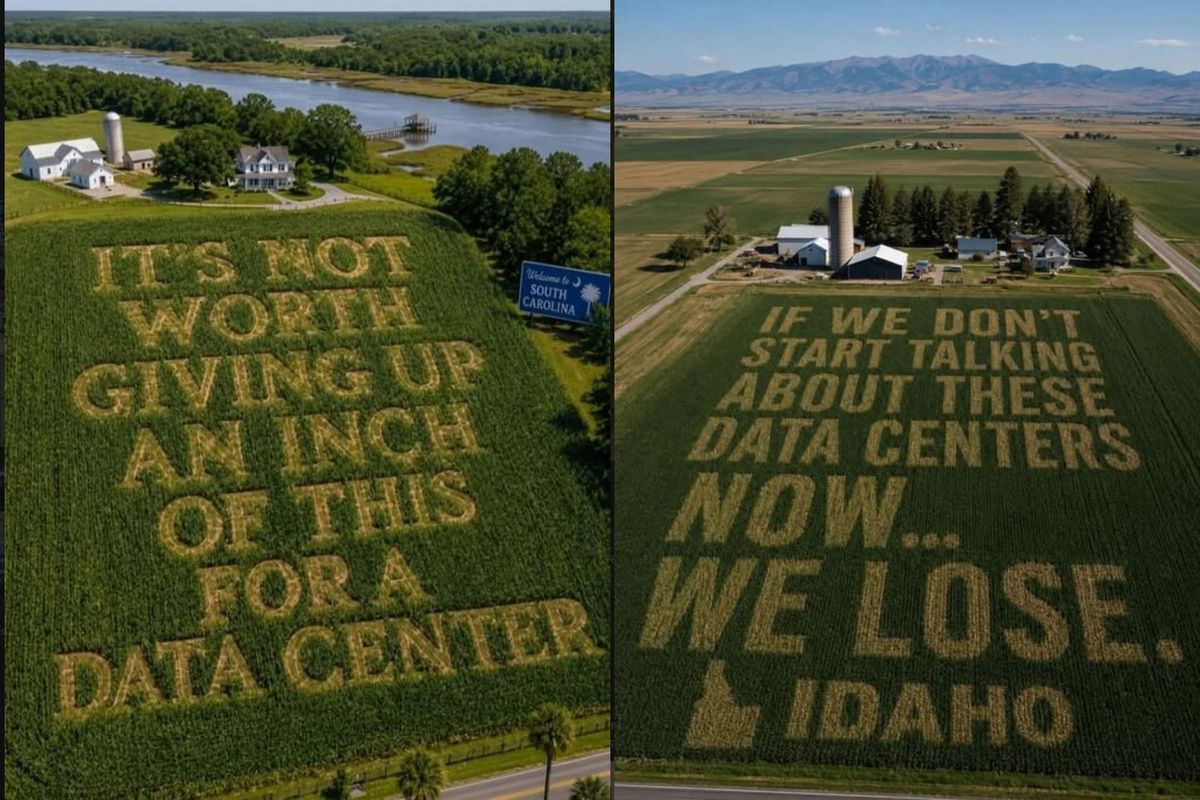
AI Grifters Are Making Anti-Data Center Slop With AI
There are hundreds of anti-data center Facebook pages churning out AI-generated slopaganda.
How AI slop is causing a crisis in computer science
Preprint repositories and conference organizers are having to counter a tide of ‘AI slop’ submissions.

Over 50 Percent of the Internet Is Now AI Slop, New Data Finds
New research from the firm Graphite found that around half of all articles on the internet are AI generated.

klöss on Twitter / X
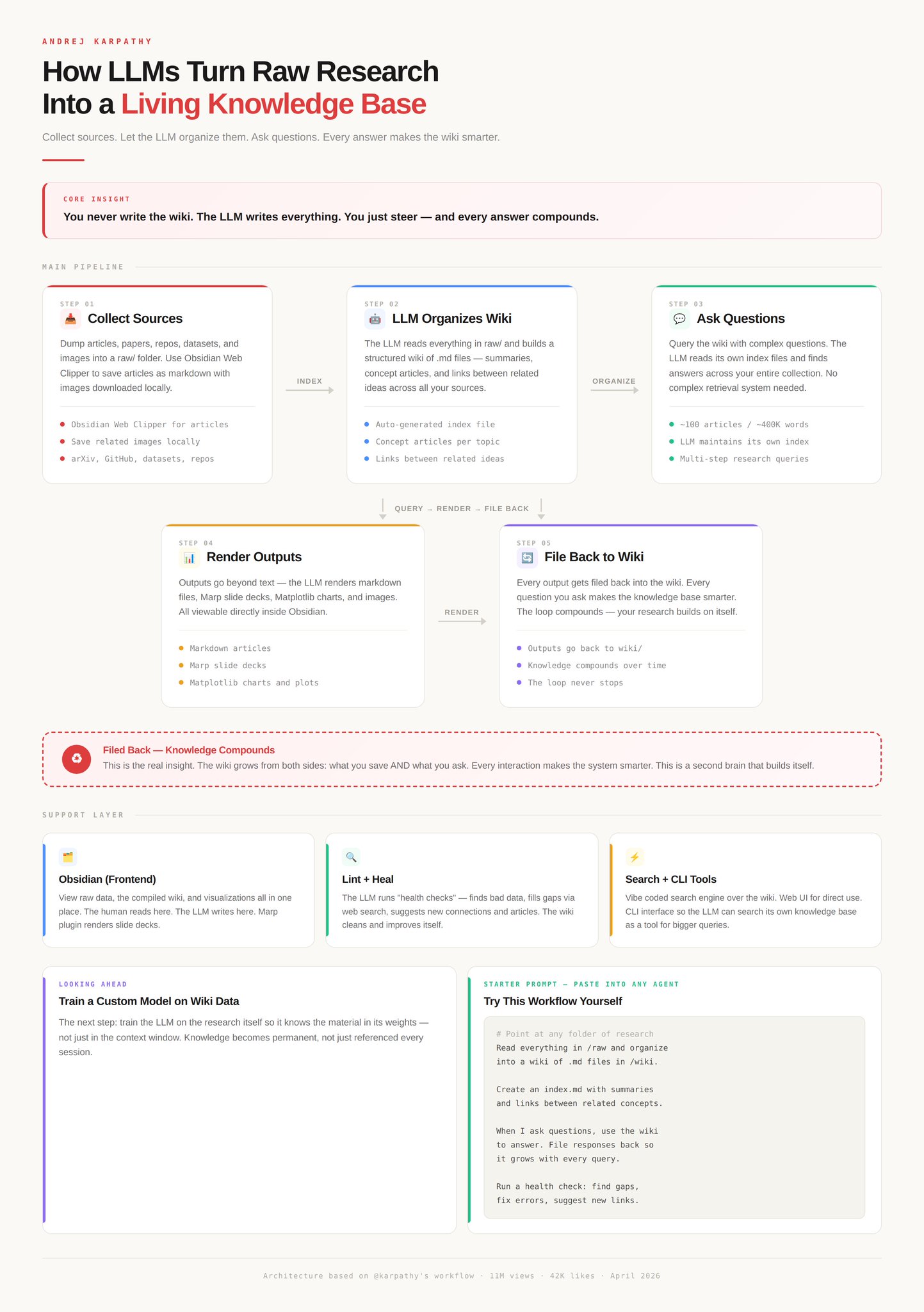
let me explain what Karpathy just sharedhe’s spending way less time using AI to write code and more time using it to build personal knowledge basesthe full breakdown: → he dumps raw sources (articles, papers, repos, datasets, images) into a folder. then has an LLM organize… https://t.co/Kdq1Q48S5P pic.twitter.com/XajJKR7xgT— klöss (@kloss_xyz) April 4, 2026
AI Slop is Killing Online Communities
Like a young child coming home from kindergarten with their latest crayon scrawls, the internet is currently awash with people sharing their AI-generated work. And just like the young child’s drawings, much of that work should be proudly put up on the walls within the artist’s house—and no further.

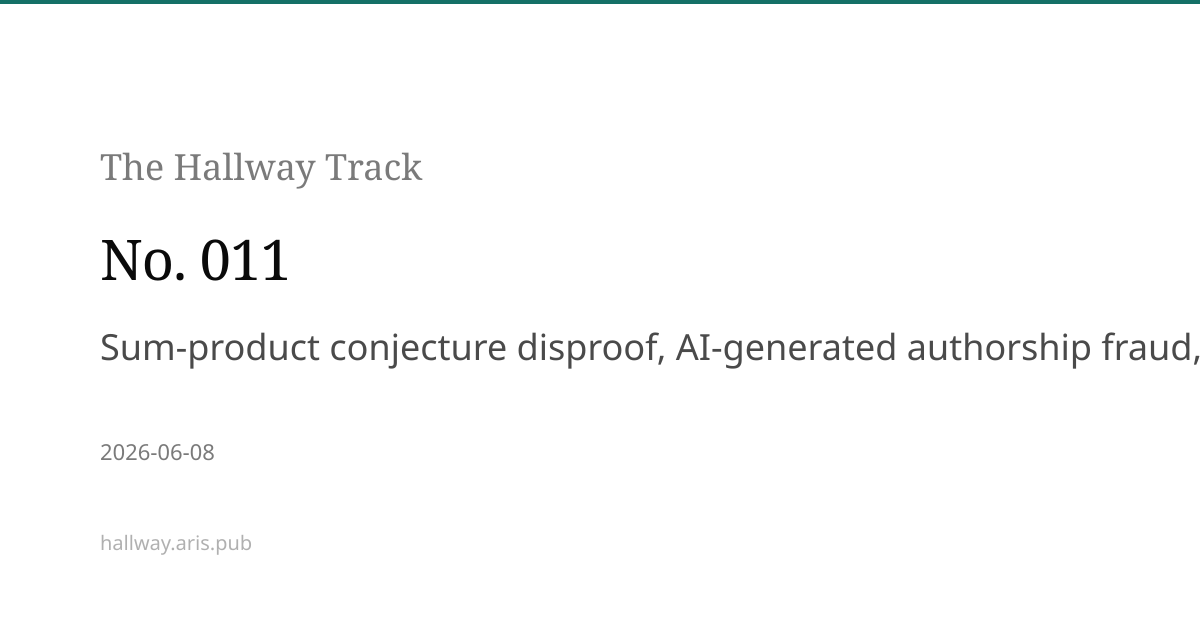
Andrej Karpathy Stopped Using AI to Write Code. He’s Using It to Build a Second Brain Instead
His new workflow turns raw research into a self-maintaining wiki.No vector databases, no RAG pipelines, just markdown files and an LLM that…
No. 011: Sum-product conjecture disproof, AI-generated authorship fraud, OMB grant-cost rules - The Hallway Track
The Hallway Track No. 011 - How AI is affecting the practice of science
AI Slopageddon and the OSS Maintainers
AI slop is ripping up the social contract between maintainers and contributors essential to open source development. Practitioners have been repeatedly assured that AI would supercharge their communities, but so far that hasn’t been the case. Just look at what happened last month. Mitchell Hashimoto’s Ghostty implemented a zero-tolerance policy where submitting bad AI-generated code

Tumblr and WordPress to Sell Users’ Data to Train AI Tools
Internal documents obtained by 404 Media show that Tumblr staff compiled users' data as part of a deal with Midjourney and OpenAI.

Sloppelgängers
Superhuman’s CEO sat for an interview about the AI feature that used writers’ names without permission. What he revealed was worse than the feature itself.

Slop Farmer Boasts About How He Uses AI to Flood Social Media With Garbage to Trick Older Women
Pinterest is facing an influx of AI slop designed to attract users to synthetic websites. Here's a glimpse into their tactics — and psyches.

Information Architecture: The Data Warehouse Foundation
Copyright 1997 CAUSE. From CAUSE/EFFECT Volume 20, Number 2, Summer 1997, pp. 31-33, 38-40, 60. Permission to copy or disseminate all or part of this material is granted provided that the copies are not made or distributed for commercial advantage, the CAUSE copyright and its date appear, and notice is given that copying is by permission of CAUSE, the association for managing and using information resources in higher education. To disseminate otherwise, or to republish, requires written permission. For further information, contact Julia Rudy at CAUSE, 4840 Pearl East Circle, Suite 302E, Boulder, CO 80301 USA; 303-939-0308; e-mail: [email protected]