


Doing social-good businesses better
Trust is the most powerful currency in business | Fortune
A clear sense of ethics tells employees, clients, and members of your community that you care about a lot more than making money.

Pivot to People: It’s Time to Build the New Economy
Today’s calls for ethical, humane, responsible, regulated and beneficial technology, compounded with venture capital’s virtue signaling in…

The School for Moral Ambition
Moral ambition redefines success: not by what we accumulate, but by what we contribute. Build a legacy that truly matters. Join the movement.

Liberals Are Preaching Moral Values. What Took Them So Long?
Until recently, the language of morality belonged to social conservatives. But the history of liberalism suggests that values have been at its core all along.

My own private basic income
One person’s experience becoming a business owner shows how our economy is based on luck rather than merit and how it rewards people who own stuff rather than people who do stuff.
Mis-Nudging Morality
Morals constrain self-serving behavior. Yet, self-regulation failures in the face of monetary temptation are common at the workplace. To limit such failures, organizations can design environments that limit the temptation to behave self-servingly, nudging workers to uphold their morals. In a series of experiments where participants may be tempted to take excessive pay after exerting effort, we study whether a simple intervention—asking individuals to state the wage they believe should be paid ex ante, before facing the temptation to take excessive compensation—prevents self-serving behavior. In contrast to lay beliefs and the predictions from prior work, we find that such an intervention is not effective, leading to self-serving behavior. However, a more realistic elicitation procedure of the appropriate wage mitigates this effect. These findings contribute to work on the malleability of moral behavior showing that simple interventions thought to effectively mitigate self-serving behavior can prompt individuals to stretch their moral boundaries. They also stress the importance of properly testing interventions that might seem intuitive. This paper was accepted by Yan Chen, behavioral economics and decision analysis. Funding: Financial support from the Israel Science Foundation [Grant 766/19] is gratefully acknowledged. Supplemental Material: The online appendix and data are available at https://doi.org/10.1287/mnsc.2022.4344 .

Rutger Bregman - “Moral Ambition” | The Daily Show
The Reversal Test: Eliminating Status Quo Bias in Applied Ethics
View all available purchase options and get full access to this article.
Effective Altruism’s Problems Go Beyond Sam Bankman-Fried
Sam Bankman-Fried made effective altruism a punchline, but its philosophy of maximum do-gooding masks a thriving culture of predatory behavior.


Please Don’t Take Moral Advice from ChatGPT
Before turning to a large language model for ethical counsel, consider what makes for good advice

AI language model rivals expert ethicist in perceived moral expertise
People view AI as possessing expertise across various fields, but the perceived quality of AI-generated moral expertise remains uncertain. Recent work suggests that large language models (LLMs) perform well on tasks designed to assess moral alignment, reflecting moral judgments with relatively high accuracy. As LLMs are increasingly employed in decision-making roles, there is a growing expectation for them to offer not just aligned judgments but also demonstrate sound moral reasoning. Here, we advance work on the Moral Turing Test and find that Americans rate ethical advice from GPT-4o as slightly more moral, trustworthy, thoughtful, and correct than that of the popular New York Times advice column, The Ethicist. Participants perceived GPT models as surpassing both a representative sample of Americans and a renowned ethicist in delivering moral justifications and advice, suggesting that people may increasingly view LLM outputs as viable sources of moral expertise. This work suggests that people might see LLMs as valuable complements to human expertise in moral guidance and decision-making. It also underscores the importance of carefully programming ethical guidelines in LLMs, considering their potential to influence users’ moral reasoning.

Values Aren’t a Moral Imperative
Credit: pxhere One of the most impactful exercises in DRI Your Career has been the values exercise (Jean wrote about it here). At first this surprised me, but then I thought about it more. Even whe…

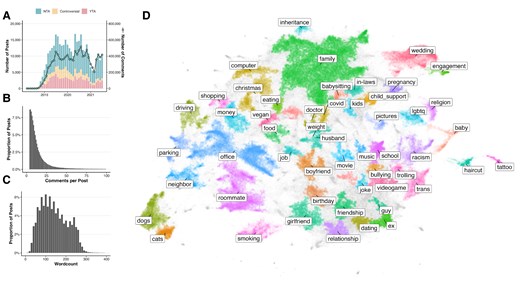
A large-scale investigation of everyday moral dilemmas
Abstract. Questions of right and wrong are central to daily life, yet scientific understanding of everyday moral dilemmas is limited. We conducted a data-d
Moral Code
Moral Code Moral Code is a working moral philosophy wiki: a place to refine a living theory of morality and test it against life, history, current events, readings, and imagined future judgment.
