

A community music project where participants cover the same song in their own unique style
The Community Artists' Collective | Non Profit | Houston, TX
The Community Artists' Collective is the catalyst which provides the inspirational and educational sources for artists and citizens so that they can use their talents and creative abilities to solve economic, cultural and social challenges in the natural and built environments in which we live, work


Why We’re Taking a Human‑First Stand on AI‑Generated Music — Qobuz Community
Artificial intelligence is transforming the music industry at an unprecedented pace. Faced with the explosion of AI-generated content and the legitimate questions it raises, Qobuz has chosen transparency. This charter establishes our framework: how we use AI, where we draw our lines, and what commi

Open Music Event
A community event guide for music schedules, stages, artists, maps, and updates.
The Algorithmic Flattening of Sound: Computational Evidence and Justice Implications of AI Music Homogenization
This paper audits whether large-scale generative music systems exhibit measurable musical homogenization relative to human-produced music, and develops a justice-centered account of why this matters. We audit two commercially deployed systems (Suno and Lyria 3) across four genres (Afrobeats, K-pop, Dance Pop, and Heavy Metal). For each system and genre, we generate 100 tracks and compare them against human corpora of equal size, using 72 music information retrieval (MIR) features and multiple diagnostics of dispersion, redundancy, and separability. We define homogenization as reduced acoustic variation in standard computational audio features including rhythm and timing, timbre/spectral shape, and dynamics, both within genres and across genre boundaries. We also generate tracks using only a genre name as the prompt, with no additional instructions, to reveal each system's default musical tendencies. The results show two structurally distinct homogenizing tendencies. Lyria reduces within-genre acoustic diversity, while Suno collapses the acoustic distinctions between genres without compressing within-genre spread. Neither system follows user prompts faithfully, indicating that the observed patterns reflect learned priors rather than prompt constraints. The two systems do not converge on a common acoustic profile and are more acoustically distant from each other than two random human subsamples would typically be. Nevertheless, a standard classifier distinguishes AI from human tracks near-perfectly on MIR features alone. We argue that these patterns matter not as an aesthetic curiosity but as a justice-relevant condition, shaping which musical styles become legible, valued, and economically rewarded as generated outputs increasingly circulate at scale.

AI music tools challenge Bay Area musicians
AI music tools challenge Bay Area musicians: As affordable AI platforms spread, artists debate creativity, copyright and survival.
An A.I. Songwriting Experiment: Humans Against the Machine
Five humans convened for a weekend to create new music from scratch. Could they do better than A.I.? Could you even tell the difference?

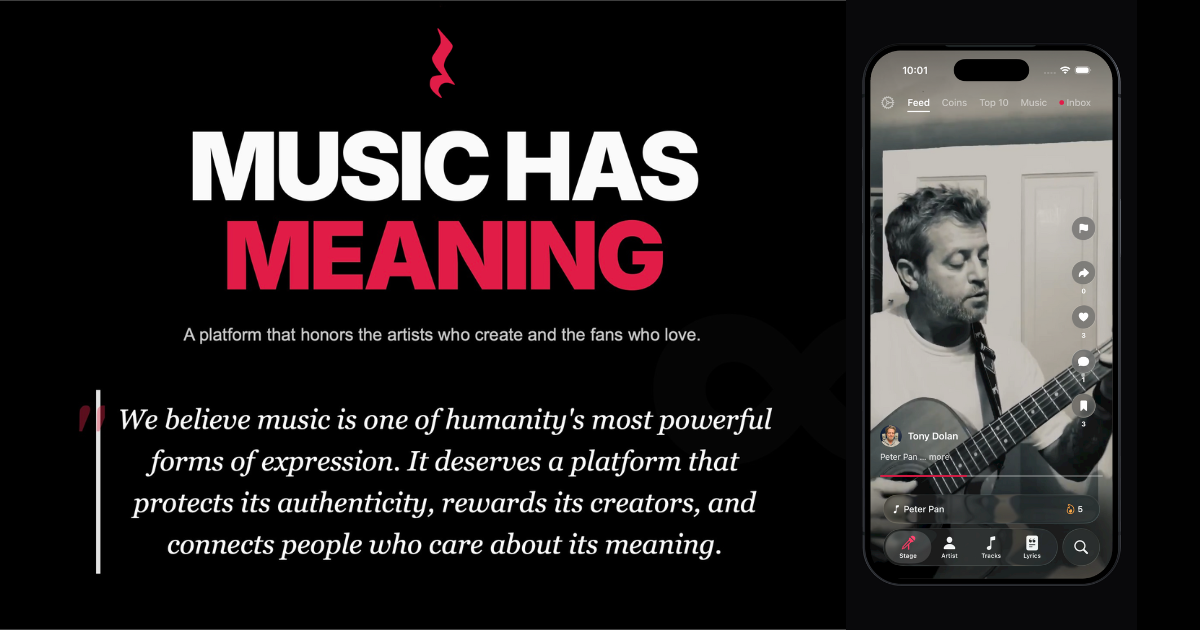
Music has Meaning
The social platform for discovering music, collecting tracks, and supporting artists directly. Only verified artists post.
Pulp - Common People
REIMAGINING INCLUSIVE MUSIC EDUCATION: REFLECTIONS FROM A BLACK MUSIC EDUCATOR - ProQuest
Explore millions of resources from scholarly journals, books, newspapers, videos and more, on the ProQuest Platform.
Home - Project Row Houses
ENRICHING COMMUNITIES THROUGH COLLECTIVE CREATIVE ACTION

Intersections in Music Education: Implications of Universal Design for Learning, Culturally Responsive Education, and Trauma-Informed Education for P–12 Praxis
To increase equity in music education, teachers can strive to know each student as a whole child, proactively remove barriers to learning, and seek to honor students’ multifaceted and intersectional identities. In this article, we first define intersectionality and examine demographics in music education. Then, we summarize three asset-based pedagogical approaches (Universal Design for Learning, Culturally Responsive Education, and Trauma-Informed Education) and synthesize their similarities. Finally, we present implications in the form of generative ideas for music educator praxis, or values-guided action. We hope our suggestions help music educators create music experiences where students (and families) feel seen, safe, welcomed, and valued as musicians and people. We also hope our suggestions can contribute to music teacher collegiality and collaboration by providing educators with tools to develop positive relationships with colleagues who are different from themselves.

I listen to music everywhere: local files, Spotify, Tidal. So why do I have to like the same song three times? Why do I have to build the same playlist three times? That's the itch behind @rocksky.app : one music identity, synced across every app, on AT Proto

