

Evidence intelligence platform: dashboards, docs, and tooling for trustworthy research quality.

Related work | Data Counterfactuals
Adjacent research areas and starting papers, curated in Semble and synced into the site.
Fakebook: Using Data Science to Spot Fake News
Home | Bellingcat's Online Investigation Toolkit
A toolkit for open source researchers

In an era where research evaluation methods are evolving, the Research Contribution Claim Network makes trustworthy tracking of non-traditional research output easy!
In this whitepaper, Patrick Hochstenbach (Ghent University Library), Thomas van Himbergen (SURF), Laurents Sesink (SURF) and Herbert Van de Sompel (DANS) introduce the...

The Robyn Dawes Institute for the Improvement of Science
Making research quality visible so everyone can act on reliable evidence.
ACE: Audit Clinical Evidence
Independent audits of published clinical research for statistical errors, data inconsistencies, and research integrity violations.
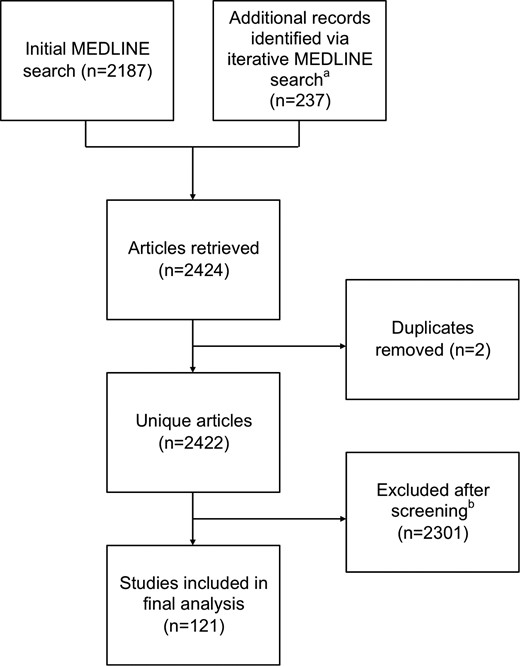
Evidence appraisal: a scoping review, conceptual framework, and research agenda
Abstract Objective Critical appraisal of clinical evidence promises to help prevent, detect, and address flaws related to study importance, ethics, validity, applicability, and reporting. These research issues are of growing concern. The purpose of this scoping review is to survey the current literature on evidence appraisal to develop a conceptual framework and an informatics research agenda. Methods We conducted an iterative literature search of Medline for discussion or research on the critical appraisal of clinical evidence. After title and abstract review, 121 articles were included in the analysis. We performed qualitative thematic analysis to describe the evidence appraisal architecture and its issues and opportunities. From this analysis, we derived a conceptual framework and an informatics research agenda. Results We identified 68 themes in 10 categories. This analysis revealed that the practice of evidence appraisal is quite common but is rarely subjected to documentation, organization, validation, integration, or uptake. This is related to underdeveloped tools, scant incentives, and insufficient acquisition of appraisal data and transformation of the data into usable knowledge. Discussion The gaps in acquiring appraisal data, transforming the data into actionable information and knowledge, and ensuring its dissemination and adoption can be addressed with proven informatics approaches. Conclusions Evidence appraisal faces several challenges, but implementing an informatics research agenda would likely help realize the potential of evidence appraisal for improving the rigor and value of clinical evidence.
Metaudits
Audits of how completely research is described in DataCite, Crossref, ORCID, OpenAlex and repositories. In English, Spanish and German.
Covidence - Where trusted evidence gets made.
The world's leading software for managing and streamlining your systematic review. Discover how to do a systematic review in less time, while maintaining quality and accuracy.


NLnet; Nanoarguments
Scientific knowledge is currently scattered across papers, repositories, and disconnected platforms, with no structured way to trace how claims connect to evidence or how arguments develop. Nanoarguments builds a framework and tools for creating, browsing, and contributing to a global, federated graph of scientific discourse and evidence. Researchers and their communities can collaboratively structure claims, evidence chains, and discussion as nanopublications, which are small, cryptographically signed Linked Data snippets with precise provenance and authorship, published to a decentralized peer-to-peer network. The project builds upon the Nanodash interface to help users browse, edit, and aggregate discourse and evidence graphs, and integrates with dokieli to enable in-context authoring of nanopublications as inline annotations while reading or writing a document. A bidirectional ActivityPub connector bridges the nanopublication network and the fediverse, allowing discourse threads to start as social exchanges and crystallize into persistent, machine-readable evidence records. The project will be piloted with early adopter research groups in discourse and evidence modeling. All components will be released as open-source modules that other systems can build upon.
Results First Clearinghouse Database
To assist policymakers at all levels of government in identifying evidence-based programs and making data-driven budget decisions, the project has created the Results First Clearinghouse Database. This one-stop online resource provides policymakers with an easy way to find information on the effectiveness of various interventions as rated by eight national research clearinghouses.

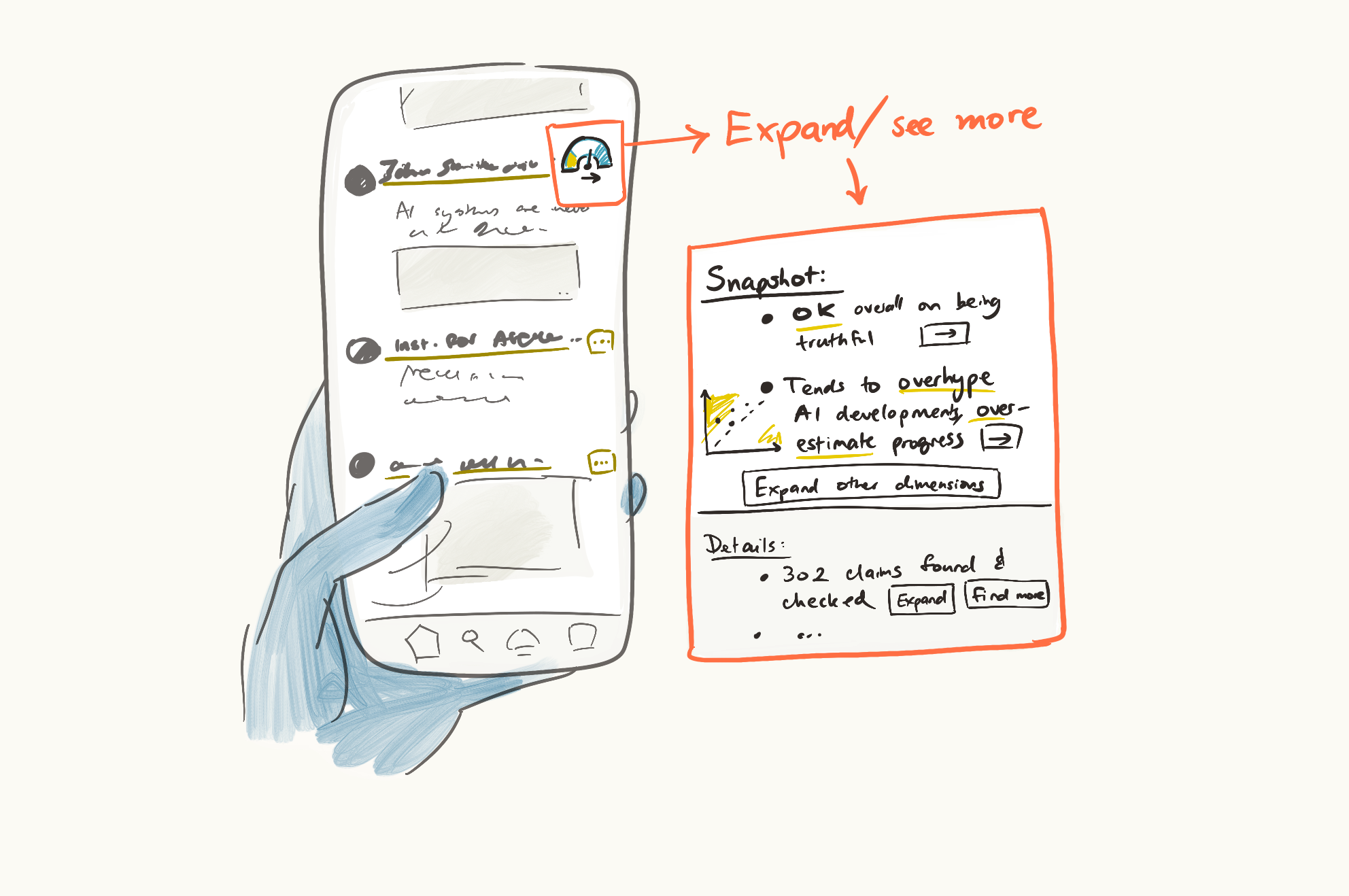
AI Tools for Trust: Community Notes, Rhetoric Detection & More
Five AI technologies to combat misinformation: community notes, rhetoric detection, reliability tracking, epistemic evals, and provenance tracing.
Identify trusted publishers for your research • Think. Check. Submit.
Tools and practical resources, aiming to educate researchers, promote integrity, and build trust in credible research and publications.
