

Who controls whom? Is technology controlling us, or are we controlling it? Does it lead us where it wants to, even to our ruin, or can we force it to yield to our intentions? But what else would our intentions be, if not some further technology? Is the humanity–technology relationship always the same or historically variable? Where is this unknown force heading?
Technology is Not Values Neutral: Ending the Reign of Nihilistic Design
We fail to take tech seriously when we do not grasp its full impact on humans

Calm Technology
The most profound technologies are those that disappear. They weave themselves into the fabric of everyday life until they are indistinguishable from it.
Anthropomorphism Is Breaking Our Ability to Judge AI
Tech Policy Press fellow James Ball asks, how should we interact with a technology designed to ‘speak’ with us on what appear to be human terms?
Care at the Edge of Automation – Topos Institute
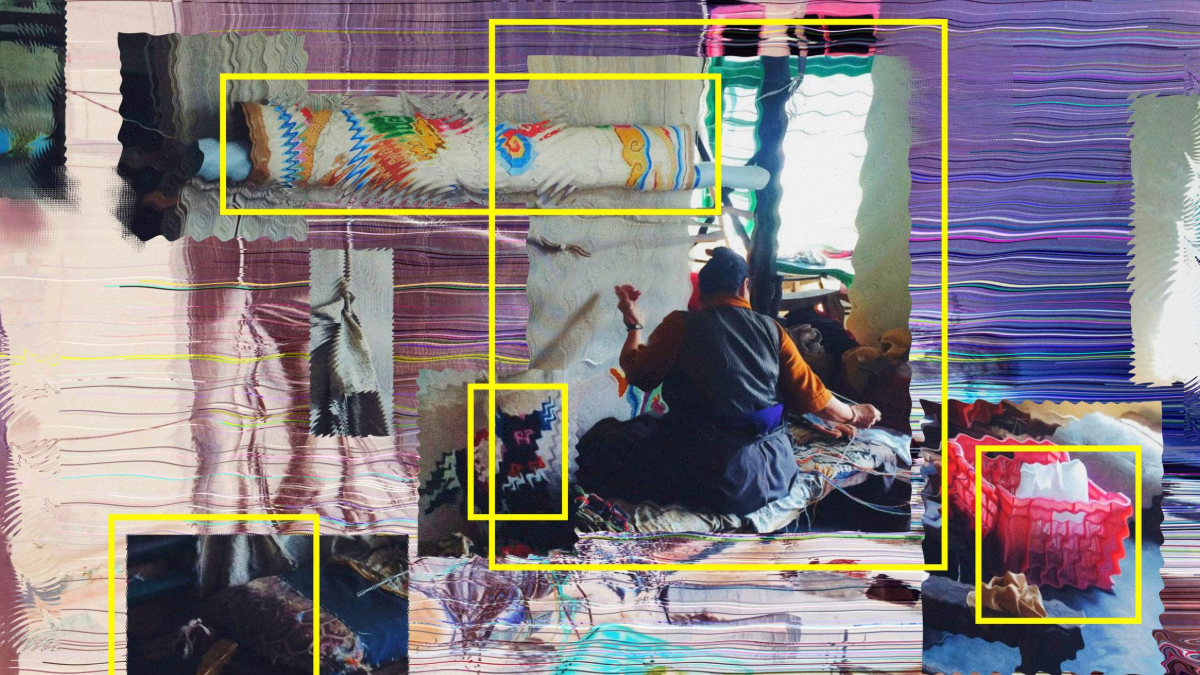
Technologies don’t just solve problems, they change us. We invent technologies, and they invent us in turn, shaping our lives and worlds. This is the phenomenon that Terry Winograd and Fernando Flores, in Understanding Computers and Cognition (1986), called “ontological design.” It matters now more than ever—along with a second lesson they saw clearly. Technological research is always guided (and sometimes misguided) by deep ontological assumptions about, e.g., the nature of cognition, agency, and communication. If we are to create technologies that truly serve human flourishing and care, we must bring these hidden assumptions into the open and question them at their roots.

ETCH
We believe technology should serve humanity and that human creativity is essential and irreplaceable. We support the ethical development and deployment of AI by funding protective technologies and translating research into real-world tools for creative communities.

Moral Deskilling and Upskilling in a New Machine Age: Reflections on the Ambiguous Future of Character
This paper explores the ambiguous impact of new information and communications technologies (ICTs) on the cultivation of moral skills in human beings. Just as twentieth century advances in machine automation resulted in the economic devaluation of practical knowledge and skillsets historically cultivated by machinists, artisans, and other highly trained workers (Braverman 1974), while also driving the cultivation of new skills in a variety of engineering and white collar occupations, ICTs are also recognized as potential causes of a complex pattern of economic deskilling, reskilling, and upskilling. In this paper, I adapt the conceptual apparatus of sociological debates over economic deskilling to illuminate a different potential for technological deskilling/upskilling, namely the ability of ICTs to contribute to the moral deskilling of human users, a potential that exists alongside rich but currently underrealized possibilities for moral reskilling and/or upskilling. I flesh out this general hypothesis by means of examples involving automated weapons technology, new media practices, and social robotics. I conclude that since moral skills are essential prerequisites for the effective development of practical wisdom and virtuous character, and since market and cultural forces are not presently aligned to bring about the more salutary of the ambiguous potentials presented here, the future shape of these developments warrants our close attention—and perhaps active intervention.

What technology takes from us – and how to take it back | Rebecca Solnit
The long read: Decisions outsourced, chatbots for friends, the natural world an afterthought: Silicon Valley is giving us life void of connection. There is a way out – but it’s going to take collective effort

Declaration of Digital Autonomy
We demand a world in which technology is created to protect and empower those who are impacted by it. Our technology must respect the rights and freedoms of those users. We need to take control for the purpose of collectively building a better world in which technology works in service to the good of human kind, protecting our rights and digital autonomy as individuals.
What Does 'Human-Centred AI' Mean?
While it seems sensible that human-centred artificial intelligence (AI) means centring "human behaviour and experience," it cannot be any other way. AI, I argue, is usefully seen as a relationship between technology and humans where it appears that artifacts can perform, to a greater or lesser extent, human cognitive labour. This is evinced using examples that juxtapose technology with cognition, inter alia: abacus versus mental arithmetic; alarm clock versus knocker-upper; camera versus vision; and sweatshop versus tailor. Using novel definitions and analyses, sociotechnical relationships can be analysed into varying types of: displacement (harmful), enhancement (beneficial), and/or replacement (neutral) of human cognitive labour. Ultimately, all AI implicates human cognition; no matter what. Obfuscation of cognition in the AI context -- from clocks to artificial neural networks -- results in distortion, in slowing critical engagement, perverting cognitive science, and indeed in limiting our ability to truly centre humans and humanity in the engineering of AI systems. To even begin to de-fetishise AI, we must look the human-in-the-loop in the eyes.

What Does 'Human-Centred AI' Mean?
While it seems sensible that human-centred artificial intelligence (AI) means centring "human behaviour and experience," it cannot be any other way. AI, I argue, is usefully seen as a relationship between technology and humans where it appears that artifacts can perform, to a greater or lesser extent, human cognitive labour. This is evinced using examples that juxtapose technology with cognition, inter alia: abacus versus mental arithmetic; alarm clock versus knocker-upper; camera versus vision; and sweatshop versus tailor. Using novel definitions and analyses, sociotechnical relationships can be analysed into varying types of: displacement (harmful), enhancement (beneficial), and/or replacement (neutral) of human cognitive labour. Ultimately, all AI implicates human cognition; no matter what. Obfuscation of cognition in the AI context -- from clocks to artificial neural networks -- results in distortion, in slowing critical engagement, perverting cognitive science, and indeed in limiting our ability to truly centre humans and humanity in the engineering of AI systems. To even begin to de-fetishise AI, we must look the human-in-the-loop in the eyes.
Good Robot
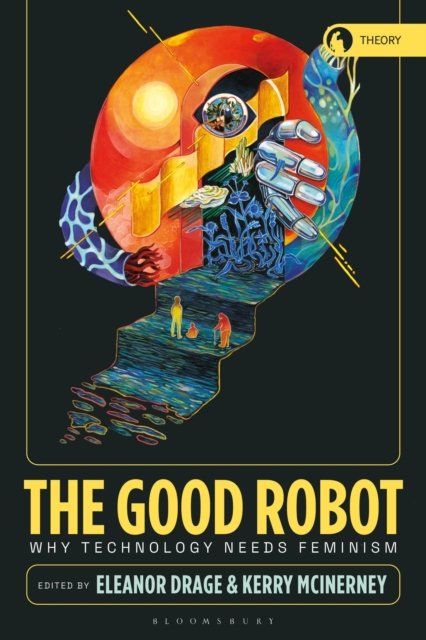
What is good technology? Is ‘good’ technology even possible? And how can feminism help us work towards it? The Good Robot addresses these crucial questions through the voices of leading feminist thinkers, activists and technologists. Each thinker provides a snapshot of key challenges, questions and provocations in the field of feminism and technology. While the question of whether various AI and technological advances can be ethical is not new, the embedded nature of feminist perspectives pulls out whether this perceived ‘goodness’ or ‘wrongness’ might actually impact our lives in the 21st century. This book explores both the radical possibilities of technology to disrupt practices of patriarchy, colonialism, racism and beyond but also provides a significant critique of how we can contain the ethical possibilities of entities we cannot predict. In exploring unjust technological practices and engaging critical voices in the tech industry, the existing moral issues are brought to light as well as the possible ethical quagmires. This book opens a new space of discussion on digital technologies – one that insists that the future of AI is an urgent feminist issue.
Technology is a Siren Song
Orangutan thinking This started with a question I asked myself: How do our minds change when we can receive a plausible, informed, and convincing answe...

Technology is Society Made Durable
Is it possible to devise a set of concepts that could replace the technology/society divide? This set of new concepts - association and substitution - might help to rephrase some of the traditional questions of social order and especially that of the durability of domination of power. However, instead of using different tools to analyse power and weakness, it is argued that power and domination are simply different values of variables that should be studied in their whole range. By reconstructing networks it is argued that a full description of power and domination may be obtained.

The politics and possibilities of ‘AI could kill us all’
AI will not exterminate the human race. But what big tech really *is* doing is bad enough that the notion may help fuel the movement against it.
Reclaim Control | over your technology, your devices, your data, your digital life.
You have the right to control your data, devices, and services. We coordinate, develop and foster communities of Reclaimers who want digital independence. Together, let's reclaim the right to a technical future of data sovereignty, digital autonomy, responsible governance, and collective care online for all.
AI, Decomputing and the Interregnum
This paper treats AI as diagnostic for the deeper changes taking place in the existing order of things. It uses AI's alignment with both the political economy and with the dualisms that underpin it, including race, gender and anthropocentrism, to highlight the nihilistic character of the current restructuring. AI's scaling and accelerationism are taken as examples of the wider tactics being invoked by hegemonic power to maintain control under changing conditions. From this perspective, the massive build-out of data centres isn't simply a seizure of energy resources but a manifestation of an aggressive and misogynist technopolitics. The paper argues that a liberal push for digital sovereignty doesn't interrupt these dynamics but plays into the hands of emerging technofascism. It proposes instead the prefigurative tactic of 'decomputing', which draws on degrowth, deautomatisation and a convivial approach to technology. It explores decomputing as a means to mitigate both material and relational harms and as a decisive turn towards infrastructuring the common good. The paper concludes that AI is the contradiction that reveals many others, not least the gap between claims to legitimacy and the actuality of destructive violence, and proposes an alternative technopolitics of reciprocity that prioritises care and sustainability.