

Where are the Eyes is a program for detecting and mapping surveillance cameras. Users mark cameras on their phone as they walk past them, and build a shared global map of surveillance.
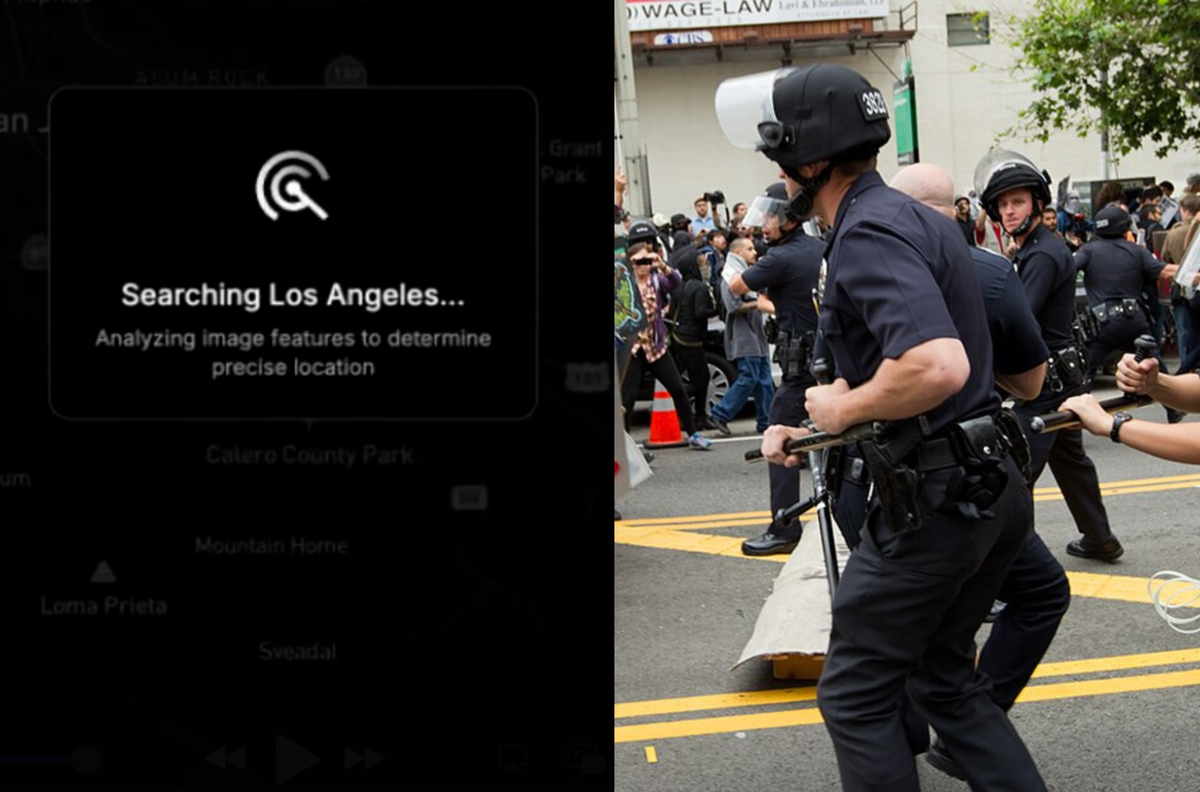
LAPD Eyes ‘GeoSpy’, an AI Tool That Can Geolocate Photos in Seconds
Emails obtained by 404 Media show the LAPD was interested in GeoSpy, an AI tool that can quickly figure out where a photo was taken.
Google makes the camera smarter with a Google Lens update, integration with Street View | TechCrunch
Google today showed off new ways it's combining the smartphone camera's ability to see the world around you, and the power of A.I. technology. The

The Dawn of Robot Surveillance | American Civil Liberties Union
Imagine a surveillance camera in a typical convenience store in the 1980s. That camera was big and expensive, and connected by a wire running through the wall to a VCR sitting in a back room. There have been significant advances in camera technology in the ensuing decades — in resolution, digitization, storage, and wireless transmission — and cameras have become cheaper and far more prevalent. Still, for all those advances, the social implications of being recorded have not changed: when we walk into a store, we generally expect that the presence of cameras won’t affect us. We expect that our movements will be recorded, and we might feel self-conscious if we notice a camera, especially if we’re doing anything that we feel might attract attention. But unless something dramatic occurs, we generally understand that the videos in which we appear are unlikely to be scrutinized or monitored. All that is about to change. Today’s capture-and-store video systems are starting to be augmented with active monitoring technology known variously as “video analytics,” “intelligent video analytics,” or “video content analysis.” The goal of this technology is to allow computers not just to record but also to understand the objects and actions that a camera is capturing. This can be used to alert the authorities when something or someone deemed “suspicious” is detected, or to collect detailed information about video subjects for security or marketing purposes. Behind all the dumb video camera “eyes” that record us will increasingly lie ever-smarter “brains” that will be monitoring us. As we will see, technologists are working on teaching computers to do that monitoring in remarkable ways across a broad variety of dimensions.
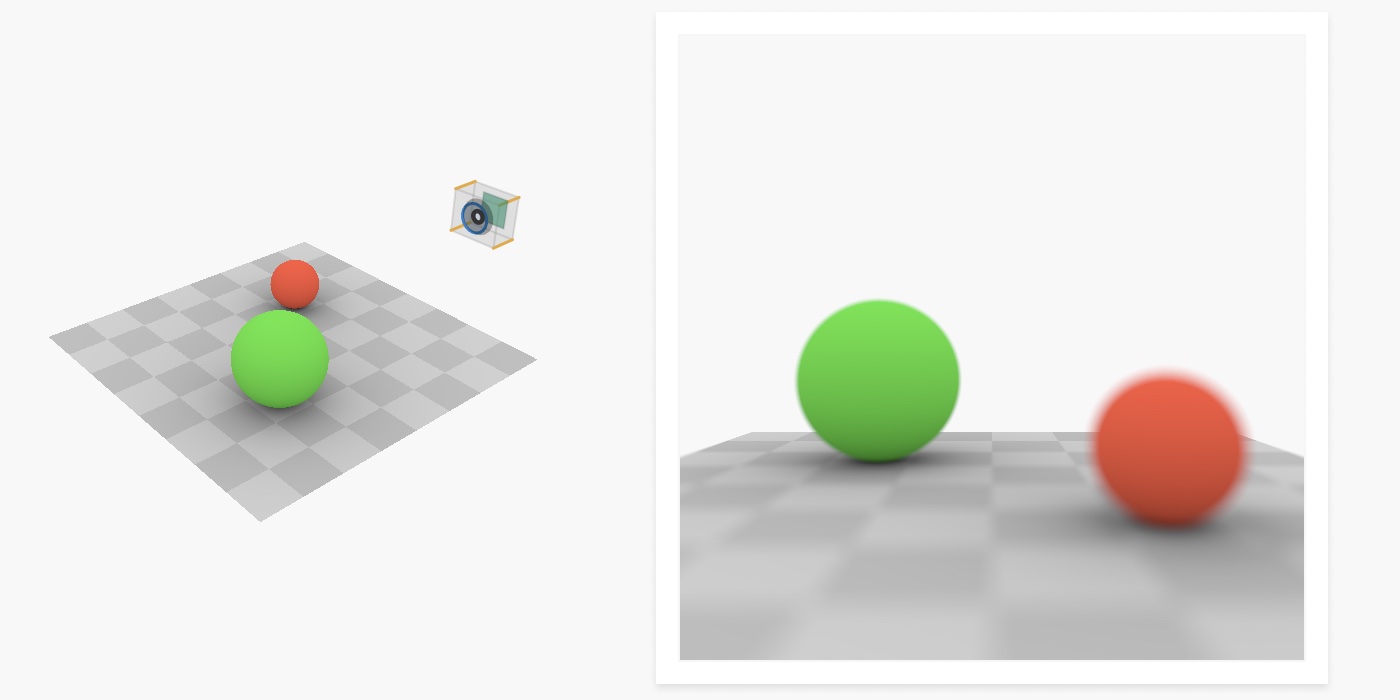
Cameras and Lenses – Bartosz Ciechanowski
Interactive article explaining how cameras and lenses work.
A new app alerts you if someone nearby is wearing smart glasses | TechCrunch
A hobbyist developer's new app, which can detect nearby smart glasses, comes amid resistance to always-on recording and listening devices that invade people's privacy.

Artificial intelligence is going to supercharge surveillance
What happens when digital eyes get the brains to match?

Surveillance Watch: They Know Who You Are
Surveillance Watch is an interactive map revealing the intricate connections between surveillance companies, their funding sources and affiliations.
Facebook’s AI unlocks the ability to search photos by what’s in them | TechCrunch
Initially used to improve the experience for visually impaired members of the Facebook community, the company's Lumos computer vision platform is now

China bets on facial recognition in big drive for total surveillance
Facial recognition is the new hot tech topic in China. Banks, airports, hotels and even public toilets are all trying to verify people’s identities by analyzing their faces. But the police and security state have been the most enthusiastic about embracing this new technology.

Artificial intelligence-powered smart vision glasses for the visually impaired
Purpose: In India, 4.80 million people are blind, and 4.69 million have severe visual impairment. Globally, the digital era and the advent of artificial intelligence devices offer solutions for daily challenges faced by the visually impaired, but they are often expensive. This study evaluates the acceptance and usability of a cost-effective AI-powered spectacle-mounted assistive device in a multicentric Indian cohort. Methods: Smart vision glass (SVG) is a lightweight tool, mounted on a spectacle frame with braille-coded keys and a real-time voice interface for guiding the visually impaired, and is connected to a smartphone Android App. The four major functions of the device are as follows: “Things Around You,” “Reading,” “Walking Assistance,” and “Face Recognition.” Ninety participants were recruited from five vision rehabilitation centers across India, and feedback was collected after a month’s usage. Results: The mean age of the participants was 23.5 years (range: 6 to 56 years) with 58.9% male; 51% from rural areas; and 64.4% students. As per the World Health Organization (WHO) classification, 90% of the participants were blind (best corrected visual acuity in better eye less than 3/60). A total of 100% of the participants were able to access all the functions of the SVG. Participants reported a positive experience with “Reading” (72.9%), “Things Around You” (44.7%), “Face Recognition” (36.5%), and “Walking Assistance” (22.4%). About 2/3rd of the participants utilized the device for an hour or more per day. Conclusion: SVG is a promising cost-effective device for the blind and severe visually impaired in aiding their day-to-day challenges and becoming self-reliant.

Gazing Back at the Surveillance Cameras That Watch Us (Published 2018)
These photographers explored the implications of a culture of pervasive monitoring.

Opinion | We’re Banning Facial Recognition. We’re Missing the Point. (Published 2020)
The whole point of modern surveillance is to treat people differently, and facial recognition technologies are only a small part of that.

Computer Vision Syndrome
In no point in human history have people been staring at bright screens just a few feet from their face like they are today. Computer vision syndrome or CVS (no…

Google Lens: real-time answers to questions about the world around you
New updates to Google Lens include smart text selection, style search and real-time capability.

Event Cameras: a New Way of Sensing - Davide Scaramuzza - ICCP 2024 Keynote