

What if the most game-optimal play in the new system is actually to become relentlessly, unapologetically you?
The Jevons Paradox of AI - Wesley's notes
Why AI can make us more productive but will never save us time
Jevons paradox
In economics, the Jevons paradox, or Jevons effect, is said to occur when technological improvements that increase the efficiency of a resource's use lead to a rise, rather than a fall, in total consumption of that resource. Greater efficiency reduces the amount of the resource needed per application, lowering its effective cost; if demand is sufficiently price elastic, this induces demand, frequently resulting in a net increase of total resource consumption.

Unfortunately, You Need to Know What the Jevons Paradox is
The Score: How to Stop Playing Somebody Else's Game
A philosophy of games to help us win back control over …

» The Goldilocks Principle in Fantasy Strategy The Digital Antiquarian
Although I’ve played way too many games for way too many hours over the way too many years I’ve been writing these histories, it’s safe to say that I haven’t spent more time with any one game than Heroes of Might and Magic II. Partly this was down to circumstance. Heroes II showed up on the syllabus just as I was embarking on one of my periodic digressions, a long series about international communications networks and how they culminated in the World Wide Web. Without the need to write in detail about a new game every fortnight, I was freer than I usually am just to play whatever I felt like playing. And what I felt like playing at that time was Heroes II. I beat every single Heroes II scenario in my Heroes of Might and Magic Millennium Edition set, some alone, some in multiplayer mode with my wife Dorte, who became almost as obsessed as I was. I must confess that my usual rule of no more than two hours of gaming per day was strained at times, shattered completely at others. But we were still in the midst of the pandemic then and there wasn’t much else for me to do with my free time, so I figured it was okay to set self-discipline aside for a while. Maybe it was even good experiential research, in that it re-familiarized me with that strange hungover feeling you get when you’ve spent hours and hours peering into an imaginary world behind your monitor screen — like butter that’s been scraped over too much bread, to steal a phrase from Tolkien. (For what it’s worth, I’ve found that the best cure for this condition is the same as that for a conventional hangover: a long walk in nature.)
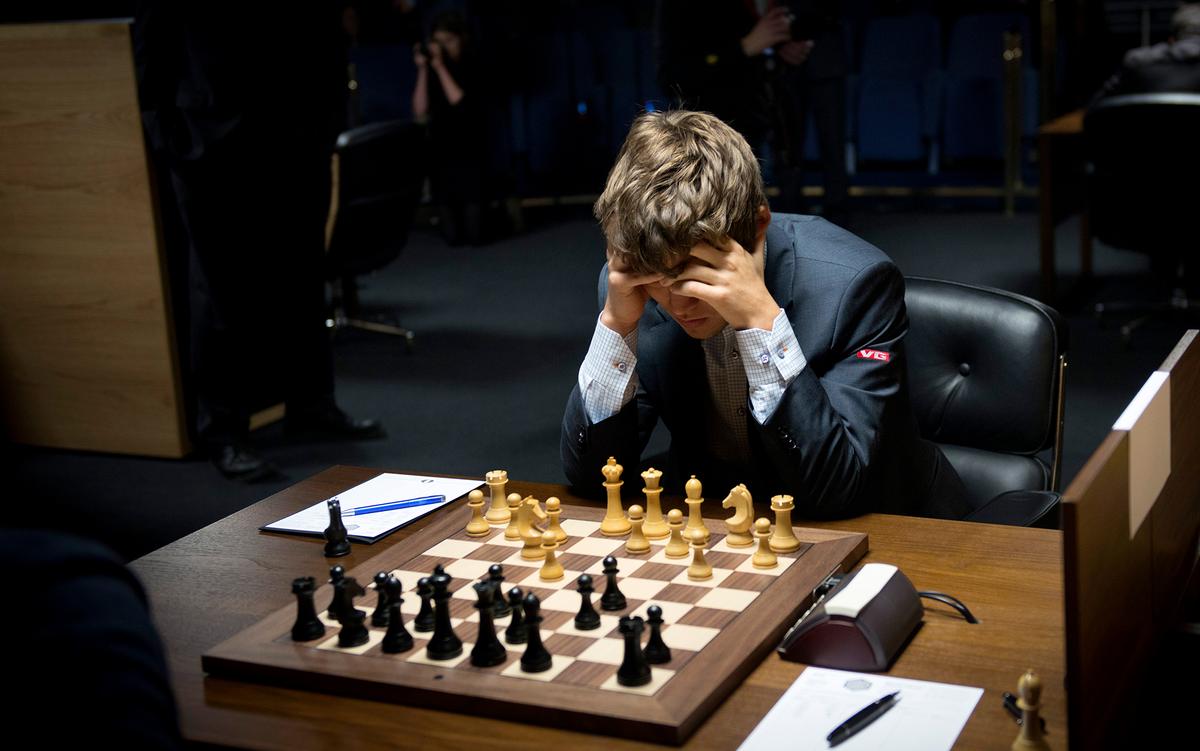
The Optimization Trap: Why Too Much Efficiency Makes Us Fragile with Olivier Hamant
Magic: The Gathering is Turing Complete
$\textit{Magic: The Gathering}$ is a popular and famously complicated trading card game about magical combat. In this paper we show that optimal play in real-world $\textit{Magic}$ is at least as...

The Optimization Trap: Why Too Much Efficiency Makes Us Fragile - The Great Simplification
In this episode, Nate is joined by biologist and biophysicist Olivier Hamant to explore why living systems prioritize robustness over performance, and what that means for a civilization built almost entirely in the opposite direction.
Specification gaming: the flip side of AI ingenuity
Specification gaming is a behaviour that satisfies the literal specification of an objective without achieving the intended outcome. We have all had experiences with specification gaming, even if not by this name. Readers may have heard the myth of King Midas and the golden touch, in which the king asks that anything he touches be turned to gold - but soon finds that even food and drink turn to metal in his hands. In the real world, when rewarded for doing well on a homework assignment, a student might copy another student to get the right answers, rather than learning the material - and thus exploit a loophole in the task specification.
» The Life and Times of Maxis, Part 3: The Sims The Digital Antiquarian
I don’t think people realize how much tactical and strategic forethought goes into their daily lives. There’s a whole subconscious time-efficiency layer in our lives. In essence, real-time strategy is our lives.
The Illusion of Decisiveness
Why product teams spin in chaos despite a "clear" strategy

Integrative experiments identify how punishment affects welfare in public goods games
Despite decades of research, the conditions under which punishment promotes cooperation remain unclear. Through an integrative experiment varying 14 design parameters of public goods games across 360 experimental conditions (147,618 decisions from 7100 participants), we reveal substantial heterogeneity in punishment effectiveness: Its impact on welfare ranges from 43% improvement to 44% reduction depending on the game parameters. To characterize these patterns, we developed models that outperformed human forecasters in predicting punishment effectiveness in new experiments. Communication emerges as the most important factor, followed by contribution framing (opt out versus opt in), contribution type (variable versus all-or-nothing), game length, and outcome visibility, though these factors often interact. The results reframe the debate from whether punishment works to when it does, demonstrating how integrative experiments enable discovery of generalizable patterns in social phenomena. , Editor’s summary People face conflicts between maximizing personal gain versus supporting collective interests. If we cooperatively recycle or donate to charities, it benefits society, but it also costs us time and resources that could be selfishly preserved for ourselves. We impose penalties to deter those undesirable or selfish behaviors, but under what conditions do punishments or penalties effectively modify behavior to benefit group welfare? Alsobay et al . systematically and simultaneously varied 14 factors together instead of in isolation. Punishment was unequivocally most effective when paired with consistent communication, particularly over time. Another effective factor was “opting out” or withdrawing some, but not all, endowments already in the public fund. These methodological advances revealed when, rather than whether, punishment works. —Ekeoma Uzogara , INTRODUCTION Human societies face many situations where individual and collective interests conflict, often referred to as social dilemmas. Costly peer punishment has been studied for more than 25 years in public goods games (stylized behavioral experiments in which individuals decide how much to contribute to a shared pool that benefits everyone) as a mechanism to promote cooperation. Prior research has identified many contextual factors that moderate punishment’s effectiveness, including game length, communication, group size, punishment cost, and so on. However, the specific conditions under which punishment improves group welfare remain unclear. RATIONALE We argue that this lack of clarity derives from the dominant experimental paradigm, in which any given study manipulates only one or a few theoretically informed factors. Because such studies differ in many ways (different experimental procedures, populations), their results are often difficult to compare or integrate. Consequently, one can list many factors that have some effect, but cannot say how much each matters relative to the others, or how they work together, and as a result, cannot predict when punishment will help or harm welfare in new settings. To address this fundamental knowledge gap, we use an integrative experimental design and systematically vary 14 parameters across 360 conditions (147,618 decisions from 7100 participants) to elucidate when punishment improves versus undermines welfare in public goods games, which factors matter most, and how they interact. RESULTS The effect of punishment on welfare ranged from 43% improvement to 44% reduction depending on the specific combination of game parameters. To characterize this heterogeneity, we trained a model that outperformed all 553 human forecasters (laypeople and experts) in predicting whether punishment would help or harm welfare in new experiments. Communication emerged as roughly three times more important than any other factor, followed by contribution framing (opt in versus opt out), contribution type (variable versus all-or-nothing), game length, and peer outcome visibility (whether participants can see others’ earnings). These factors often interact. For example, longer games enhance punishment’s effectiveness only when communication is available, and contribution framing effects depend on both contribution type and outcome visibility. CONCLUSION Many phenomena in social science are shaped by many factors whose interactions are consequential, yet the dominant experimental paradigm often limits its inquiry to “does a given effect exist?” and examines hypothesized factors in isolation. As a result, research programs can accumulate many partial explanations without a clear picture of how they combine to determine outcomes across settings. Knowing that factors matter individually is fundamentally different from knowing how much each matters and how they interact. The integrative approach implemented here offers one way forward. It varies many factors simultaneously within a shared design space, evaluates models by their predictive accuracy on new experiments, and probes those models to constrain and develop theory. Our hope is that integrative experiment designs, combined with models that integrate prediction and explanation, represent a path toward more cumulative social science. Integrative experiment reveals when punishment helps versus harms. We systematically varied 14 design parameters across 360 experimental conditions. The effect of punishment on cooperation efficiency ranged from −44% to +43% depending on the specific game parameters. Communication emerged as three times more important than any other factor, followed by contribution framing, contribution type, and game length.

Guy Who Sucks At Being A Person Sees Huge Potential In AI
SAN MATEO, CA—After spending the past three decades of his life being totally unable and unwilling to engage in any meaningful way with the world around him, James Parker, a local guy who sucks at being a person, told reporters Thursday that he saw huge potential in AI. “While it’s still in its early phase, artificial intelligence will one day accomplish things that humans could have never even dreamed of doing,” said Parker, who, by all accounts, has never stretched himself to do something he found difficult; has never created anything truly original; and, deep down, has absolutely zero understanding of what makes things good, enjoyable, or rewarding. “Just yesterday, I asked an AI program to write an entire sci-fi novel for me, and [as someone who will die an empty shell of a man who wasted his life doing nothing for the world and, perhaps, should never have been born] I was super impressed. Soon, humans won’t need to do anything at all! Awesome.” At press time, Parker added that as someone whose contributions to society would almost certainly be measured cumulatively as a net loss, he also saw great potential in the future of the metaverse.